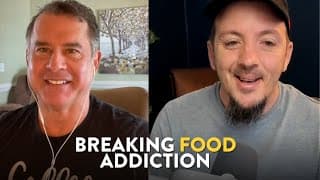
Well, welcome to another episode of the podcast. Thank you guys so much for tuning in and continuing to engage with the content that we put out on recovery and addiction related topics and I'm excited because today on rebuilding life after addiction. I've got one of our early guests on John Higginbotham who is a health coach and fitness expert and many a friend as well and I'm excited to be able to talk to him again and for those of you who are watching if you're catching this the beginning please take a moment and hit the like button, leave us a comment, let us know where you're watching from. If you're watching this on YouTube please hit the subscribe button and also leave us a comment below as well; all of your engagement helps these conversations get out to more people. As we go into the new year, we're going to talk about everybody's favorite topic that they like to think about immediately after going through the Christmas and Thanksgiving holidays and eating a lot. We're going to talk about living a healthy lifestyle in regards to diet, exercise, and there's a lot more that goes into that.
I've asked John specifically to come in and talk a little bit about the idea of diet and exercise as it contributes to recovery, right, as it contributes to the process of getting free from drugs and what role living completely healthy lifestyles might have and assist in that. John I was telling you a little bit offline that one of the things I've seen over the years working with folks at Teen Challenge and, yeah, just seeing folks get free from addiction but then like they start to put weight on and there's a point where they start to put weight on and it just, it doesn't stop, right, they keep putting the weight on. So I want to talk to you a little bit about that today, but man first off how are you doing? Doing good, doing good. I was, yeah, I was looking forward to being here and it's a, you know, it's a weekend when we're recording this so I always enjoy my weekends a little bit so it's good to be here and it's a fun topic because so many things that are involved in addiction or in health and fitness or diet all kind of tie into the same pathways of behavior.
Comparing addiction and diet: dopamine and behavior change
I call myself a health coach but really at the end of the day the way that we're trained it's really I'm a behavior specialist, behavior change specialist, so I think they're very related. As you and I've talked about before so I'm happy to be here man thanks so much for coming on and I'm excited because I know you've got a group coaching program that you're launching very soon for folks that are kind of looking for some assistance in this whole process and man we'll definitely give some folks some direction on how they can connect with you on that here at the end of the conversation. But having that accountability is so, so important. So let's dive right in man and talk about the similarities and it might be good to recap that a little bit right and our last conversation for those who aren't here I'll drop the link in the description you can go back and check out that conversation.
So behavior changes in regards to diet and exercise and then behavior changes that often need to take place in the recovery journey making the decision to quit using drugs and alcohol right I mean what are the similarities there can you unpack that a little bit. Sure yeah you know I'm not a, I'm not a doctor or a neuroscientist or anything like that but you know the dopamine pathway is really it's the same no matter what the addiction is so the amount of times the amount of time that it takes to become addicted or to break an addiction are really the same so they're very related. It's still that reward, you know, pleasure-pain reward pathway so you can treat them very similarly. So to say that they're not the same thing would not be accurate.
Yeah so when you say how long that the amount of time that it takes for somebody to become addicted in regards to what's happening with the dopamine, the dopamine in the reward system and all that, I mean what does that typically look like? So your body always has this play between having these dopamine spikes and then resetting that and the problem is that we reset that but whether we're eating a doughnut or snorting some coke, we're spiking our dopamine and then every time after that it takes a little bit more of that or maybe not necessarily more but we're, you know, less time between addictions to create the same dopamine spike. To break that addiction it's going to take the first 10 days is going to stink, you know, and then I tell people the first two weeks, so whether it's food or whether it's meth it's going to take you the same amount of time to break that. But we can get into maybe how to do that, but the time frames are basically the same and I don't know exactly what you teach in drug recovery or addiction recovery when it relates to drugs but most everything else I would imagine the same. You have to be away from the addiction and so that's why treatment programs are so good because sometimes the addiction is so strong that you have to be away from it; you can't have access.
Breaking that addiction it's probably going to take 30 days to reset those dopamine levels and so it's a progression; the first 10 to 14 days is really painful. Yeah and then it starts to let up. I didn't actually purposely wear this shirt right but you really do, I don't know, what's a good thought, yeah. It certainly is, but if you just concentrate on the day then you don't have to win the 30 days that it takes to reset those dopamine levels; you just need to win today. Do it today.
It's interesting you mentioned that two weeks because at Teen Challenge we typically, you know, we're more of a discipleship ministry than we are a drug treatment program; we happen to work with folks that are dealing with addiction but like your Teen Challenge is typically two week block out when they come in right because the first two weeks the temptations are higher. You get on the phone with somebody a little bit more stressed and it's, you know, out the door like a light and so we kind of always had that two week period in there where there is kind of like, and it stinks, it's a shock at first I'm going to be disconnected from everybody I know, everybody I love for two weeks. But the reality is that those first two weeks are always so difficult and problematic that it doesn't take much for a relapse or to run back in that period.
So talk about the dopamine and so diet and exercise right let's just get into the topic that nobody wants to talk about right most people unlike you you want to talk about it all the time so but like you know man like the diet and exercise portion in early stages of recovery I mean how does that contribute to the process right of helping what's going on with the dopamine and all of that like what role does that play. Yeah it's really addictive personalities really, you need to—well addictive personalities especially need to have another addiction I mean or at least they feel the need so that's usually where these new behaviors come up. It's making sure that you're not doing the one thing that you're trying to avoid, you know, but also filling that dopamine because we get, whether it's eating a doughnut or like we talked about earlier whether it's eating a doughnut or snorting some coke you're getting a dopamine boost from that. So resetting for 30 days is really a key so replacing that and not developing new bad habits is really something that you need to focus on. Replacing a bad habit with a good habit is probably the easiest step I think in getting somebody to that next, you know, to a full 30 day recovery plus.
Practical steps: exercise habits, obstacles, and accountability
Let's say John I am fresh into my recovery journey, I am looking at this process man and sometimes I think, you know, I think sometimes diet and exercise especially at the beginning can be overlooked because I'm just trying to get off of whatever insert drug here. But if I'm starting this journey out, from your perspective—and I know you're not a doctor and obviously I would recommend anybody that's going to start a heavy exercise routine the day after they stop using to have a conversation with your doc so you don't kill yourself—what are some of the first and most important exercises or changes that you'd recommend I make? I'm living a sedentary lifestyle, I'm coming off the drug lifestyle and I'm facing this thing from day one, what step should I take going forward? That's a good question.
If you're coming from a sedentary lifestyle then I would just immediately set up something that takes you out of that sedentary lifestyle whether it's, especially if you're in a place where you're removed from society a little bit, doing body weight exercises whether it's push-ups or sit-ups or air squats. You can do shoulder presses and sit-ups or pull-ups on a door jamb; there are ways to do things. Developing a habit of just saying hey listen I know I'm fighting this addiction I need to fight that addiction with another healthy addiction—being addicted to an endorphin rush from exercise is another way of feeling better. Replacing one thing with another healthy thing is how you create a sustainable pattern.
We're talking about a holistic recovery realistically and looking at all the angles, mind, body and spirit, and being able to focus on all of that. Practically speaking man, some of the biggest battles for those of us battling addiction whatever that might be are up here, you know, getting the mind squared away and being able to start to think properly again. What role does exercise and diet play in our thoughts and getting clarity of thoughts? Lack of sleep and other stuff impacts thinking processes but what about lack of exercise in regards to what it steals from us versus adding exercise in regards to what it adds to our thought processes and how we think more clearly?
Getting oxygen to your brain is such a big piece. I think there's five basic pillars of health and that is one you got to move, secondly you have to breathe, you need mindful eating, you need good sleep and you need hydration. So literally if you could just focus on those five things it sets you off on the right path. Sometimes people who struggle with addiction tend to be all in or not at all; we're hardcore and that mindset can set us up for failure because we end up starting a pattern that is not sustainable for the long run and then we hit our first few obstacles and the disappointment sets in and now we just stop all of it rather than adjusting.
This is applicable to people in recovery or just folks trying to get to a healthier lifestyle. What kind of obstacles do you see people face when they're starting to try to adjust their diet and exercise routines and how do you help people navigate some of those obstacles when they're trying to implement this lifestyle? That's a great question. Developing the new habit of literally just going to the gym even if you only walk in and spend five minutes and then walk out, but you develop the habit of five days a week or whatever your goal is of actually just doing the thing, that in itself starts to create a better and new pattern. That's one place I think I'd start.
When the obstacles pop up—let's say I've been rolling for a week or two and then I don't know man there are 30,000 reasons that somebody could find to not make time for their exercise or slip on McDonald's and order the double quarter pounder meal with the large fry and the large Coke or Diet Coke to make them feel better and feel like we're doing something good for ourselves—those obstacles are endless. I think from the beginning we do this from a health coaching model where we ask people what do you see that could prevent you from making this one change. We narrow it down to what actions you want to take and then action number one is to identify what you see as some of the optic obstacles like it's eating well, my kids love this food so when I cook this is so, you know, I'm saying.
When we come up with what the goal is to achieve then we name these obstacles and then we address those. What are ways that we can overcome those obstacles, how can we add accountability with other people, getting other people in your life to be on your team to give you support—tell five of your closest friends that you're going to do this thing and you're going to do it consistently and can you report into them every day and if they don't hear from you can they give you a heads up. Enlist people that love you and care about you to support you and identify first the goal and then the obstacles and some ways that you can avoid those obstacles or address them when they come up.
Accountability is such an important topic and we hit on that all the time in the recovery world; accountability is so vital. A lot of people struggle with self-reliance or pride and not wanting to feel like we're admitting our weakness by inviting people in and having to ask folks for help. Twelve-step folks say the first step is admitting our powerlessness over this and it really is that we can't do this alone; if we could we would have already done it alone. There's that process of making adjustments in our life and being humble enough and committed enough to our growth that we're willing to bring other people in.
My buddy and Rob, he gets on here with me a lot man to co-host and we talked a few weeks ago about relationships and fellowship and how important that is in every area of life and that we need accountability partners not co-defendants. That distinction of being able to engage good accountability to help—and have you struggled with that ever, like reaching out and being able to engage with accountability? In your health journey have you been pretty self-reliant or like, you know, I love to hear some of your story on that. When it comes to my health I've had some—as you know and maybe some of their audience don't know—I've had some obstacles that were pretty much in my face that I needed to address.
I fell 60 feet off of Raven's Roost 15 years ago which put me on a path where I was told that I probably wouldn't be able to walk or at all and that I might have some neurological problems. Being faced with a challenge like that, like honestly a lot of people with any kind of addiction it's a huge obstacle. Having something in your face like that meant I couldn't have done it without other people; I've learned in business and in friendships and families and even my addictions that I need other people. People need people and admitting that first is probably a good idea.
I couldn't have made it through any of my challenges without enlisting the people that cared for me the most and even if you don't have a lot of people around you that you feel like care there's somebody there and you need to search those folks out and enlist them even if there's only one person or two. As many people as you can get on your team and let them know what your goals are and hey listen I know we all need accountability will you...
Framing the journey and the risk of unprepared goals
Will you help me with this? I mean I think it would just be tremendous. Yeah that's really good man and I think it's important. I think the context there of that, you know, like you know we're here rolling this call right now. You are in shape, people see that, but sometimes you see that and it's like, man, that's a mountain I can never get to — he's already there.
But you hear the journey that this just wasn't overnight, you know, that there were some insurmountable odds that you had to overcome. Part of that is maintaining the discipline in the house but also realizing that I've got to engage some other people in this process and help me through the journey to get where you're at today. And tomorrow I'm preaching one on you, really kind of going into the new year. Everybody starts talking about resolutions and goals, and sometimes we set these extremely lofty goals, which I think is good.
I don't have a problem with setting big goals, but the direction I'm going with the message is that if the heart isn't prepared the weight of the goal when we achieve it can actually crush us. So we could be praying for something and expecting an outcome that we're not prepared for, right? I think that's part of this journey of health and trying to maintain motivation and whatnot; it's like, okay, I know that this is going to be difficult — I've struggled with it my entire life and whatever that might be.
So I'm going to do the work of propping the goal up, you know, because it's going to greatly, greatly increase my chances of actually hitting that goal if I put the proper support in place. I'd love to talk to you about that for a minute — the strategies maybe for maintaining that motivation, right? We talked about one which is good accountability. But on what other strategies would you suggest for somebody because your New Year's resolutions, what do they say — typically they're all broken within the first week of the year.
Yeah, week to 10 days — so how do I get past the 10 days, John? When the days know really I mean I hate to I hate to keep coming back to that but it really is figuring out what your goal is and then breaking that goal down into 24-hour pieces. You can't, you know, it's like I tell folks sometimes that, you know, I coach for weight loss let's say, and you know weight loss you can't do that overnight. I gained 40; I was 244 pounds when I fell off Raven's Roost and I'm about 40 pounds less than that now, but I didn't put that 40 extra pounds on in a day.
I didn't even put them on in 30 days, so I needed to have a goal — I needed to break that down. What is my weekly or monthly goal on this thing? So grab the goal and then break it down into bite-size pieces, you know. The best way to eat an elephant is one bite at a time, right? And so your elephant might be, you know, the thing in the room — I've been there — so yeah, one bite at a time and I think taking it.
It's great to have big goals but I think you set yourself up for failure if you don't now take that goal and then break it down into bite-size pieces that you can achieve a little bit at a time so you get these little wins. Those little wins give you that dopamine spike, the dopamine that you're trying to replace; you're now getting these daily wins. You set yourself up for failure if you don't break those down into bite-size pieces and I think that's the best way to keep a positive mental attitude and just keep going forward.
Now I don't know if you've read a book — I know it's by Jeff Olson, it's called The Slight Edge — and it really is about mastering the mundane: doing one thing each day, every day, and just taking what's in front of you and winning the day and completing your goals. So, breaking that goal down into bite-size daily pieces I think is the only way to do it without setting yourself up for failure. I mean I had a goal at least 40 pounds but I know you aren't going to drop it in no time, so yeah, having those bite-size pieces, those broken-down goals, is huge.
Yeah and that's so good man and I think that again, not to keep beating the drum of community, but like having those people around you that can help you sort through those goals, right, and not discounting the little steps of progress — that's what makes a recovery program so powerful, right? Places like T.C. — it's the encouragement on the little wins. You know it's when a guy pauses in the middle of the day to pray for somebody else instead of going off on them, it's like, hey that's a win — well done.
Most of us sometimes are like, well why should I celebrate something they should just be doing anyways. It's because it's that motivation, it's that encouragement that you praise the behaviors. We do this with our kids all the time; we praise the behaviors we want to see repeated and even as adults we still respond to that same thing. When we're encouraged and we're praised in something, we continue in that pattern.
So I think that part of community and working with somebody that's able to kind of dissect these goals with us and say, you know, hey I know you want to lose 100 pounds and that's a tremendous goal — not to tell you you can't reach that but let's break that down into some short-range goals. Let's get to five pounds first, right, or whatever that is, and how do we then break that down and what actions do I have to take on a daily basis? Those are the simple actions, right — the ones that we're praising day after day after day; that accountability and that support, man, it's so good.
Group coaching program structure, community support, and what to expect
So let's talk about your upcoming group coaching program, John, and I am segueing right into this one purpose because man you're rolling out an eight- to 90-day group coaching program for this purpose, right, to provide community, accountability, and for the person that is like, I know that I need help, I know that I need to do something different — you're going to help them structure that, right, and figure out what it is they need to do. There's so much information on the internet and it's hard to decide who to listen to, who to engage with — you know my sister, she is like a Google expert.
Every time she has a call she's got six conditions and like I say that in jest, but talk to me a little bit about your group coaching program and kind of what that's going to look like. Yeah, well, you're right that having a group of people that are in your corner that are there to help celebrate your wins and that can be there to encourage you and you them — because you know I saw a study once that talked about people that do good for other people. They experienced an endorphin rush; actually just seeing someone do good for other people actually gives you the same endorphin rush.
Being in a group not only do you get the help and the encouragement, but you can be an encouragement to other people and it just feeds on itself. I'm excited about it. I know sometimes in group sessions there might be things that people don't want to share, but we can a lot of times talk offline about that kind of stuff. Being in a group — I'm looking forward to it; it's going to be a lot of fun.
Group coaching is a little bit more difficult than one-on-one, but we'll do the same things and then I'll have a group of accountability partners that can help encourage us to make those changes that we want to make even if it's just something as small as getting better sleep or drinking water and staying hydrated, not alcohol. Yeah right, yeah we're not going to be a health coach never shot such a kilo. No, but now I could do a whole video on alcohol and its effect on the human body and, you know, I don't want to be a buzzkill for anybody — maybe I do, yeah — but you know it's terrible stuff.
I'm really looking forward to the group coaching thing and how we can put that together and help make a change for a group of people. You've got John, the expert health coach and practitioner of this stuff, and that's the part — we're taking advice, we're connecting with somebody who's done this. Man, I know John has just spent the last several months — I'm probably underselling the amount of time that he's been engaged in training and courses and working on this process of getting sort of board certified and all this stuff that you're working on.
Being able to take 90 days out at the start of the year, connect with a group of like-minded people on a weekly basis that just want to see their health improve — we hit on this in our last conversation where we talked about the why behind it all. It's figuring out the why for you. I mentioned that like, you know, it's crazy — I still probably need to adjust personally with some diet stuff but I've been more intentional the last couple months, kind of cutting back on stuff and not eating as much and working on that part of my life.
The reality of it — when we talked last time — was that I was putting weight on and realized it when I chased my daughter across the yard. You feel that and it's like, oh, you know, and those are the types of things that start to have you look at this. I went to the doctor six months ago and they had been keeping track of my blood pressure for the last year. I'm one of those people that get really nervous in the doctor's office and my blood pressure always spikes a little bit — I probably had a shot of espresso before going in there — but she had tracked this over a year and my blood pressure was not good.
I went home and had that conversation; they were going to put me on blood pressure meds and she looked at me and she's like, you got to take care of yourself — we need you. That hits you. Over the last couple months I've gone back to the doctor and blood pressure is back at normal levels. Some of those heart-to-heart conversations really start to move that needle.
I would just challenge folks that are listening to this — and I'm going to give you a second to chime in on this, John, I promise I'm going to stop preaching — ask the why. What is the motivation for doing this? What is the drive? We all have things we want to do in life and one of the things I love about talking to you, John, is that you consistently talk about just wanting to help make people's lives better. I don't want to see somebody die a slow painful death for something that can be prevented, and that is the heart behind it.
I'd love for you to speak to that for just a few minutes as we close out and encourage folks to find that why. Yeah no man, you know I've — we all have done this; I know I'm not in the room by myself. We watch family members literally dig their own graves with their teeth and they have terrible habits — they don't exercise, they don't do anything. I want to be able to just get out in the yard or even on a ball field and play with my grandkids and have them remember those days of, "My grandpa did this." My dad couldn't do that, you know.
It's not because of somebody can or somebody can't; it's just the fact of being with my family and being able to participate in their lives and enjoy that. I used to tell people that you can't out-train a bad diet, but I'm beginning to think that maybe you can at least help because one thing you need to do is get movement, get some blood flow going. We've all watched family members go through things and have health scares.
I have a father who is type 2 diabetic and I hate to say this but type 2 diabetes is often self-inflicted. It's not type 1 — you weren't born with a pancreas that wouldn't make insulin; you actually have, over time, impaired some of your pancreatic function so the beta cells can literally not be able to function after so many years. Our biggest glucose sink is our muscles, so getting active, moving, breathing, and eating well make a big difference in how you feel day to day.
Living longer and being able to do more longer — being able to get out in the yard with your kids or your grandkids — is a real thing. It's one of those habits we need to pick up and develop some short- and long-range plans like just going for a walk the first week. In the end, that will save people massive amounts of heartache and you feel so much better; life is so much more enjoyable when you can do the things you want to do.
I'm looking forward to this. I've been in the mortgage business for 22 years now and in real estate for five years before that, and this is for me kind of just a passion. I was inflicted with some injuries — I fell 60 feet — but that led me to really look at what made me more physically capable and I want to do that for other people. Even small changes, not extreme measures, can make massive differences and those small wins stack up on each other and contribute greatly to your life.
You don't realize it until you actually start to experience it. So can I ask you then — I mean, 22 years in the mortgage business, five years doing real estate, 27 years doing something in the same field, and now here you are, John, 56 and pursuing a career in health coaching — that's a big leap. I know people think about making that change at this stage of life. Can you speak to the motivation behind that for a few minutes because that's pretty significant, that you're at this place wanting to make this change in your life to help people?
Yeah, you know it's funny how you learn things and you kind of learn them along the way; you would have thought I learned 15 years ago when I fell off the cliff. You don't realize — at least I don't think you do — the things that change right away; sometimes change is a slow process. For me, I realized what really mattered. I had a great mortgage business; it was actually much better than it is now, not just because of the economy — I was in the mortgage business in 2008 during a credit crisis and I survived.
We all made plenty of money after that but that wasn't achievement. Success became less important than significance. When I pass away I want people to show up at my funeral for a lot of reasons, but mainly because that guy did this for me. I can't say I don't care about making money because we all have to keep the electricity on, but there are other things that matter more — achievement and helping other humans and witnessing change.
I've had people I've coached in the past who have literally lost 100 pounds plus and to hear them tell you thank you with tears in their eyes — it's not something I ever had doing mortgages. People don't cry when you do their mortgage, they get tearful for different reasons. That's powerful. I heard a preacher quote this a few years ago and it stuck with me: he said you spend the first 10 years of your ministry chasing success and the next 30 chasing significance.
Shifting focus from numbers to life-changing depth and taking the first step
It's hit me because I, you know, even in my ministry walk early on it was numbers, numbers, numbers—how many students can I get in the program, how big can we make the church? And the Lord's been dealing with me a lot on that, man, on focusing a little more on depth than width. What you're talking about, that type of significant life change—like that 100 pounds lost for somebody—like, you know, I know how good I feel when I'm five pounds off; I can't imagine the difference in the transformation. For those who are listening that hear that, it's the same thing for a person reaching out on the phone saying, "I need to get help and break addiction"—it seems insurmountable, it seems impossible.
And it's like, we don't have to fix everything today. We've just got to take the first step, and let's break this down—let's just take that first step. The benefit of engaging with folks and connecting to somebody like yourself is that they're engaging with somebody that's going to walk with them on every single step. Because some people, I know the support systems don't exist; they're not great for everybody.
For those of us, we can sit in the middle of that and say I have nobody to help me, or we can start to pursue the people that will pour into our lives. That's the part where no matter what the struggle is, the personal responsibility element comes in. And that's not a shame-based thing, but at some point we've got to kind of move beyond and just make a decision, and I'm going to make that decision. I would encourage folks watching today—I am pitching hard for John right now because I know your conversation and your time in his group coaching program will change your life if you commit to the process.
Commending recovery work, offering help, and closing with a call to action
We're going to drop that information down below; if you're on YouTube or Facebook John will be tagged in the post as well and I would encourage you to check with him and follow him. John, do you have any parting words, man, as we close out? Well man, I tell you what—I appreciate you not necessarily just for what you do for me as a friend but also for what you do, and I think the people that have broken addictions in the past become the most significant in knowing how to help other people change. I just really commend you for what you do—your channel and your work at Teen Challenge—and anybody that I can help make a change, to me health isn't just about not taking drugs.
It's not just what you put in your mouth or in your life, but also what you might put in your veins, what you might put in your arm, and what you might put up your nose, right? So I'm happy to help anybody because man, that's the juice—so I appreciate all the work you do, man. I think because of your past it's what's going to be so great about your future, and I know that you and I both give God the glory for that. You had a lot of people that God put in your life and you did the work, but sometimes we just need a little help, so anytime I can be a help to anybody I'd love to help no matter what it's about.
And I think that's that shift: as we start to mature we realize that having help and people in our life is not a detractor but it becomes an asset. The friendships and the relationships are the greatest asset that we could have as humans—outside of our salvation, that's the gift that can never be taken away. And you know what's the old statement—it's not what you know, it's who you know—and that applies in so many areas. Well John, thanks man I appreciate you jumping on and chatting about this, and we'll have to get together and have that boost conversation and break down some of the stuff because I mean there's some great information out there but hearing about some of the impacts of all of that.
For those watching, please take a moment—smash the like, hit the like button. Give me a comment; if you had any questions in this conversation, or stuff that popped up, please drop those in the comments and we'll do our best to get back to those. We'll see you again real soon with another episode. God bless you guys and have a wonderful day; thank you for watching.