Discovering a Methodology for Transformation
A methodology that we discovered during the process of writing the book, which is truth, transformation, and then testimony. And so essentially that truth part is kind of debunking our belief systems and getting in line with who we are in the Lord, right? Understanding that we're not really up against facts or things on social media. We're up against belief systems that we grew up with. Now, if we can start to undo those things, then we can get into a place of transformation. The whole point of transformation is to realize that the brain is capable to rewire through neuroplasticity. In the book, I discuss different modalities, breathwork, timeline therapy, ways to care for your body. It also encourages you and the reader that, hey, this stuff is not linear. As you guys know, recovery is not linear.
Introducing Ace and His Journey
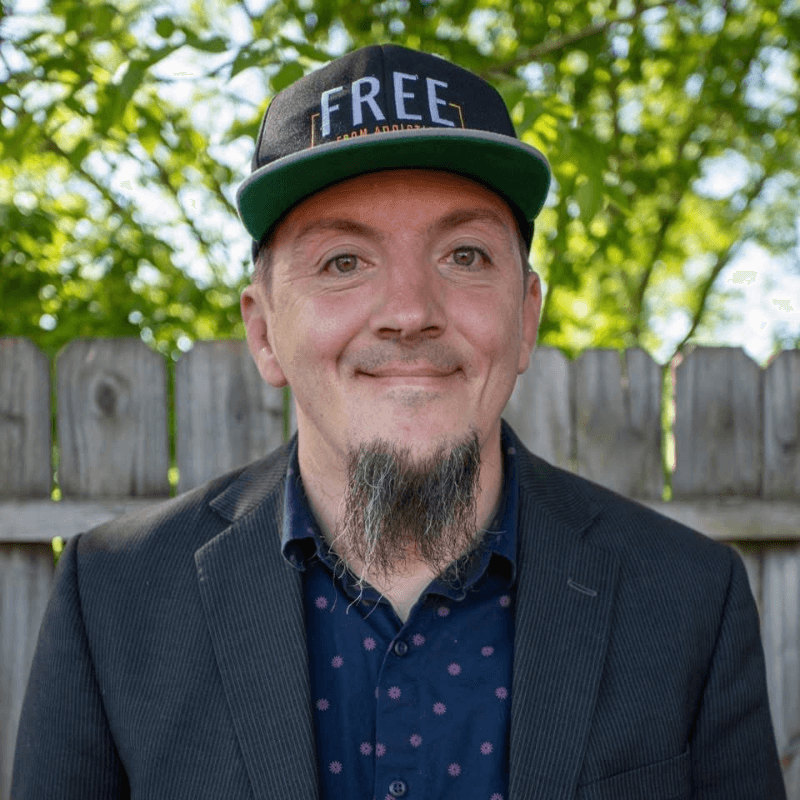
What's up? What's up? Welcome back to another episode of Rebuilding Life After Addiction. Man, it's good to be here again with a good friend, a good brother in Christ, a man that just wrote a book. It’s so awesome to see where God has taken this individual from just the last conversation that we've had. You know, he celebrated a year of sobriety. Many of you guys may know who he is, but I'm just going to allow my brother from another mother to introduce himself and give him all the praise, all the applause or whatever you want to call it. Yeah. Yeah. Ace. Go ahead and take it away, man. Share a little bit about yourself, bro, for those that don't know.
Thanks for the intro, Robert. Justin, man, it's so good to see you guys. First off, I just want to congratulate you with, you know, going back in and built with some unfinished business routine challenge, man. It’s awesome. And Robert, congratulations, bro, with what you're doing to help people their financial futures and just business. Amazing. It's good to be here. My name's Ace. I was one of the respiratory therapists at a science of the first community, spread COVID patients in the United States. That was in February of 2020. Time went on, and I found myself into addiction. Various substances, hard drugs, alcohol, marijuana, just really spiraling out of control. On December 18th of 2021, I had a failed suicide attempt. Three days before my brother's wedding, I was just really in a dark place. That’s when the Lord really met me and told me, “There’s more to life than suffering.” So I decided that day that I was done suffering. Seven months later, I got sober and, by the grace of God, I have like a year and close to a year and a half, all one day at a time. So I'm just grateful to be here, guys. Thank you so much.
Reflecting on PTSD and Its Influence
Yeah, it's so awesome. And yeah, Robin, now we're talking about you. He shouts you out on the podcast all the time. Your testimony, man, your story. That conversation you, me, Rob, and Luis all had together was such a powerful discussion. For those that are watching, if you get a chance to go back to the YouTube channel and check that out, you could definitely catch that full conversation. Now I’ll drop the link in the comments as well. But, man, your story, just the stuff that you've walked through even prior to the experience at the hospital and through COVID and everything that you went through during that season, man, it's just so powerful, dude. Congrats on the book launch! That’s no easy feat, man, to get through that, get it written and put out there. It’s an awesome thing.
I want to ask a little bit because I know the journey and the struggle with PTSD inspired the book. I mean, kind of just that journey that you walked through. I don't know that we went real deep into that part of the story, right? Last time around, I think we talked about some of your backstory before. Do you mind bringing us in a little bit to kind of how that, you know, when you started to notice that, you know, after your time working in the hospital, how you started to become aware that you were dealing with this PTSD and the trauma that ultimately inspired you to write the book?
The Journey Toward Awareness and Writing
Oh, yeah, absolutely. I think after the failed suicide attempt, it made me start to be aware of mental health. I had to see therapists and counselors as part of that and kind of self-diagnosing that I was suffering through some post-traumatic stress with everything else we were searching. It wasn't until January of 2022 that I was diagnosed with post-traumatic stress. I think like one big thing about the diagnosis was that now I have a game plan. Now I can go into it with, “Alright, other people have probably had post-traumatic stress. How did they overcome it, or how did they still live a great life with post-traumatic stress?”
So I dove in. On July 30th, I got sober of 2022. That was a really fun day because I was sitting at a bar and I said nice to this gentleman, who we consider one of my brothers. I told him that I was trying to get sober but was having a tough time. He mentioned that he goes to AA meetings. Now I'm sitting here like, okay, he goes to AA meetings. I asked him which ones he goes to, and he said Tuesdays at 7 p.m. I said, “Oh, I do too.” He asked, “Where do you go?” And I said, “Where do you go?” He said he goes to this one in Eagle, Idaho. He asked me who I knew, and I said, “Who do you know?” He said, “Lance,” and Lance is my sponsor. I was like, “Oh, shoot, man, I got to tell him myself, right?” I had to tell him myself that day. And to me, I look back, and God just has a sense of humor. He met me where I was, no judgment, but just a conversation, you know, just like, the what’s the we have? And just really checking in.
Exploring Trauma Through Creative Expression
A few months went by, I ended up going to Save a Warrior. For those who don’t, Save a Warrior is a suicide prevention program for first responders, veterans, and active duty military who suffer with PTSD. Going there, I learned about an ACE score. It’s not my score, but I do have a score, which is adverse childhood experiences. From that, it really opened up my eyes to seeing why I act out in certain situations that, I guess, normal people don’t. Learning about complex PTSD, which is essentially childhood PTSD, I started going on this journey of self-discovery and trying to piece together the puzzle that wasn't handed to me through my family. Culturally, we don't really talk about trauma. We don't talk about what happened, but there were some clear signs that we had some stuff go on in our family.
A little history: my grandfather was a World War II prisoner of war in the Philippines against the Japanese, and it was quite gruesome what they did to him. Both my parents were law enforcement. So we escaped the Philippines because my dad was on a hit list from the cartel. Then we get, I get stuck, or I get brought to the United States, and we're here, right? A combination of like an immigrant family trying to figure stuff out with my parents losing their careers and being homeless at one point. Just all those things, moving so many times, there was really a lot of stuff that went on that I was not aware of that affected who I was later on. After diving in, I think it was about three or four months after that, I had a brother who said he had a vision for me to tell a story.
I said, “Well, I’m not a storyteller. I’ve never written much except for some poems when I was a kid.” He inspired me to write a—we were doing a Bible study on Ecclesiastes at the time. He said, “What about we do a topic called stairs?” I started with stairs. It was essentially, let's write some poetry or some sort of stories about each of the steps, each of the 12 steps. I started working on it, wrote some poems, just had some fun. A month later, another brother, Tim Masters, somebody I went to high school with, we went to lunch, and he gave me this acronym PTSD, which is Pray, Trust, Seek, and Declare.
My first impression was, “Bro, that’s fire, to transform PTSD into that.” He said, “The Lord gave that to me, brother.” He also suggested writing a book. Two months later, a brother found one of my testimonies on Facebook, and he approached me with the opportunity to write a book. With no experience in writing books, we began writing down stories and the things that happened. We revised the book three times, and in the end, it turned out to be a 12-chapter book that turned into “12 Steps to Testimony.”
The Book's Message of Truth and Transformation
I take the reader through a methodology that we discovered during the process of writing the book, which is truth, transformation, and then testimony. So, essentially, that truth part is kind of debunking our belief systems and getting in line with who we are in the Lord and understanding that we’re not really up against facts or things on social media. We’re up against belief systems that we grew up with.
Now, if we can start to undo those things, then we can get into a place of transformation. The whole point of transformation is to realize that the brain is capable of rewire through neuroplasticity. In the book, I discuss different modalities: breathwork, timeline therapy, ways to care for your body, and it also just encourages the reader that, hey, this stuff is not linear. As you guys know, recovery is not linear. It makes me think of, I’ve been on this kick lately, listening to a guy by the name of Myron Golden. He’s just a phenomenal speaker, communicator, and really articulates the text very well.
Embracing PTSD While Fostering Creativity
As you were sharing your story, how Myron talks about how God is creator. In essence, we too are creative individuals. We’re creative beings. We create things, right? And lo and behold, though you went through what you went through, and you dealt with the trauma that you dealt with, it was something that was trying to hinder you from discovering your creativity. I listen to your story as you speak, and I also see the sovereignty of God needing to bring you through this process. I think what I like you to speak on, if you may, is how you’ve learned to embrace PTSD and be okay with this diagnosis and still be creative, right? Because many people give up and throw the towel when life is hard.
Don’t get me wrong. I’m pretty sure you've wanted to throw in the towel since you’ve been sober, right? Still, it’s like how have you learned to embrace it and put out a book? That’s phenomenal. That’s creative, right? It goes to show you, despite what you're dealing with, there's still a purpose. Can you speak to some people that are listening right now that might be going through something similar? What were some things that you were able to walk through to this journey of writing the book and reliving these stories?
Navigating Recovery and Creativity
That's a great question. I think this is a variety that teaches us a lot, especially that first year. I counted 84 times. I don’t know why I counted, but I did. 84 times I wanted to quit the first year, and I picked up the phone. It might not have been the first person, second, or third. Sometimes it'd be the fifth, but somebody picked up. Knowing that sobriety does not run in my family and being empowered to know that if I have a dysfunctional family, it could be less dysfunctional if I become functional.
Also realizing that, hey, I do self-sabotage when I get close to a goal. I do things to distract myself because I fear what might come out of it, which is shame, which is not being good enough, whatever lies the enemy speaks. So being able to identify what those lies are and realizing that, hey, I’m just one decision away or one good choice away from the next step, which sometimes would just be a paragraph.
Sometimes I’d have to pause and pray, trust, seek, and make those declarations, to just trust that God wants this out. Partnering with other creative minds, I think, is really helpful to be in an environment. I had to learn how to be in a creative space. Initially, writing testimony stuff was brutal, and it threw me back into post-traumatic stress. Learning how to tell the story from a third person’s standpoint was huge for me. This happened to Ace, okay? Ace went through this. These were the things that went on and not so much wrapping myself into the story.
Truths That Transform
I think definitely taking breaks and trusting that, if the Lord wants this out, he’s going to have it out. I had great help through the editing portion, and just incredible people that helped me with the editing portion and tremendous support from the community that said, “Hey, this needs to get out.” On January 1st, the book came out, and by the grace of God, that first week it was a number one new release on Amazon for 12 Step Recovery. It’s number four new release on Amazon for PTSD, and number seven overall for health recovery. I mean, that’s all God.
He, that’s all Him, and it amazes me how just by some encouragement from some brothers, speaking truth into something that you might not even believe in, but partnering with God in it, He’ll make it happen if it’s His will. I give it all to Him, then, by then to yield.
Transformative Truths and Identity
So Ace, what are some of those truths, man, that have really—because truth is transformative, right? When we start to combat the lies, and I love that, you know, combatting the lies with the truth—the truth of the word of the Lord and what God really has to say about us. If you had to pick one or two, right, out of the list of truths that have been transformative to you, what are some of those keystone truths that, you know, you've grabbed a hold of that have helped, you know, transform your journey and ultimately, as you mentioned, turn it into this testimony that you’re now sharing with other people?
Yeah, definitely a few things. One, knowing that I am a child of God, right? If He created me, and I have a purpose. My authentic self is love, peace, joy, patience, one suffering, and self-control, amongst other things. With that being said, on the side of statistics, from a scientific standpoint, with my background being as a medical professional, the brain has the capability to heal. If it can be damaged, it also has the capability to heal, and it can become more resilient than ever. So those three things and holding on to those is what got me through a lot of dark times writing it.
To just kind of bring some of the testimony to date, I had a PTSD episode at work that has had me off for a few months now. I’m currently going through that stage of recovery to just further solidify the testimony that even during that time too, right before the book was about to be published, it was really tough to not receive finances from disability because that's a whole process, right? And so the lack of buying Christmas presents for my kids, I think all those things were really challenging to go through. But still, God has purpose in it, and He allowed it to come out where He was supposed to.
Learning to Embrace and Process Suffering
I think one key thing that I’m learning in this season, big time is that I can use this in our suffering, but He uses us in our suffering. He’s Paul when he was in prison. He can use us. Even though I’m suffering through some nerve pain right now, I can still jump on and be encouraged by you guys and vice versa. It’s just beautiful what God can do in the midst of our suffering, because I think He actually draws us closer to Him during these times and protects us from our own egos, and from what we think we did in our own, because He certainly wasn't just me, bro.
The Importance of Speaking Truths
There’s so much, man, there, and that on God using us in the middle of the suffering, right? And, I mean, it's one thing to do the victory lap right after you get through a difficult battle, but man, it’s another level of dependency on the Lord like to be able to like even, you know, take a Paul writing letters from prison, you know, and some of the stuff that we read, like in some of the most encouraging texts that we read, I mean, are written from a place of Paul being in the middle of suffering, or just after, you know, being on a shipwrecked, or beaten or whatever he had went through. You know, and what that says about the ability to really connect with God in those difficult moments.
Yet, I mean, talking about the power of the testimony, still sharing that, right? I mean, Rob and I have to, that’s probably one of our favorite verses on the podcast, we overcome by the blood of the Lamb, the word of our testimony, and continuing to share that, because there’s an overcoming effect that takes place in us, as we can still see God’s goodness, even in the middle of the difficult, you know.
Practical Tools for Healing and Recovery
I think, too, it’s really important to understand that your story is your story, right? Nobody could tell you different. You’ve been through what you’ve been through. You’ve experienced what you’ve experienced. No textbook, no, you know, like, there’s nothing that can debunk your story because it’s yours. I think it’s really vital. One of the people that supports us, I’m going to shout out his page real quick, you don’t even know this is coming, but Philip O’Rourke, he has a brain, it’s BU, right? The model behind that, I’m not 100% sure what that is exactly, but it kind of speaks for itself, BU, like it’s you. Like nobody can be you. Just be you. Stop trying to be a carbon copy of anyone else.
When we were talking about suffering, I kept thinking about the verse in Philippians that says, to live is Christ and to die is gain. It’s really not suffering. It’s this place of rejoicing because Paul says again in 2 Corinthians, chapter 12, he says, “For my grace is sufficient for my strength is made perfect in my weakness.” He says, “I rather boast in my infirmities in my weaknesses.” God places us in these positions so that He can be strong, because as John said, John the Baptist said, “I must decrease so that you could increase.” We have to get out of the way. We have to get out of the way to make room for the Father so that the Son can be exalted.
We look at our stories, and we’re like, “Whoa, whoa, why am I dealing with this? And why does this person have this?” It’s like, bro, get out of your head. Get out of your head. Because it’s not even about you. What you went through, Ace, was necessary for the redemption of the next man, because God used your creativity to write a book, and that book is going to deliver more souls than you could ever do on your own.
He didn’t put you through what He put you through so that you could get the recognition. He put you through what He put you through so that He could get the glory. Everything that God does points back to Him. I think what we need to understand as a people is that, as you said earlier, Ace, one of the truths that you stood to is understanding your identity.
Identity in Christ
This is something that the enemy is just going crazy on right now within our society and culture. He doesn’t want people to know who they are. I remember this vividly when I was in Teen Challenge. There was a man by the name of Greg Hammond, and he preached a message. He’s like, you have the orphan and you have the son. They both get brought into the home. The orphan obviously becomes adopted, but the orphan doesn’t know what he has access to because he doesn’t identify as a son. He still identifies as an orphan.
Where the son goes into the home and opens up the fridge and knows what he has access to. Some people are in the Kingdom of God and still operating under the orphan spirit, not realizing that they’re sons and daughters. That’s huge. So identity is crucial to the faith. This doesn’t matter what you’re going through in life. If you know who you are—and this is what blew my mind this morning when I was reading the passage of Scripture in Hebrews chapter six, it’s talking about how Abraham received the promise from God.
Then it goes on to say that he waited patiently for this promise. Well, when I looked up this word, waited patiently, it essentially means to endure. Now, enduring something doesn’t mean that you’re staying stagnant. That means you’re moving forward and you’re going to go through things. So we as believers must understand that we have a promise. When we understand our identity and we understand the promise that’s given to us, we’re able to endure the hardships.
Practical Steps and Challenges in Recovery
Ace, you’re living out the Scriptures, my brother. You’re enduring through hardship because you know that there’s a promise laying and waiting for you. That’s a miracle. That’s a testimony. That’s why we love doing what we do. That’s why we have this podcast. That’s why we inspire other people. That’s why we want it to reach the nations. That’s why we want this thing to blow up is because we want people to understand that their story is impactful and that it has a purpose.
So I assume I kind of feel like I’m going not very deep after I skipped a rope, just went and they’re just really later now. I really passionate right there, man. I just had to unleash that because it’s like, I don’t know what you’re going through, Ace. But can I say something, bro? When I pray and I don’t see it come to fruition or come to pass and I can't heal you, that hurts, bro, because I know you're hurting, and it sucks when you have a brother in Christ that’s hurting and you can’t fix it.
But you know what? I can rejoice. Why? Because this is temporary. This isn’t forever. This is just temporary, man. And so I’m inspired by you more than you ever could imagine because of what you’re going through and you’re still alive. You’re raising your children and you’re a husband, right? You’re a father? This is good.
Practical Modalities for Healing
Now, I would love to hear, for a few minutes, you talked about some practical things like physical breathwork and stuff like that, man. I’ve been wanting to ask this like conversation. What does that look like? Can you break some of that down a little bit and how that contributes through this whole process, you know?
Sure. So I'm not an expert medically, so I’m, you know, I’m going to sound like an idiot if I try to explain it anymore. So I’m just going to stop there. Oh, man, you do, you do great. Well, I think there’s, you know, if we look at a toolbox and if we look up ways to heal or ways to reduce anxiety, you’ll have like a thousand things to pop up. But focusing on just a couple and turning those tools into practices, I think is the key. Consistency is just as important, if not more important.
But also trust in the process of certain modalities. I’ve been suggested hundreds of modalities, and in the book, I share what worked for me. It might not work for you, but it might be something you might look up on YouTube and get into. I didn’t share in the book that I take ice baths, but those have been really helpful. Cold water plunges have been really great to help increase my dopamine. I think a lot of us in recovery suffer from some ADHD. So increasing that dopamine for an extended amount of time has been huge. It got me off an SSRI.
Somatic breathwork—kind of like Wim Hof breathing—where we do diaphragmatic breathing. Instead of just, you know, right now, we’re just really breathing with our upper airways. Taking those big, deep breaths. To me, it’s like, I haven’t smoked cigarettes in a long time, but it kind of gives me that relief of just calming my whole nervous system. There’s also a type of yoga called Yoga Nidra, I’m probably butchering it, where you’re lying down and kind of working from either head to toe or toe up. You’re like within your toes, and you’re kind of just really being present in the moment and allowing yourself to be mindful of what’s going on.
Grounding Techniques for Mental Wellness
Great modalities that I use when I’m really struggling or when I feel amped up is just get outside. I focus on my five senses now. I think it was the five-four-three-two-one method, where we put our five things I see, four things I hear, three things I can touch, two things I smell, and one thing I can taste. Going through that gets me out of what is going on and what’s spinning and how my body's reacting to being present.
Yeah, and we can do that right now. If you’d like. What are, you know, for example, I see the snow coming down. I see a plant. I see you guys. I see a window. I see this green shirt, this green top that I’m wearing. Just keep going down, right? We just slow it down.
Seasonal Struggles and Preparing for the Future
So we just get centered. Those are some key ones for me. You know, it’s towards the end of the year. I felt really heavy as well. It’s interesting. I was speaking to some sisters about what happens at the end of the year going into the New Year. They talk about like doing like an emotional purge. It’s interesting because if you think about, let’s call it spring cleaning, right? You’re removing stuff so you can make room for new things. I think that’s also the case with our emotions and preparing ourselves for what God has for us in the New Year.
January, to me, is always pretty challenging as well. I’m glad you’re bringing up this topic because it’s like if we set ourselves up to prepare for a renewed way of being or continuing in the path that God has us in, there’s got to be some stuff to be removed. It’s kind of like plowing snow and making way for the driveway. I know Robert probably doesn’t have to worry about that right now, but yeah, making way for what’s to come.
It’s uncomfortable when it first, when you get into these new ways of being, and kind of drawing the line in the sand saying, “Hey, I'm making a declaration that I’m not going to do certain things that I used to.” Really sticking with that, right? I think it’s so important to have community. We’re here in Idaho. We’re supposed to get like three and a half feet of snow over the next day or two, and I’m like, “Okay, well, I will be stuck at home.” There’s a high probability that I’ll experience that seasonal affective disorder, or whatever you want to call it. Just mentioning, and so what can we do, right?
Go hit the gym. Maybe stay inside and get centered and really be intentional with this time.
The Challenge of Constant Busyness
I think sometimes, for me, I look at those moments and, you know, my mom used to call me a busybody. I always had to do something. I mean, I was living with my mom, my wife, and my first born, Josiah. She was always like, “Man, you guys always have to be doing something. You’re always on the go.” I’m like, “Yeah, I don’t know how to sit at home and just rest. Give you a bite of some rest.”
So I’m like, “Mom, what do you mean? There are things to be done.” Like, you know, I have a kid, but she was teaching me a very valuable principle about life. It’s, as you guys were mentioning, and you guys were kind of hitting on this all already, but it’s self-reflection. Self-analyze like, what’s your point? Why are you thinking the way that you’re thinking? Why are your thoughts going this way, right? Why do you feel the way that you feel?
But we’re afraid to ask these types of questions because it begins to unpack some things, and then it becomes very messy. Nobody likes a mess. Right? To me, like, we want our lives to always be put together. Right? That’s what it means for me, man. I used to get tired of just the people in the church because every time you see them, it’s just like, “I’m blessed and highly favored.” It’s like, “Oh, you were not always blessed and highly favored.”
I get what you mean by your blessing. I get that. But that’s not even like a term throughout description. You know what I mean? Like you just found a couple of passages and made it into something to where it’s like, now you have this church lingo. But it’s like, yo, like, let’s be real. What are you doing? Dude, bro, how can I pray for you? I’m struggling this week. You know, I had some temptations. I’m trying to learn how to process some of these thoughts. I’m having self-doubt as a parent or as a husband, right? These are things that actually really begin to develop and evolve the individual and who they are called to be.
But if we ignore these things and we allow them to lay dormant in our lives, the enemy has his way and begins to kill, steal, and destroy everything that God has called us to. He wants us to do that. I was saying this right now, last year was probably the hardest year for my family and I. The hardest year. It was a very difficult year.
The Power of Forgiveness
I thought I had forgiven a specific individual. I was holding this weight. I was holding this weight. I didn’t even realize I was holding this weight until the Lord kind of just hit me dead in the face, you know? Just punched me hard. He’s like, “The reason why you are the way you are is because you haven’t released this individual. You haven’t forgiven.”
I kid you not, ever since I’ve forgiven this individual, I feel like everything has just been falling into place. Am I where I want to be? No. But everything—I feel liberated. I feel good. I have confidence. It’s because I’ve released the very thing that I was holding on to that I’ve ignored.
As I allowed myself to sit still in the presence of God, He’s exposed the dark areas of my life so I can bring it to the light. Truth does what we said this in the beginning. Truth does amazing things. It sets you free. It sets you free. But we would rather believe the lie of the enemy than believe the truth of God’s Word.
The Importance of Sharing Our Stories
The reason why we are where we are is because of the fact that we’ve bought into the system. We’ve bought into the lie. Right? And so for me, man, like, yeah, like I just encourage people that are listening right now. You might have thought you forgave somebody just because you were like, “Oh, yeah.” But let me ask you this: could you pray for that person right now? Could you call them up and have a conversation? Would you invite them back over to your house? It’s time back, right?
That’s what they say. It’s the truth, though, man. It’s like, man, like what does forgiveness really look like from a biblical perspective? I know this is a little off-topic, right? This is probably something we can talk about offline or another podcast. I don’t know. But I think for you, Ace, like, and just like where you’re at and like what you’re doing through your book, man, you’re really giving people tools.
The Journey of Healing through Truth
I think that’s the point that I want to make right here, is that we have the tools to get from where we’re at so that we can go to where we want to go. No, that’s powerful. You know, I’ve always thought that like, there’s no way I can, for me, it’s difficult for me to think my way into good acting. But if I can act my way into good thinking, so what are some actionable steps I can get into, right?
I think a lot of us here are on route, have spent some time in recovery. That step four amends, man. That step four amends where we talk about how a situation or person affected us emotionally, maybe financially, spiritually, or physically. Writing down how it affected us, right? Then even going into how we would like the situation possibly resolved, and being bold enough to ask that person, which is kind of crazy, kind of scary, to ask that person for forgiveness.
Working with my sponsor, we talk about writing out a letter and giving it, either giving it to that person or asking, “Hey, I have an amends to make. Would you like that in person? Would you like it on the phone? Would you like me to send you a letter?” Then it’s up to them. But we’ve already made the actionable steps to go through that amends because it’s not about them, it’s about my reaction to what happened.
Releasing Burdens through Forgiveness
And it’s not happening presently, but it’s affecting me presently, and it could continue to affect my future. That’s a crazy thing. I was hurt by the individual, but I said, “Hey, man, I need you—I need you to forgive me, bro, because I had you burdened up in a person that you don’t belong in.” Meanwhile, I got set free from the law, but I’m binding somebody else in another person that they don’t belong in. Yeah, bro, I was going away.
It’s like that one passage of Scripture, right, where the dude gets all his debts forgiven, right? Then what happens? He goes back to the dude that owes him money. He’s like, “Hey, bro, you better pay me right now!” Or she, or she, and guys like, “No, it doesn’t work that way.” I forgave you. You got to forgive him as well, right?
And Robert, I love—sorry, but we are putting spiritual strongholds on people. This leads me all the way back to my original point that I made earlier. God is creative, right? God created the world with His words. We are putting spiritual strongholds on individuals by the power of our words. There’s life and there’s death in the power of the tongue.
Closing Thoughts and Resources
Yeah, that reminds me, brother. That’s so powerful in Hebrew. Correct me from Ram, not a scholar or anything, but hey, thoughts and thoughts and words are the same thing. It’s the same word. Right? So our thoughts and words are like one. I think that’s why the Bible talks so much about renewing our mind, because our thoughts become words, then become actions. All of a sudden, we’re walking out of the Spirit.
And I don’t know about you guys, but when I start trying to play God in my life, it gets really, it gets really pretty. Yeah, we did that on Monday. We started working on this recovery live program with the guys, and we’re going through the 12 steps to students to the center. We talked about the illusion of control on Monday. And that one was always, but that’s always fun to deal with, right? Where we try to play God in our lives and think we have control when we really don’t, you know? Like we really don’t have much control. Like we, yeah, it was just, it was a good topic, man.
Yeah. That process, I mean, y'all, we’re talking about the making amends. I mean, there’s always more opportunity to be hurt, right? And I’m constantly trying to think through that, like, you know, the opportunities to be mistreated or misunderstood and, and where a lot of times, you know, people get a response this really to something we do, whether it be helping them, like this is especially true servant and ministry, like there’s so many opportunities to, you know, to be misunderstood.
And like, and, and something they're dealing with ends up projecting on you. But then, like, you have this moment where you can easily slip into offense and bitterness and unforgiveness because of their reaction, you know, to what, what you were trying to do to help, right? And that's, that’s such, such one of those things that I constantly got to be on alert with. And I don’t, I'm not sitting here on a throne acting like I have it right because I struggle with it so often.
And it's like, okay, Lord, you know, I’ve got a pause here and forgive these people, you know, or, yeah, ask for forgiveness if I, if I missed the mark, you know, but, but let’s, I mean, and, and just to take it once that further, right? You know, and I know we’re almost wrapping up here, but think about what, gee, let’s look at the model, the life of Christ. When Jesus ever addressed anyone, He didn’t address them. He addressed the spirit.
You addressed the spirit. And then when He was on the cross, He said, “Father, forgive them for they do not know what they do.” He understood the state of their being. They didn’t have a kingdom mind. And we are expecting carnal man to understand kingdom principles. I heard, I heard somebody say, they robbed, he extended the forgiveness while the murder was still happening.
I heard that on a podcast the other day, dude, and that just, you know, oh, yeah, like, and, and, and here I am, the stuff that I’m holding onto, right? Right? Dr. Stole your lollipop. It’s very grave. Yeah, we are still tripping on with that person. There’s got candy, man. It’s my favorite.
Connecting with Ace and His Journey
Oh, I just put a cream on coffee, like, oh my god. Oh my god. Yeah. No, we’re tripping. We are some dumb sheep. That's what we're going to be. Hey, don’t, hey, no wonder why the Holy Spirit had to come in. I mean, I mean, we all, we all weren’t jobs, bro, so the Holy Spirit had to come in. I’m getting a hat, mate. Custom hat. Oh, actually, you know, it’d be really funny to be like, you know, it should say, this is some dumb sheep.
So, so people connect with you, man, I’m going to copy of the book. I did put the Amazon link in the comments, but any other places that people can connect with you right now to kind of follow along on this journey, man?
Yeah, absolutely. So, well, here’s the book. It’s called Triumph Against Truth: Transforming Trials into Testimonies. You can find it on Amazon. It is available through Kindle. In the book, I left my email address there. So if anybody wanted to contact me, I offer coaching as well, with people through the 12 steps of testimony to get to a testimony. You can find me on Instagram; it's a underscore, two, a underscore gram. So, Instagram. I’m also on Facebook under my last name. Find me there, and I’m just really excited to continue to build this out and help people to transform their trauma into a testimony.
Final Thoughts
Thank you, everybody, man, for jumping on. If you're here, still hit that like button, smash that subscribe button. Wait, they say that backwards. I always jack that up. But hit the share button, let people know about this story, man. If you get a chance, the link is either above me or below me. So jump over to Amazon and pick up a copy of Ace’s book. God bless you guys. Thank you for following along, and we’ll see you on the other side.