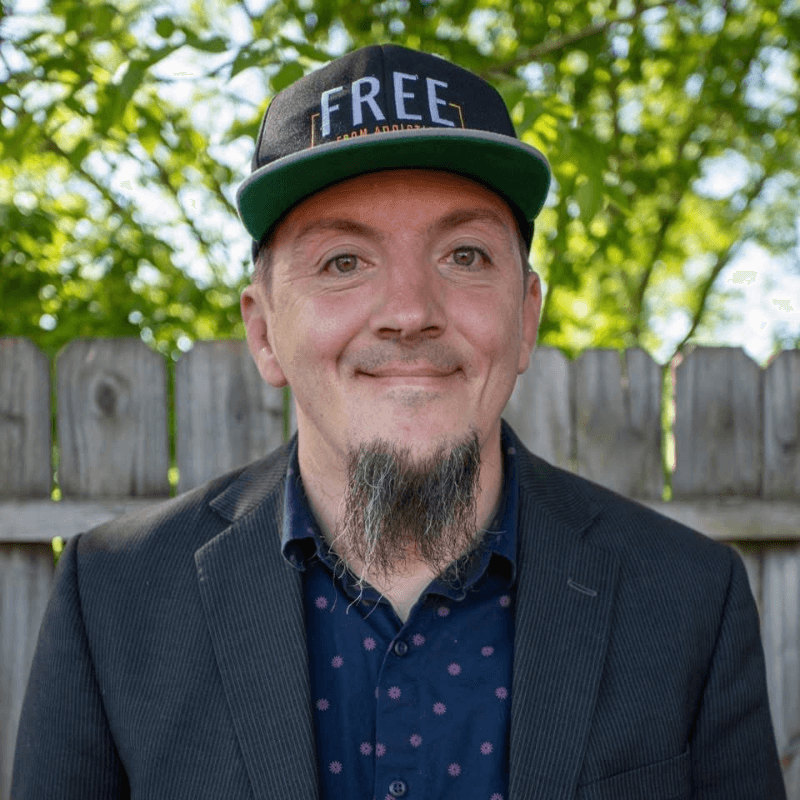
Transitioning from Brookside Church to Teen Challenge
When the higher power is named as Jesus, and there's that strong community focus, like that seems to be a huge catalyst for change. They were showing like more of a 30% success rate. Hey guys, it's Justin Franich here, and I just wanted to welcome you to another episode of Rebuilding Life After Addiction. But I'm excited to sit down because we're kind of in a new season. You know, we're transitioning just like six days out from stepping away from our role as lead pastors at Brookside Church. It's kind of fun.
Yeah, but you know, when you know that the season's done, you're ready to move on. You just kind of had to roll with it. Yeah, stepping out in faith, too. I mean, coming back to Teen Challenge and it being, you know, four years or so since we’ve done this, we’ve been in the pastoring space and now kind of rebuilding Teen Challenge. I mean, really from the ground up again. I mean, there's some foundation and whatnot, but that little bit of on, I mean, the last conversation saying the next yes, right?
Perspectives on the Transition
And so, yeah, I mean, how do you feel about that transition so far and kind of your hope for the next season with Teen Challenge and all that juice? Yeah, I'm super optimistic. I think just knowing that it was all good, the last season and being at Brookside, it was great. We learned a lot of things that we didn't know or hadn't walked through before. And so now walking back into Teen Challenge and just with a different look at it or a different place where we've grown and the ministry’s grown and just stepping back and just a new blank canvas.
So it's just exciting to be able to go forward and know that, yeah, there's going to be good things that come. Yeah, it's even still like, even though there's like, there's stability right now, but it's like, I mean, working in Teen Challenge is, it's a missionary lifestyle. Right. You know, and so, I mean, there's no, nobody writing a paycheck each week. I mean, we're the directors, you know, and so trusting in the Lord and other people to come along and support us, you know, there's always that pit in the stomach, you know, got to come down that roller coaster. Right.
Observations on Recovery Ministry
And so, yeah, but feeling confident, though, that is the right time and the right thing to do, like it helps with that pit. Like I feel confident that it's going to pan out. So what do you think about, I mean, even being away from recovery ministry for four years now and coming back into the world like, I don't know, anything different, anything stick out, you know, like? Not really anything different. Hmm. I mean, the landscape's changed, right?
I mean, after COVID, things got crazy for recovery centers and Teen Challenge, much like, I mean, I think when we left in 2019, we looked at some old board minutes and we had around 40 students in the program. And like, yeah, it seems crazy. Today, there are seven. And so it's interesting because that season, they walked through with COVID. I mean, my parents were in charge. They did the best they could, right? Considering all the external forces that control things. But looking at that again, it's like, are we aiming to go back to 40 or 50 students again?
Rethinking Student Recovery
Are we, you know, maybe building things a little differently this time around? I mean, yeah, do you thought anything about that? Yeah, I think so. And we've chatted about this just a little bit of like, it may be the less number, but I mean, in 40 compared to seven, I mean, that sounds much easier. Because 40 people is a lot, right? And so there's just so much more to do. But being at seven, like, you can really go, instead of wide, to go deep.
And really going deep is where, you know, the discipleship will truly take place to where it's like, hey, I am not going back to that lifestyle. You know, I can really focus on the hard issues and the reason why they went into addiction in the first place. So being able to take that time and go the extra step to dig deep, yeah, and so wide.
Community and Connection in Recovery
Yeah, one of the things I'm excited about doing, even with a more emphasis on this podcast and we're here, by the way, at Table 61 and one of their storefronts. It's called the green room. And our friends Jason and Crystal and the crew over here have allowed us to set up the space here. It's great. Not just for us to use, but for others. And we're hoping to do some stuff personally, you know, kind of stepping out doing some recording and podcasting for folks.
But I took a lot of pictures the first time around. Like, I've got, I've got 20 years almost maybe not 20, but I've got years of photos on my phone. But one of the things I'm excited about doing this time around as we rebuild is document in the journey, you know, kind of talking, even talking through this now. Like, you know, 40 students to seven, you know, figuring this out. Right. And kind of sharing, you know, some of the real stuff along the way.
And we've been back at this now for a few months. And I don’t know that the 12, 13 years that we were involved before, we never had a fundraiser as successful as the Josh Baldwin concerts. Yeah, that was fun. Like craziness, almost 1500 people cross two locations, and seeing God’s people show up and invest $50,000 into the ministry. Yeah, it was amazing. When we had six people in the world, like, like it was, in my mind, I'm like, why never that level of investment with 50 people?
The Power of Faith-Based Programs
No, right. You know, like we're scrambling, but it just goes to show me that, like, it really didn't matter how many people you're helping. Right. As long as you're helping somebody. Yeah, you know, you're faithful with that and God will be faithful on the other side. I've got these Google alerts set on my phone now where on any addiction recovery, like, like on faith-based recovery stories, like Google's alerting me now when new stories are published.
And so I get to pull these things up and take a look at them and I get an email like once a week with like a digest. And I saw one on there that was on, I think it was the National Institute of Health recently did a study. They were talking about faith-based programs. Actually, did the study in connection with the Latter-day Saints, which is obviously not our doctrine and not what we believe by any stretch of the imagination, false teaching and all that jazz, but they were talking about the 12-step programs that have a spiritual component in them and how they were showing like more of a 30 percent success rate.
With some of the AA 12-step groups, which are, I mean, when the higher power is named as Jesus, and there's that strong community focus, like that seems to be a huge catalyst for change. And I'm just thinking back over the years and some of the groups of students that kind of stick out over the years that we've done in ministry and like, there are names that I can recall that I can't recall without thinking about another person that they were close with.
The Importance of Community Support
And those people that tend to be doing better now, that they’re still connected, right? And what, I mean, what's been your experience? What have you seen over the years that has, like, when you see people connect, you know, that's helped you help them stay the course? Right. And I guess women have that tendency more to, like, have those, like, clicky kind of things, I guess. But I'm, I gosh, I can remember so many times when someone went to leave, when the ladies and like, we just, like, they would grab their one person and then that one person would grab another person and be like, hey, let's, let's support her.
Let's get around to her, like, she can't leave this program. If she does, like, we don't know, she’s going to make it till next week. You know, it's one of those serious things, or they're struggling because her kids are at home, and they’re missing them. And so it was like, hey, they would grab their, um, their bestie in the program. And then that person would grab someone else and then, um, and then, like, we’re all rallied around this one person.
Navigating Difficult Times Together
And so, um, just filling the connection, the community, the support, and knowing that, like, we are cheering that person on. We're cheering that lady on, like, you can make it. We'll stand by you and we'll pray through it, and we will hold your arms up, you know, we will help you get through it. And until the next call on the phone when you get to speak to your kids, you know, and then, you know, maybe after the call, then it's another, like, crying, I need to go home.
Well, let’s do it until the next week. We'll pray and help you through until the next week. And so just being able to rally around one another and to listen to the tears, you know, a couple times, like, there would be deaths, right? A student would receive the news of there was a death of a good friend or something. And so those are the times that we had to really rally around each other and support. Remember, gosh, one certain instance, and the staff member, like, literally, like, I would go down during the day and sit with the lady and as she just cried and we just, like, processed things.
And then the other staff member would sit with her at night, like, because she couldn't sleep, it was just devastating, you know, her world outside of Teen Challenge being just ripped open, I guess you would say, just broken. And so then having to walk through that in the Jesus way, you know, not running back to the drugs to numb the feelings. And so like, day and night, we sat with her, we prayed with her, you know, we just watched movies together.
Building Relationships for Lasting Change
It really was just like bringing that community and holding each other up through the hard times. And those are the relationships that stuck, you know, we walked together through this hard stuff. And, you know, we're going to continue to walk with you through the good stuff too, you know, and so just continuing that relationship and just being like, hey, you know, we might be too state the way now, but hey, that's why we have Facebook and messenger and all these things and FaceTime, you know, that we can use to stay in contact.
Yeah. Yeah. As you were talking about that, I on the verse in Matthew 11, 28 to 30 popped into my mind. I love on the message translation. It says, are you tired, worn out, burnt out on religion, come to me, get away with me and you'll recover your life. I'll show you how to take a real rest. I love that, that difference because it's not, I mean, I have a tendency to when I need rest to isolate. Right. And I'm really good at that. I do a great job isolating for people like, like as much as I enjoy being in front of people, I don't mind doing it.
I love, you know, being around crowds. I also really enjoy being a loner. Um, which seems weird, but that's my life. But Jesus goes on to say, this is the message, Eugene Peterson's translation. The paraphrase. It says, walk with me, work with me, watch how I do it. Learn the unforced rhythms of grace. Right. I won’t lay anything heavy or ill-fitting on you. Keep company with me and you'll learn to live freely and lightly. Right. And, and that, that piece right there is unforced.
Overcoming Expectations in Community
Right. I won't lay anything heavy or ill-fitting on you. And I think a lot of times we struggle to engage in community because of the either spoken or unspoken expectations of that community. Right. And so we step into a community and it's like, what are they going to require out of me? And, and that's not like giving and serving, like shouldn't be because of somebody else's expectations. Right. It should be because God has, you know, set this thing on your heart.
It's out of a cheerful heart, right? That we're choosing to serve. And I think even in the recovery world, right? What are they going to think about me? There's this expectation that if I don't lay this all down and I don’t, like, I should have the anorexia and not need accountability to the bathroom or the bulimia or whatever, right? I should have that fixed day one coming into the program. And so we've watched that over the years, staff members like, Hey, it's three weeks. I still got to go to the bathroom with them.
The Deeper Journey Through Recovery
Like, you know what I'm saying? And so we can even put these expectations on people to change quicker. And like, and so waiting into a community of people who know how to walk in these unforced rhythms of grace, right? Like is the challenge, right? Yeah. And actually had before I had walked through a lot of the things, you know, I had I never struggled with the anorexia or bulimia. And so like in my thigh, at first, I was like, dude, this should be easy.
Like let's just do it and you'll be good. And but really learning the depths of it, like working through workbooks with ladies, working through the situation and really like, oh my gosh, this is so much more and so much deeper than like, Hey, one one day, you know, sure. There could be a miracle and that could happen. Yeah. Absolutely. But like what we saw was just it was the every day renewing their mind. Like, yeah, just walking it out and having the accountability to support them.
Challenges of Community Building
Yeah. Yeah. That’s really good. I just love that first, that first verse and the way this is written, are you tired, worn out, burnt out on religion. Right. You know, I'll show you how to take a real rest and I'm, I'm working on learning those rhythms in my own life, even now. I don't think this learning process of because there's so many things that become imperative to community and an impediment, right? Like that become an issue with us engaging in community, whether it's expectations, whether it's offense, right?
You know, there are so many little things that can trip it up and like, and every season of life, like it's different. You know, and I'm even sitting here in the table, I think, about Jason saying over and over and over, like we just want a group of people that do life together. You know, and I think that's what TC has always been. Right. They say you're not supposed to become great friends with the staff, but like, like I turn out to you, when you're together all the time.
Scaling Community Effectively
Right. Like who else is going to sit up with me at three o'clock in the morning after I finished doing drug tests. You know, with students and searching dorms on that type of community. It’s just, yeah, that’s where relationships form. Yeah. Yeah. Yeah. And so I think, I don’t know, maybe that's the kind of circle on this back around. Maybe that's where we're heading going forward, right? It's, you know, if, if God sends us 60 people and we get a huge campus and we can do a large scale Teen Challenge again, then, and we can do it with community and great, you know, but if we continue to run agents and students, and that's one of the things I'm just looking at because I’ve said to you over and over, I don’t want to do it the same way.
Moving Forward with a Fresh Vision
And not that it was all bad. We had some great moments, you know, but it's like it's a different season. I'm different. You are different. And like, I’m just praying into that in this season, like God, how, how do we do this well and not sacrifice community? And that's one of the challenges. How do you scale community? Church of struggle with it. We struggle with it. We had 15 staff members at one point. How do you, how do you build intimate connection with 15 leaders?
You know, how do you build intimate connection with 60 students? And, and I, I don’t necessarily believe people who say they figured it out at scale like that, because like Jesus only had 12. Right. And like, he was the son of God. And so I think there's layers to it. I think there's decisions to pour into certain people, those people pouring into other people. And there's a, like a community that way. But like, that was one of the things I think I do regret the first time around was like not thinking about how to scale community.
Inviting New Opportunities
Right. Like, so it is significant and deep. Right. And, um, yeah, I think it's when it's like, um, I think we could think too hard to like, yeah, like what is the step? I step to do this, but like, and then not let it just naturally happen as well. Of course, we had to take some time and be like, well, let’s, you know, this set person should be like head over this. And so let’s really pour into them, like you said, and then they’ll pour into others.
But then a lot of times, I think it’s just like naturally can happen when you have the person who has the same heart, you know, who was like, hey, I want to go after this with you. And so it's not like, hey, let’s intentionally do this, but it just naturally overflows. Yeah. Yeah. I always wonder like I saw on Instagram real a few weeks ago and on it was, uh, it was this mattering together of clips of on like all these different church leaders like like talking about their small groups program and how they're unique in its individual.
Exciting Upcoming Events
And like all it was like 30 different churches back to back to back. We're going to get in circles, not rows, circles, not what you don't know about. And it was the same thing being said by all these places, all these different churches. They weren't connected. Right. Oh, funny. And so, you know, even that trying to systematize community. Right. Yeah. It's like, yeah, I will it be successful. And then, yeah, not letting it just kind of happen. So yeah, I mean, it’s just letting things, letting the community grow organically.
Right. And really leaning into that in the season. And I think it's going to be good. So we've got a couple things coming up. I wanted to talk about right. So we’ve got Ben Fuller. Yeah. Super cool. You’re excited about that. I am. Yeah. I’m learning his songs, right? Because I hate going to a concert where I don’t know any of the songs. So I know like two, but like, I’m really listening to his playlist so that I can be in the songs, you know, not just seen the concert.
He’s got that country sound too. He does. And that’s a new Brandon Lake has done some country style uses it. That’s like a new thing. It is. It’s like, yeah. Yeah. Which is funny. I don’t know if everyone’s going to country. I particularly don’t like country music. And so, um, don’t say that. Sorry. Ben’s coming. Okay. But I do love that music. Anyway. But my girls are going. Our girls are going on a youth retreat. And what are the nights? They do spirit nights is cow girl or cowboy or they can do country club.
Engaging with the Community
So they can pick whether they're going to be cowboy or preppy. Yeah. I’m going to try to get and reach out to them and try to see if I can sit down with Ben. I think that'll be fun for the podcast. Yeah. You know, like, I don’t get these names into often. Right. You know, but you can’t take advantage of that. Yeah. And it's been fun. We haven’t done a lot of promotion tickets are starting to sell. Okay. And so that’s going to be good. If you’re on, by the way, like, if you want to be involved in the concert, there’s a couple of different ways you can do it for our local folks.
You can certainly purchase a ticket, but on there’s also sponsorship packages. And I’m really excited about those for both churches and businesses. So if you’re interested in sponsoring the concert, we have different levels. Some of them include like, um, your name on the flyer or your business name on the flyer. In addition to that, some of the packages include on us mentioning you on the social media platforms, which is great because I think across both Teen Challenge and my personal platforms right now, we have an audience of around 25 to 30,000 people. Awesome.
The Need for Sustained Support
Which is crazy. And so we’ll be happy to also promote your business for those you who run businesses. Um, it’s not just a donation. It can also be an expense because it’s an advertising deal as well. And you get to support Teen Challenge. And so I'm excited about that. The, again, I, I’m still like one cloud nine from Josh Baldwin. And there's like this pressure. Like it's got to be better. Right. And, um, like I had like my fangirl moment on the stage.
And so I think I'll be all right with Ben. I’ll be a little more reasonable. But like, it just kind of pensioned myself. Like, like what the heck is happening? Yeah, like so. But Ben's got an incredible addictions testimony. And on, and I’m excited about that. And on, yeah, I think it’s going to be good. And I also think going forward, we’re going to be booking Sunday morning services again.
Opportunities for Ministry Engagement
And so whether that is us individually coming out to speak, we’re not, uh, showcom and sit and watch and shake your hand. But on, but if you’re interested in having us come out and share and testimony and also deliver a sermon, deliver my story or whatever your needs are, we’d love to bring Teen Challenge back out to do some of that. Yeah, absolutely. Yeah. And so I’m going to ask you a question. And I think this is going to be good for the podcast. And then also we’ll pull some clips out of it later. But on, like, monthly support.
The Importance of Monthly Support
Like, I wanted to get your feedback. Like, what are, like, how important is it? And what has some of the struggles been, like, not having that over the years? Sure. And kind of get some of that conversation on. Yeah. Well, reality is, right, everyone has bills and they have things to, um, to pay for. And then we can think about gas and rent and all that stuff. But like, really focusing on like, I guess the extras too. And so like a program can be a program, but us also can be enjoyable.
And so yeah, your support is so needed just to really just bring the program full circle, you know, to be involved in every aspect, the fun stuff, the hard stuff, the curriculum stuff, the things that, you know, they have to do in the program. But also the stuff that make it just full for the student and the family to be involved. Yeah, that’s good. I was talking to somebody the other day about how our social media team, actually, and I were talking about how difficult it is to raise support on the internet for men.
Engaging Communities for Support
Yeah. He was mentioning that people like saved, saved the children, right? I mean, I get the St. Jude’s YouTube ads all the time. The puppies and the puppies and like a land is more set with SPCA for years, right? Or is it? Was it her? I've done it. It’s one of those artists, Sarah McLaughlin, one of them, I will remember you remember that. Oh, yes. It’s sad. Me to cry. But like, I get the St. Jude’s research commercials and like, it’s just, you know, and it should be like, it’s kids, right? Nobody argues with that.
But like, like 30-year-old men, they don’t get the same. Right. Yeah. But you have to remember that it’s 30-year-old men, but it’s also their kids here at home. It’s their mom and dad who’s taken care of their kids while they’re here. And so it’s more than just, hey, yeah, just in the program. But it is sponsoring the experience. And so yeah, your support is so needed just to really just bring the program full circle, you know.
Investing in Futures
And to be involved in every aspect, the fun stuff, the hard stuff, the curriculum stuff, the things that, you know, they have to do in the program. But also the stuff that make it just full for the student and the family to be involved. And we’re helping them become who they need to be, right? Absolutely. So awesome. Well, this has been fun. Yeah. Good times. Do you have anything else? Do you want to say? No. Thoughts, comments, neither marks. No, I think good.
Well, thank you guys for jumping. And it was fun to kind of have this, not, it was fun to have this conversation on one community. And, um, yeah, we’re just excited to have, you know, the opportunity to keep putting these episodes out. I’m really looking forward to the future with the podcast. I’ve got some phenomenal conversations coming out. We’ve got one coming out this Monday. This won’t come out soon after. And, um, well, you don’t know that because when you see this, it’ll be the first time. But our plan is to get at least an episode out every Monday.
Continuing the Mission
And, uh, and so you can look forward to that on the YouTube channel. Please, if you’re here, hit the like button, subscribe. And we would love for you to leave a comment. The comments help share this with your network as we continue to grow. And, uh, really the mission, right? We’ve seen challenge. We want to put hope within reach of every addict. One of the things that I’ve seen for a long time is the necessity of social media, right?
The necessity of podcasting video stuff to reach a broader audience. Sure. And I think that’s the part like having these conversations, um, on drawing people into the community. So please engage with us. We’d love to chat. Um, if you’d like to support the ministry, we’ve got the Ben Fuller concert coming up. And we’ve also got our monthly support program team hope. So if you’d like to be involved in either of those, I’ll drop the link in the description. And thank you again for joining us. And we’ll see you soon. See you.