
Rebuilding Life After Addiction · October 13, 2023 · 27:47
Breaking The Cycle: Mastering Relapse Prevention In Addiction Recovery
with Rob Grant
Relapse doesn't start with a drink, a needle, or a pill. It starts way earlier. In the mind. In the emotions. In isolation. Rob Reynolds has been free from addiction for 13 years and has watched the warning signs play out over and over. Communication drops. Healthy routines fade. A guy stops calling people back. He starts drifting from community. Then the dominoes fall. We cover relapse prevention, community, emotional triggers, and boundaries with a Jesus-centered approach.
If this episode hits home
New episodes, straight to your inbox
One quiet email a week. No pressure, no spam.
Read the full transcript
Understanding Relapse as a Process
And cycle the relapse and it talks about relapse as a process, right? Not a single event. And then it goes back to what you were talking about just a few moments ago. There's emotional, mental, and invisible, right? And like emotional kind of starts out with like the denial of the circumstances. And then there's mental where it's, I'm reminiscing about it now. I've had an issue in my life. I've got struggles that I'm dealing with. And so now instead of dealing with those issues head-on, I deny what's happening. And then I start to think about a solution, which is reminiscing about drugs. And then that leads to the physical, right? And so it's not always a, I just got up and decided to go out and do drugs today. It's, there's a process. A lot of times I think that's when you start to see the individual struggle with addiction in the past. They start to disconnect, right, from people. When they're in that emotional state, you know? There's a little bit of, I'm pulling back from the people that I can actually help you. And then they're living elsewhere immensely long before they decided to use.
Recognizing Warning Signs of Relapse
Thought it would be fitting to really let some of our audience know some signs to look out for when those that we love and cherish are struggling with their addiction and maybe even sober for a period of time. And they end up going back into that addiction or that formal life habit. What would you say are some good tools or some good warning signs that we should look for people that are about to relapse? Yeah, man, it's hard to notice that, right? Sometimes, and I think there's that challenge of seeing the best in people at times, right? And we want to, especially when you're walking somebody through addiction, like you've got to be able to see the best in that person to see what's unseeable. But you can't allow that to push you into a place of delusion that you ignore the warning signs. I almost talk, I think that these warning signs, especially being able to notice them and see them are important because they've ever seen that domino, right? You said you clicked that first one over and then it ends up setting off a chain reaction.
The Importance of Setting Boundaries
There are behavioral signs. There are stuff that people are doing. There are physical signs and all of that. But it's man, when we see that stuff and we see that first domino click over, it's man, you got to know that one thing is a big deal, right? We want to give grace and not hold accountable. There is a difference between accountability and punishment, but we want to give grace and not hold accountable. And we don't realize that man, that one domino can set off a chain reaction. I don't know if I answered your question or not. Yeah, the thing that I thought about was, and I can't remember the name of the book, but I read it through my internship in Team Challenge. I want to say it was boundaries for parents, but there was a particular portion of the book where it said how we're not to look at our grown adult child or our grown adult as a child of the infant stage in diapers, because we had this idea in our minds after one overcomes addiction and goes to a rehabilitation center.
Acknowledging Adult Challenges in Recovery
They're like, oh, whether it's three, six, a year-long program, they've completed it. And it's like the parent's guard gets put down because they're like, oh, my child has completed a task. He's done something or she's done something that she's never done before. There's my little Johnny again. There's my little Abby again. And the reality is that they're not little. They're grown adults. And when proper systems aren't put in place, and you allow yourself to be that individual that enables again, rather than instructs and corrects, guides as a parent should, you often give those that are struggling in addiction the opportunity to utilize your vulnerability as the weakness that it is. And they're like a lion and they prey on that. They're like, yes, like this is my opportunity. Moms guard down, hey, mom, let me hold this or hey, mom or dad, let me do this. And I know for myself, man, I didn't really have that parent model figure in my life, but when I was going through my addiction very much, but I do know that when I got out of Team Challenge and I reconciled with my mom and my stepdad, there were moments in my mind that I thought that I can play the trick on men when the reality is that I was only playing the trick on myself.
Building Healthy Communication
So I think something that's really beneficial for people to look out for as a warning sign is that when you don't have proper systems put in place, or if you don't necessarily look at them as the adult that they are, it can cause you to put your guard down and open you up for opportunities for your child to redo the same thing that they've been doing all those years. Yeah, absolutely. I think too, because we're, I think for loved ones, I don't have any adult children that have walked through this, but I've got family members. I've got siblings that have walked through this process of I was clean, I had my life together and now I'm trying to help them out. And I think sometimes it's easy to overlook because we're afraid to lose in them again. And I know that's a fear that some parents have to probably deal with. It's, man, I finally got my kid back. I finally got, they're active, they're in my life. I see the person that they were before the drugs in alcohol.
Long-Term Recovery and Support
And so like, they're close and I enjoy that, enjoy that closeness. And so it's, man, if I step in and hold accountable, then what if they run off the rails again? And so sometimes it's easy to overlook, but man, there are on, I used to talk about this a lot. And I've seen it in so many people where there's like a mental and emotional relapse that happens way before the physical relapse ever takes place. I think about it. Yeah, but there's like that lifestyle, right? The hustle and mentality that some people carry like when you've been in a lifestyle of dealing drugs or whatever that might be, like that mindset of continuing to live like an addict, you know what I'm saying? And not becoming whole again, not becoming the new person in Christ. And there may not be drugs, you know what I'm saying? But that's what we've talked about a lot of getting to the root causes of addiction, dealing with those and getting healing because not putting a needle in your arm isn't the only thing that elicits recovery, right?
The Challenges Beyond Physical Addiction
In a new life, there's so much more work beyond just using. I would argue that stopping the physical substance is the easy part of recovery. It was painful, but that's the easy part. Dude, it's, I think about my wife, for example, she went through Walter Holy Home in Las Vegas and she was, or so she thought, she was gonna go to a Bible college in Arizona. And she came back to the dorm after visiting her family, I believe. And there was a notice stating that there was an internship at FEPC, lo and behold. And she prayed about it and the Lord told her to go that way, right? So she had just graduated, she's doing this internship and she literally moves cross-country to another totally different state, no familiar surroundings, people just formed to her, right? And there's something about starting new.
The Role of Routines in Recovery
But one thing I've learned about my wife and I understand is that like, when her life, if she doesn't organize things, it's like a warning sign for me to ask her, are you okay? Because I know how she was or she's expressed to me how she was when she is not well, these are the certain habits that she has, right? It's good, the chaos that's in their life. And I think one of the most important things that we can do for our children, for those that we love that are struggling in addiction is ask those kind of questions, how can I help you? Rather than trying to be the savior of the situation, really learning to surrender and trust God with the child because the child is at the end of the day, but really just asking the question and coming alongside them as another brother or sister in Christ and saying, hey, how could I help you? Like where do you believe your shortcomings are? Where can I hold you accountable?
Encouragement Through Challenges in Recovery
And I think in asking that question allows that individual to understand that you're not there to prevent them from doing what they want to do and dictate how they live their lives. But also what you're doing essentially is opening up the door to say, hey, look, I'm here for you. I'm not against you. I'm not going to condemn you because you relapse. But I want to make sure that I get you to the destination that you've been called to go to because your life is more valuable than that needle or that pill that you're going to use. Yeah, absolutely. I was a critical surgeon over here and I found some stuff on the cycle of relapse and it talks about relapse as a process, right? Not a single event. And that goes back to what you were talking about just a few moments ago.
The Emotional Disconnect in Addiction
There's emotional, mental, and physical, right? And like emotional kind of starts out with like the denial of the circumstances and then there's mental where I'm reminiscing about it now. I've had an issue in my life. I've got struggles that I'm dealing with. And so now instead of dealing with those issues head-on, I deny what's happening. And then I start to think about a solution which is reminiscing about drugs and then that leads to the physical, right? And so it's not always a, I just got up and decided to go out and do drugs today. It's, there's a process and a lot of times I think that's when you start to see the individual struggle with addiction in the past. They start to disconnect, right, from people when they're in that emotional state, you know?
Recognizing Changes in Routine and Communication
There's a little bit of, I'm pulling back from the people that can actually help me and then they're living elsewhere immensely long before they decide to use. Wow, so it's like the organic conversations that say you might have sat down and ate breakfast with the family every morning and then now it's a way he's sleeping in. Why is he sleeping in? He used to go to the gym, why is he not going to the gym anymore? Or like just the things that you would see them pick up. I think after recovery is a telltale sign, right? Because generally speaking these rehabilitation centers, they're systems that are put in place that they abide by. PC taught us to wake up early, make our bed, do a devotional, you had breakfast, you did a devotional, you had your workday, you came home from your workday, did whatever, a little bit of free time, had dinner and had chat.
Building Community Support in Recovery
There was a routine, I think routines are really good. And I think one of the things that you can look out for if you're a parent is what's the routine of my child? And maybe they're not living at home and I think that's hard too and they're not living at home because we have to address that too, right? Because a lot of these people may not or may be they are, but may not be living at home. So like how do we handle that, right? You don't want to be overbearing and you don't want to be like calling them every single day. What are you doing? Did you eat your breakfast? Did you take your vitamins? No, but they don't want to be that weird parent. But that communication, when it decreases, that's the question. Whatever is your normal, right?
The Importance of Being Attentive to Changes
So whatever is your normal activity, the level is a communication. If that starts to just drop, like I would be asking questions, right? And the one thing I noticed too, outside of some of those folks that like to take these random social media fast, but like when the TC graduates that I worked with were doing well, they are posting on social constantly, right? Now those are, that's for the ones that we're using Facebook. Obviously there's a whole generation that has moved to Snap and TikTok and everywhere else where they got to disappear in messages and people still like that for some reason. But for those that I was connected with on Facebook, when they were doing well, they were eager to talk about it. And then all of a sudden, they just go to their social media presence. Because nobody's going to shout their failures out. And those are the times where it's, brother, I haven't seen you posting a while. Are you doing okay?
The Value of Open Communication
Yeah, man, I'm just, and the one conversation is, yeah, man, I'm just, I'm taking a break from social or whatever. And it's just, I'm here, I'm praying for you, et cetera, et cetera. Look watching that. Yeah, that, that's why I like, I like the whole idea of what Ace talks about a lot, like recovering out loud. And because it is that accountability piece. And so if I'm a parent and I'm seeing that, and I'm not living it home with them, I'm gonna probably start asking some questions. I don't know what about you, what do you think? It's hard, right? Because this is just from my perspective, coming out of addiction, and not already having a really well established relationship with my mom, and then trying to create that was born and awkward, right?
Navigating Relationships After Recovery
Like at first, because it was like, man, I love my mom. She's an amazing woman of God, like all these great things. But how do I cultivate a relationship that was never there? And I didn't know how to do that. And a lot of times in my addiction, what I ended up doing, Justin was really pushing people away. And though I was well, I still had a tendency to push people away. And that people to hear me say that, it's like, what do you mean, Rob? Like you're the most outgoing individual in the world. Yeah, I'm actually a really good extrovert slash introvert. Like I like being by myself. And so I'm really good at keeping my distance with individuals and the saying is like playing the part. Like I could fool people to believe that everything was okay when things weren't okay because I didn't want to let people in.
Developing Healthy Boundaries in Relationships
Because the second I let people in, it was like it was exposing all this baggage and so on and so forth. And there's only a few people that I let in because it's, I don't want to deal with the drama. It's like going back to answering your question. I think that is good to have that healthy boundary relationship and communication with your child. But also too, for those that are struggling in addiction, it might take time. And I think it's important to understand that's the parent to give that space and let it happen, let it happen organically. Don't be overbearing, but let it happen organically. Make your presence know whether you set up a call once a week. It's, hey, look, you don't have to call me every day. I just want to hear your voice once a week and check up on them, right? Maybe you go out, you have a bite to eat or so on and so forth.
The Journey Beyond Addiction
But sometimes, man, it can be overbearing because it's something that's new to them. You got to understand you were once dead, you've come back to life. You're under this new way of living. And now all this, it's almost overwhelming because everybody celebrates you and praises you. And that can be very dangerous in and of itself because stepping out of addiction, getting all this praise, it's, boom, then when that dissipates and it's no longer there, it's, oh wait, what's going on here? Why aren't people praising me and giving me all this glory? It's like my child, when she's two years old and she uses the potty, we're like, yay! But imagine doing that within adult, you're 24 years old. You just use the bathroom, yay! Johnny, you use the bathroom. I'm so excited, I'm so happy for you. You know what I mean? And so it's like how do we navigate and walk alongside our child? Or let's just say our friend, right? Let's distinguish the difference, right?
Intervening with Care and Compassion
Or separate the two, right? It doesn't have to necessarily be parent and child. But how do you walk alongside your friend and help them? Yeah, I think I look at it like the good Samaritan. If they're broken and they're hurting, don't just walk past it. If you acknowledge something, even if it results in the relationship being broken, don't let your child just sit there in pain because you're so afraid of them no longer wanting to be in relationship with you. No, that's not, a friend that loves looks differently. You know what I'm saying? And so like sometimes these warning signs are there, but parents are afraid to say anything because they don't want to lose their child like they previously did in the past. And so we have to be careful to not allow these things to slip through the crack and be very cautious to understand that this is someone's life that God has stewarded you with. And you have to take responsibility for that. And yes, it's hard.
Encouraging Growth and Accountability
And sometimes you can't do anything, but if you have the ability to do something, speak up. Yeah, for sure. No, thinking about that, man, just knowing what that process and that journey or recovery is going to look like. I shared an illustration like I ran cross country in middle school for a couple of months. I wasn't my thing, but I did my first meet, my first cross country meet. And on I think about running those longer races like that. And I imagine outside of doing these huge marathons and these big cities where people are everywhere cheering them on, I noticed something. There was a crowd of people at the starting line. And there was a crowd of people at the finish line, right? But the in-between stages, it was just me and the trail. And recovery feels like that a lot. You know what I'm saying?
The Journey of Recovery is Often Isolated
Like when I'm starting, especially just starting out getting a life together and you start sharing the testimony. And this is what God is. There's a lot of people there cheering you on. But then as you begin to mature, you know what I'm saying? You're going to get further along in this journey. That crowd falls off. And so unless you've been real intentional about building the disciplines to put good people in your life or really work on the mental game to be able to endure, then that section in between the start line and the finish line can be difficult. And so I think for parents, it's knowing that it's man, they are still building those disciplines. They're learning how to deal with themselves. They're learning how to be themselves, figure out who they are as people. And that's a journey, man. That's a long drawn-out journey.
The Role of Encouragement in Recovery
And fighting that mental game is sometimes hard. And so if you see them step off or slow down or start to do something differently that's maybe out of character of the new person, those are the moments where like you said, I'm just stepping in and cheering them on. I'm encouraging because no matter, I'll say this, if I know for me, no matter how old I get, I still enjoy affirmation from my parents or other people. Always do. It just doesn't matter how old I get. I send a video to a client and they send a message back and say, man, you crushed on that video. Like my eyes light up when I read that. I enjoy hearing that.
The Importance of Affirmation
And so those are the part where we can be intentional loving somebody that we might think is slipping to just speak life. Yeah, no, that's so good. I remember Greg Hammond from Teen Challenge. She always said, is Robert Eureman? He's, I've never met any man that has ever said that they've been encouraged too much. You can never encourage a man enough or a woman enough for that matter. But the thing that really sparked something in me with what you were just saying is looking at how you see them in their condition and you see where they're weak and you come in and be strong.
Embracing Weakness as a Pathway to Growth
And it makes me think of the passage of Paul or our second Corinthians where Paul said, your grace is sufficient for your strength is made perfect in my weakness. Yeah. And I think we need to take a second to understand that. It's okay to be weak. It's okay to be weak as a parent. But it's okay to be weak as one that has overcome addiction and is going through the rehabilitation process. Because your weakness doesn't define who you are. Your weakness opens up opportunity for God to come in and usher his presence.
Surrendering Control to God
Yeah. And so God wants to work in your weakness. And I think we have this facade, this idea in our minds that when we're whole, we have it all together, we're gonna have everything figured out. We're gonna be able to conquer the world. And the reality is God, I don't want you to have it all together and be able to conquer the world. I want you to be weak so that you rely on your opponent upon me and me alone. And see, when you come out of addiction thinking that it's you that have done it, that's when you end up going back into your relapse because you begin to compromise and go and do things that you used to do before thinking that you're strong enough to be surrounded by those individuals that were once like-minded like you.
The Need for Community in Recovery
And the thing is is I can't do that, bro. Like I just, I can't. Like I can be around people that drink and stuff and have a beer or whatnot. But I'm not gonna sit there and be at a party where people are getting the bluer. You like, it's not gonna do. Like I don't choose to do that. But it's 10 years from you're strong enough. No, I'm not. I'm still in the flesh. There it is, that's good. I'm still in the flesh. Yeah. That's like saying, hey, look, I'm gonna put you in a room full of women and I'm just gonna- No, dude, I'm in the flesh. I'm married, I love my wife, but I'm in the flesh. I cannot do this. Jesus tells us you can do nothing apart from me, right?
The Power of Community
And see, this is why community is so vital to those that are going through anything in life, especially in the rehabilitation process. Because when we come together and I heard this man say this and I'm gonna give him credit, nobody really knows who he is. He works with me. Awesome man, a faith, he came out of addiction, but he said community, common unity, community. It's a common unity. What is your common unity, right? Find the common unity with your child and bond again. That's so good. Yeah, man.
Nurturing Relationships Through Shared Experiences
And I think when you learn to bond with your child begins to open up and I know this because of the relationship that I've been able to build with my son over these last couple of years. When I got to bond with him on this recent camping trip, he's like, Dad, I gotta share this with you or dad, I gotta, and it's cool to see that, but it's because we connected. And I think often we try to connect with our children in a wrong manner because we have our own ideas of what it means to connect. When the reality is, it's not about you.
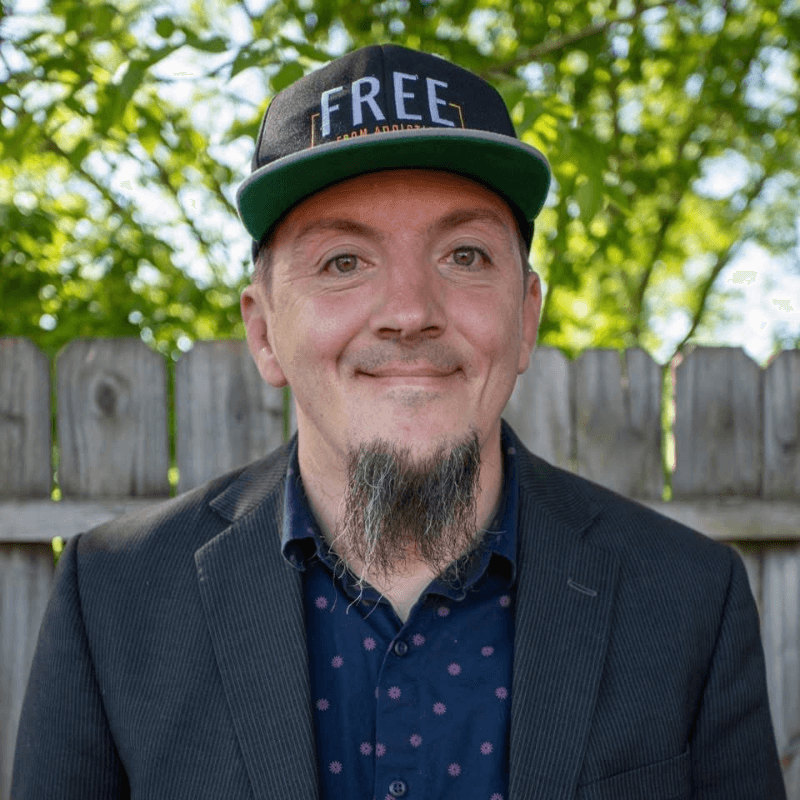
Justin Franich
Justin Franich is a former meth addict, Teen Challenge graduate, and pastor who has been clean since 2005. Today he's a husband, father, and Executive Director of Shenandoah Valley Adult Teen Challenge. He hosts the Rebuilding Life After Addiction podcast and helps families across the U.S. navigate faith-based recovery options, compare programs, and rebuild life after addiction.
Read my storyKeep going

Monthly partners
Episodes like this stay free because partners keep them free.
Monthly partners cover the studio, the phone line, and the family guidance behind every episode — so the next family searching at 2 a.m. finds real help, not a paywall.
Become a monthly partner