you know, falling on my face, getting arrested, you know, going and having to be on prescribed all kinds of different medicines. Doctors told me I'd have to take medication for the rest of my life just to be normal because of childhood trauma. That's like a whole other part of my story, you know? It's just like what kind of led me to start using drugs and alcohol. That was based upon, you know, a lot of hurt and trauma from the past and a lot of wounds that took place at an early age. Growing up in a dysfunctional home and family, my dad was an alcoholic, uncles were alcoholics, and my mom was adopted; both of her birth parents were drug addicts and alcoholics. I mean, like I had this notion as a little kid that I can't drink or I can't do drugs because more than likely I'm going to become, you know, my dad or I'm going to become somebody who struggles.
The Challenge of Reconciliation
Even when we attempt to reconcile and maybe it doesn't work out like we anticipated, you know, or they don't respond to our letters, or us reaching out and apologizing, you know, that can take us back into that dark place. I'll just be curious to see how you dealt with that, you know what I'm saying? How you dealt with some of those moments, maybe when the reconciliation didn't work out as you anticipated or as you hoped, and how you prevented yourself from going back into that dark hole or coping with it maybe like you did prior to rolling into a program like Teen Challenge. Whatever strategies you used, you know, to stay the course. I'm married and I have three kids, right? So I know it's crazy, dude. You don't have kids yet, but that probably puts a whole other spin on things, right? Like it's like finding purpose in Christ. You didn't find purpose in man, and you no longer need to find validation in man because you've already received validation from God.
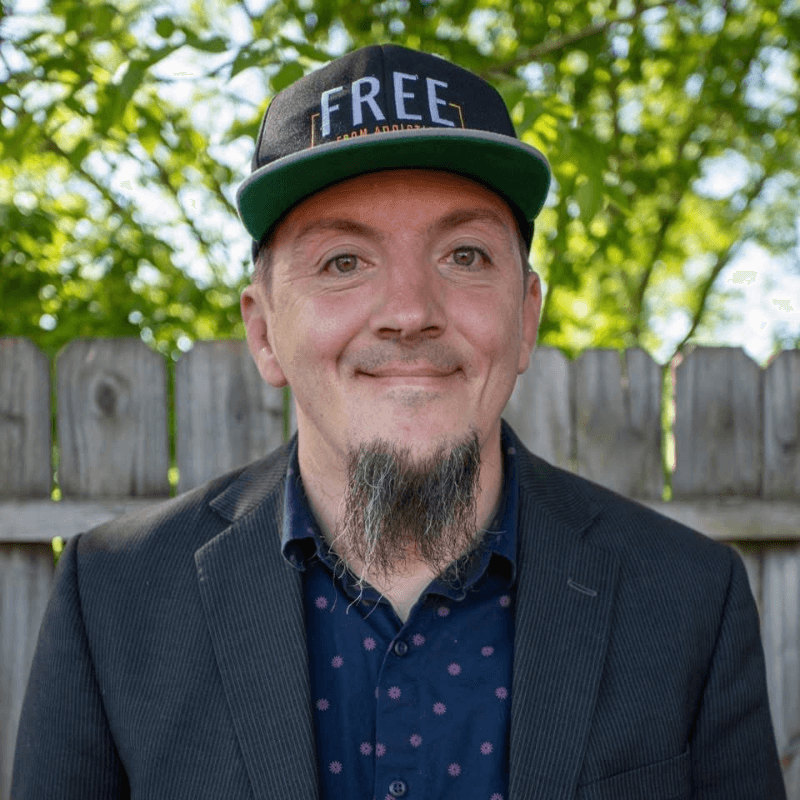
And so in that, when you find this relationship and this connection with God, the relapse becomes a thing of the past when it surfaces its head. It's not like, "Oh, look, I'm going to do this thing." It's like, "Wow, I value this relationship more than I value this." I rely so much on the Holy Spirit's empowerment today because the thing is, in my own nature and my own flesh, I am weak, and that's okay. You know, it's okay to be weak. It's okay to not have it all figured out, but it's like when we're weak, He is strong. So I just want to say thank you, guys, for everybody that's going to be listening to this podcast today. We have an awesome guest that we would love to introduce to you. His name is Tyler. He's a graduate, he's a husband, and a devoted follower of the Lord who loves to reach lost people. So without further ado, let us have Tyler just kind of give us a brief context of his history, where he's at now, and where he's going in the future by the leading of the Holy Spirit.
Tyler's Journey to Recovery
Yeah, absolutely. Thanks, guys, for the opportunity to hop on here with you all. I just wanted to encourage you guys. This is crucial, and I love the dialogue and the conversations that you are having, especially with the perspective of reaching out to those that might not have community or those that might have strayed away, and just really bringing people on that can share a message of hope and encouragement, you know, at this time. It's a time where we need community, and we need each other. So I appreciate what you guys are doing by bringing people together to share their stories. So keep up the good work in that.
But yeah, my story started, man, like I started pursuing recovery before I started pursuing Christ. I was the guy that tried, like after high school—I mean, when I had a full-on drug and alcohol problem. I started seeking help in my early 20s, like even as early as like 19 years old, like I realized I had a problem. So I was going to AA meetings and pursuing clinical counseling and psychologists, going into different residential treatment programs. I went into a couple of different programs before I went into Teen Challenge in January of 2016, and every time, man, like I realized I had a problem and that, you know, I was in this vicious cycle of relapse. Falling on my face, getting arrested—having to be prescribed all kinds of different medicines. Doctors told me I would have to take medication the rest of my life just to be normal because of childhood trauma.
And that's like a whole other part of my story. It just led me to, you know, start using drugs and alcohol based upon a lot of hurt and trauma from the past, and a lot of wounds that took place at an early age. Growing up in a dysfunctional home and family, my dad was an alcoholic, uncles were alcoholics, my mom was adopted; both of her birth parents were drug addicts and alcoholics. So I had this notion as a little kid that I can't drink or I can't do drugs because more than likely I'm going to become, you know, my dad or somebody who struggles. But high school came, you know, and I began to experiment. By the time I was a senior in high school, man, I tried pretty much every drug that was out there. In that phase, I was a regular marijuana smoker and started drinking and partying. But once I failed out of college, that's when like narcotics really got a hold of my life, and I started really doing a lot of opiates and cocaine.
At that point, once I fell into the trap of an opiate addiction, my life just got reckless and out of control so quickly. So I was extreme in nature; I would kind of just have one drink or smoke a little bit of pot. Everything I did was extreme in nature, but after going through a couple of different programs and not really processing what was going on in my life, I was 21 or 22—this is actually the age that PTSD manifests in a young adult male. PTSD manifested in my life, and for a period of two years, I went through flashbacks to trauma that I experienced. I was dealing with suicidal thoughts and depression to a magnitude that I never felt before. I quickly began this path of either dying from an overdose or dying from suicide because of the pain I felt inside. I was 25 years old, and I thank God that I met Him when I did at 25. I was actually in South Florida, of all places, close to where I'm at serving the Lord today, in Fort Lauderdale and Pompano Beach, in a program that was an extended care facility for dual diagnosis—depression and drug and alcohol addiction.
I remember just laying in the bed of that facility, and I was like, "Man, I'm just so sick of this cycle of in and out of programs, sick of getting arrested, sick of the medication," you name it. And through that dialogue that I was having with myself, like the words "Teen Challenge" came to my mind. I was like, "What's Teen Challenge?" I was reminded of the first program I went to when I was 19 or 20 years old. I used to be a two-pack-a-day smoker and walked by two guys sitting on a bench. One guy said to the other, "They're trying to send me to Teen Challenge," and you're on program. This was like five years later. I realized in that moment that there was no reason why I should have remembered that, but I recognized that it had to have been God who spoke that to me. It made no logical sense why I remembered a conversation. That's like me going to Walmart and overhearing a conversation, walking into a door, and as quick as you hear that, as quick as it's gone. But the Lord decided to use that as a seed, and that's what led me to Sanford Teen Challenge in January of 2016.
When I told the program, "I want to go to Teen Challenge," they were like, "Man, you don't want to go to Teen Challenge; that's the Christian program. You won't be able to smoke cigarettes or this, that, and the other." I was like, "Listen, I will stop all that today if it means getting into that program." I left it all behind and went into Sanford Teen Challenge. It was just my second week in the program that I met the Lord during a time of worship and praise in the chapel. At the time, it was carpeted. I remember walking down to the front and hitting my knees on that carpet and just said, "Jesus, I need You to come into my life, forgive me of my sins, and ask You to come into my heart."
In that moment, I felt the presence of God, and I just cried. It was the first time I cried in what felt like years. Guys on the program came up, they laid hands on me and prayed, and that was when I actually felt the love of God demonstrated through people. So it was my second week in the program, man, that I met the Lord. We were fortunate enough that we had an immense God encounter come through my first month in the program from a church called Faith Assembly. One of the most powerful moments of it was like a forgiveness exercise that they walked people through, and that was when I learned how to forgive those that hurt me growing up. This all happened in my first 30 days. You know, it's a miracle, right? I had unforgiveness in my heart and was instantly healed of PTSD—instantly—not taking any medication. I haven't had a flashback to trauma, and in that moment through the power of forgiveness, God healed me from PTSD where I could have a conversation like this at any time and not be having a flashback to stuff I went through as a kid. It's just truly a miracle, you know, the Lord did in my life.
I've stayed with the ministry in Teen Challenge since then. I felt the call of God like probably in my fifth month in the program. My call is not just in Teen Challenge, and I think that's unique. I'm at the point in my recovery journey or my walk with Christ where I say, "Lord, however You want to use me, You can use me." If that's like serving in you, you know?
Yeah, I got a strong tribe. Do you want to go first? Go ahead, man.
Yeah, all right. You know, no man, you said something in the middle of your testimony that caught my attention. You said that when you were younger, watching the addictive patterns of your family, the alcoholism and all that stuff that you experienced around you, at one point set your mind that you never wanted to touch it. But then you said high school rolled around, and you started to experiment. I would be curious because I think for maybe parents or family members that are listening in and kind of watching their kids, a lot of times are trying to shield them and protect them from going down this path of addiction.
My dad and I used to say all the time, we were running the CC program, that we wish our jobs didn't exist. We wish that addiction prevention would become so good that Teen Challenge didn't have to exist—nobody. We all love serving in this ministry because we know what it feels like to experience transformation, but nobody wants to have to serve in this ministry. From that perspective, I'd be curious to hear you elaborate on what shifted for you. You know, was it peer pressure? Was it relationships? A struggle to fit in? What were you really pursuing in that moment when you started using?
I would say acceptance at the end of the day. I think it came from a father wound, honestly. A lot of my hurt had to do with an absent father, an abusive father, and things of that nature. So the thing that just kind of hit my mind as you're asking that was acceptance, you know? Looking for validation in others—not really even at that time in my life knowing my identity. Right? I'm a teenager just trying to figure out life, and I didn't know Christ. Like obviously that's our firm foundation as believers; our identities are in Christ. But at that time, I didn't know the Lord, so I was looking for validation, looking for acceptance in all the wrong places.
Even in middle school, I went through a period of time of bullying and just had some friends. You know, I have friends who were like the video game guys. We would play sports and have fun, but weren't necessarily in the "cool" crowd. When high school came, that like carried over, and I had friends—good people, and actually some of them were Christians—but there was still this drive of trying to discover who I was and who could accept me. Before I knew it, probably about my junior year of high school, some of my friends from middle school who weren't necessarily my friends came back into my life. They were the ones who were really successful and like sports and were partying at the time, so I went out and started partying. That was when things escalated.
I knew I had a problem, but I was that little kid who said, "I can't touch this stuff or else I'm going to become just like who my dad is." I just knew it deep inside. Maybe it was a warning that the Lord put in me as a child, you know? I can't do this. I don't know, but it was definitely the acceptance and looking for validation in all the wrong places.
It speaks to how much we really crave being known, you know? Being loved. One of the things that we've really been hitting on in these conversations is the value of community and, you know, the desire to be known and to be accepted well. It outweighed any fear that you had of becoming what you were afraid of becoming, right? That's how strong that longing for community and connection is.
I know Rob wants to ask a question, but before I give it over to him, what era of video games? Was it NES?
No, it was the original Xbox.
Oh, okay. Do like "Halo," like where you had, like you got the two consoles together, and you could connect them so you could have X amount of screens up? But that era for sure.
Okay, I was in '64, so we would get down on the original "GoldenEye." You know, that was the first shooter game, man. That game was epic.
But yeah, I feel like so disconnected right now because I didn't play video games. I had the system, but I never used it. You know, it's interesting that you're saying what you're saying, Tyler, because you become what you behold. What I'm hearing as I listen to you is the deep desire to be like your father, and from a spiritual perspective, we desire to be like the one who created us, right? He tells us to be like Him.
So you saw your father; you saw the image of your earthly father, which was nothing that you wanted to be. But because you had the abuse and the abandonment from him, the lack of acceptance from him throughout a period of your life, you were like, "Man, I don't want this." But at the same time, it's almost like you fell down this path of addiction because you thought in your mind, "Maybe, hey look, if I do this, maybe my dad will also accept me. Maybe he'll validate me. Maybe he'll take me in." I could be wrong in my thought, but as I listen to people's stories, man, where I get the most intrigued is looking at people's paths and seeing their younger years and how it affected them.
So, maybe you can speak on this a little bit, but where's your relationship with your father now if you have that? How have you learned to navigate through receiving the acceptance of your Heavenly Father rather than being validated by your earthly father?
```
```markdown
people's houses and helping to solve a problem, you know, I felt important. But addiction otherwise took me down another path, and wow, and so did my relationship with any potential relationship with my dad to the point that the last time I saw him was right before I came into Teen Challenge. My mom and I, they don't have any kind of relationship today. But I was in a crack motel, just got evicted out of an apartment where I was selling drugs, and I moved into a paid-by-the-week motel. I blacked out for an entire week on Xanax, and I woke up with my face this close to the mattress. I was wearing glasses that were kind of flipped, which prevented my face from suffocating. I remember taking a deep breath, looking around me, and I was looking at drug baggies, needle caps, and empty liquor bottles. I found my phone, almost dead, underneath the bed, and it said the date a week later than what I had remembered last. I lost an entire week, and that was like my point where I was like, “Man, things are really, really bad.”
Struggles with Family Relationships
It was actually my dad who found me down in that crack motel, him and my mom. They dropped me off at that first treatment facility that I shared about—the seed of Teen Challenge. My dad and I's relationship today, man, there's been so much growth. The thing is, we can look at it from a program side of things at Teen Challenge. Of course, there are monumental accomplishments you have while in the program, but my lord, so much growth happens when real life happens. You know, when you have a family, when you get married, when you're serving and connected to community, or when different trials and crises come along the way.
After I graduated Teen Challenge, I saw my relationship with my mother improve greatly. It was the best relationship I had up until that point, and it was founded in Christ. Now my relationship with my sister started to improve as well, and I had that hope—like, “Well, man, there's hope for restoration with my father.” Even when I was a student at Teen Challenge, I tried calling him, but I guess he blocked the Teen Challenge number or my cell phone after I graduated. I was asking, “I just want to reach out, let you know I'm doing good. I just want to touch base with you, share what God's doing in my life,” you know? I had that hope and drive for restoration. Finally, he responded to a letter that I wrote and called me. We had like three good conversations, but then in one of the letters, I let him know that I forgave him. I also apologized for things I did in my mess during my addiction, like breaking into his house.
Continuing the Path to Personal Growth
I was about to steal all of his guns, and someone that I was with stole a piece of jewelry from his house unbeknownst to me. During that time, we were blacked out and didn't realize we were taking his stuff until the next day. I said some things to my dad on the phone that really cut through and hurt. He brought those things up in our third conversation, like, “Hey, I hear these things, but there are still some subjects we need to talk about.” I was like, “What do you mean? How can we talk this through? I'm sorry. How can I make this right?” Going through the process of amends, I didn't hear from him for a while. But I saw him one time since I got saved, and he has cancer right now—terminal cancer that they say is incurable. But he has actually been alive for the last seven or eight years, so I believe it's God's grace and mercy on his life keeping him alive.
I saw him at a nursing home when my nanny was about to pass away. We went to see her as she was in the late stages of dementia. As I left, she looked at me and said, “Alright, Tyler.” I was like, “Yes!" My nanny recognized me. I got to say goodbye. As we were walking out of the nursing home, my dad walked in. I had no clue he was coming in, but my dad walked in with my grandfather. My grandfather came up and said, “Hey, how's it going?” I said, “Good, you know, I just had my last visit. God restored that relationship with my grandparents. Is it where you live?” Now it’s like Columbus, Georgia. I'm working at our regional office, yada yada yada. My dad's listening, and finally, when my dad came up, it was so weird. It felt like a father should embrace a son. I embraced my dad, gave him the biggest hug, and I felt something break in the spirit.
Looking back now, I really believe it was affirmation that I had genuinely forgiven him and had done everything I could to pursue a relationship and reconciliation. But today, that’s a relationship I don’t have. I got married, and I invited him to my wedding. We got married at the height of COVID, which is a whole other story with changes to the plans. I got engaged, I sent him some pictures, and he said congratulations. Then I reached out and said, “Hey, just want to let you know my wedding invitation is also going to include my dad.” I didn't hear anything. It was like, “Hey dad, we ended up getting married, and here are some pictures.” Nothing—no congratulations, no phone call—and that’s now been three years since then.
Through that process, I experienced that feeling of maybe losing hope or wanting to give up or questioning God about why this relationship hasn't been restored. But I have such peace about it, knowing that I’ve done everything I can in these almost eight years of walking, serving the Lord, and being in recovery and repentance in my life. I have genuine peace, and I pray for my dad every day. Really, I’ve grown in the last couple of years in knowing who my Heavenly Father is. He is not my earthly father, and the hurts that I experienced from my dad on this earth are inconsequential compared to the love that my Heavenly Father has for me.
That’s my dad—my Father in Heaven. It’s been a journey in that respect, but I'm glad I rambled too long on that. It’s like layers, you know?
The Process of Recovery and Community
The process of reconciliation and whatnot, right? The work that you put in there, I imagine—it’s not been easy, you know? It’s not an easy process to walk through. But how vital was that? So, Tyler, just out of curiosity, since Teen Challenge, have you relapsed at all, or have you stayed the course? No, I’ve stayed the course, thank God. I mean, there have been opportunities maybe that I could have or places in my life where I was really down and out and struggling where I may have turned to, but man, it’s been God's mercy in my life that I haven’t. You know, even since I was a student, I sneaked a cigarette during my first five months in the program. But I haven’t even touched a cigarette or drank or used any drugs since graduating Teen Challenge. It’s just a miracle, man, really!
I was just wondering because I made that connection. Sometimes, those past relationships and wounds can drive us back into darkness if we're not careful, even when we attempt to reconcile. Maybe it doesn’t work out like we anticipated, or they don’t respond to our letters or our apologies. That can take us back into that dark place. So, I was just curious to see how you dealt with that. How did you navigate those moments when reconciliation didn’t work out as you hoped and kept yourself from going back into that dark hole? What strategies did you find effective to stay the course?
It’s good. You know, I give glory to God for everything He has done in my life. But I’m one, especially in my preaching and teaching today, who is really trying to train and equip people to go to Scripture when Jesus says we can anticipate trials, persecutions, and hardships. Take those words seriously because it’s a warning for us even as believers. If anything, the more you desperately need God, it’s like, “Lord, I can't do this without You.” When it says in the Word that you can’t do anything apart from Him, that’s my story. Remaining desperate for God has been an anchor for me. Another is a consistent prayer life. Through that desperation, my prayer life started as just talking to Him about how I'm feeling, creating that dialogue through prayer, and growing in that practice.
Additionally, surrounding myself with people who keep me grounded is essential. It has to be God first, but you also need people you can reach out to at any time, who can say, “Man, I’m jacked up right now. I need to talk to someone.” Like, “This is what’s going on; hear me out. Would you pray for me?” Just having a couple of those people who are genuinely there when you’re struggling is vital. You want to keep a heavenly mindset too. Circumstances and things change, but being intentional about not getting caught up in earthly matters has helped as well.
Yeah, that’s really good, man. Can I just hold?
I was just going to say, I think sometimes, a lot of guys in the program, especially, act like they just don’t have desires anymore. They say, “The Lord changed me,” and some people have stories where the Lord took the taste out of their mouth immediately. I love that, and I love when that happens. But I also know the reality that sometimes during those first couple of months, I wanted to leave and go get high. Robin and I had a conversation about this a few months ago. We don’t help ourselves by acting like desires don’t exist. If we pretend they don’t exist, we can’t implement strategies or pray specifically for fixing it. I love how you're systematic in talking about how, for you, desperation for God and prayer life, along with people around you, have been key.
I appreciate you breaking that down the way you did.
I was just going to add that instead of just saying “I’m praying for you,” I challenge myself to type out a prayer. Even if it’s on Facebook, if someone’s in trouble, I’ll type out a prayer in Jesus' name and send it to them. You lose stuff so fast in conversations. That’s a healthy challenge—actually call someone up and pray for them or type out a prayer instead of just saying, “Hey, I’m praying.”
It’s interesting, man. Tyler, I know you are currently at a women's Teen Challenge facility, which could be overwhelming. I don’t know if I could be in a facility with just those women. Are there any male staff inside as well?
No, there aren’t.
That being said, I know your community is basically from a new location right now, and you don’t really know many people there yet. So how do you establish community? Where is your community now? What are you doing to stay the course and keep the faith?
```
```markdown
Navigating Life and Ministry in Recovery
Whole another spin on things, right? Like, it's like, yeah, absolutely. Where are you? If like I know I ask you a lot, but like I'm just intrigued, man, because you're one of the first people that we've interviewed that are still currently in a program, right? And so, like, you give a different perspective than for people like us that have been out of a program and kind of established lives, if you will. Not to say that you don't have a life; you still have a life, but it's a little bit different.
Yeah, I think for me, like, I have to—one of the things, you know, I would say maybe in like my first couple years, it was like Teen Challenge can be very consuming, if you will. You can say as busy as you want to, but even like when we went up to Baltimore for like a year and a half, and we were even in Columbus, Georgia, and things like that, I would say like learning—like I'll be honest—Teen Challenge is the first thing for my life. You know, like I think a lot of people can fall into the trap of like, this ministry is my everything. TC, you know, I bleed star, man. You can name it, but I don't know that that's great. You know, like I don't knock that, right? But for me, my life is so much greater and my life is so much more than Teen Challenge. So, like, it's ministry and it's an assignment from God, but my life is so much greater than Teen Challenge.
Keeping a Humble Posture in Challenges
So, I mean, I stay in just like that posture, just trying to remain humble. And like, I'm the first one to say that, like, you know, I’m one bad decision away from thinking that I have this all figured out to being on my face. It's like as soon as I think I got this or I got it all figured out, I'm one step away. Like the word of God says, "No man think he’s standing unless he fall." Like, I don't have this; I don't have the science; I don't have all the answers. But like, there's a point in time when I was in the intern at Teen Challenge, sitting up behind staff apartments in Sanford, and I remember reading the word, and it just kind of felt like dry. I was like, man, I just feel like I'm going through the motions just reading the word and doing devotionals. You know, I remember asking God, I said, "Lord, can you give me a fresh hunger and can you give me a fresh desire for your word?" And in that moment, something switched in my heart, and I've had like this desire and hunger for God's word that has never left me for years. Like every day, I'm in the word, and every time I read the word of God, it ministers differently, you know, depending on like what I’m going through.
So like, you know, the word—the Holy Spirit's our teacher. So like when I'm going through different things in like my life or my personal life, like the Holy Spirit's there to minister to me through the word or through how he talks to me and things like that. You know, and man, there's been so much that I've gone through post-Teen Challenge, like with crises in my family or getting married. It's like, man, I have struggles today, and I think that's one thing, like especially in leadership, it's like most people feel like they have to put—and especially as men, right?—we have to have this "man, I got everything figured out. I'm strong; you know I'm the provider, I’m the protector," you know? But it's tough for men to be vulnerable, you know, in the season because you feel like you have to be strong and things like that. But we have to get rid of ourselves and be honest about how we're doing and what we're thinking, what we're struggling with.
You know, every season of my life, there have been things like, okay, for example, it's like I get married, and I think I'm further along in the area of like anger or something like that, and then all of a sudden, I'm like, God's like, "Actually, I’m not as further along in this." Like, no marriage will bring out of you what you think it will in any other situation. So it's been like, it's just been a process, you know? And there are still things, like man, even like today, for example, right? New ministry assignment, new level of leadership, if you will. And with that comes new challenges; like I'm learning how to navigate through stress, for example, that I never felt before. Or I'm bearing a weight ministerially that I've never borne before.
So learning just how to navigate that with God—like, I mean right now, for example, like as an executive director, like okay, all of this pressure, all of these things ultimately come with my shoulders. And yes, it's true, but learning like, man, I don't shoulder this by myself. Like, this isn't my ministry; this isn't fully my responsibility. But learning how to, like, yoke up with Christ in these things and helping get over my burdens because it's like the natural man wants to be like, "Man, I got to figure it all out. How are we going to get the money? How are we going to do this?" You know, like we have to build these relationships, and it can become stressful. But learning like to be in step with the Lord and being led by the Spirit in these things. So like, I mean, even today, that's just a practical thing that I can share.
Like, I'm navigating through a whole level of stress that I've never felt before, but it's been good because man, every time that God brings me on the other side of something that I'm faced with or I'm struggling with, I know it's just making me stronger. Like I can at this point, almost eight years into this, look back and be like, "God, you okay God, you brought me from drug and alcohol addiction and you brought me on the other side of PTSD. God, you brought me on the other side of these relationships." God, you saw me through this crisis and marriage. God, you saw me through one of the hardest seasons of my life ministerially in Baltimore City. God, you saw me through this—that I can look back and there’s a track record with God that points to His faithfulness and His goodness in my life that like when I'm faced with present difficulties, I can look back and be like, "God, you've seen me through so much. Like surely you're gonna see me through this today." Like keeping that track record with God, you know?
You know, it's so good, man. It's like what I'm hearing just—and this is what I love about you, Tyler, man, I got to give you some praise for a moment, dude—but your purpose is greater than your relapse. And you found purpose in Christ, right? You didn't find purpose in man, and you don't—you no longer need to find validation in man, and you're not looking for man's validation because you've already received validation from God. And so in that, when you find this relationship in this connection with God, the relapse, how long it becomes a thing when it surfaces its head, it's not like, "Oh look, I'm gonna do this thing." It's like, "Wow, I value this relationship more than I value this," right? And it's like I'm not going to jeopardize my marriage or anything at the expense of a simple moment, a light moment of pleasure, right? Because it doesn't last. Yeah, that's the reality. It seems pleasing; it seems rewarding in the moment, but what you're doing, man, is it's so honoring and so rewarding to hear that you've taken the time to heal and you're still healing. And even in your struggle, the very thing that you constantly save, brother, is, "I'm taking everything to the Lord, and I'm letting the Lord do it because I know I can't do it."
Yeah, yeah, we got to like stay in that posture of humility like before the Lord. And like, man, I'm telling you, pride is something that will try to creep in like all the time, you know? Right? But just remaining like in that posture, like you know, like Lord, I can't do it. I can't be a follower of you; I can't be a husband; I can't be a pastor; I can't be a ministry leader—there's like a part from you, like, I can't do anything apart from you. And I rely so much on the Holy Spirit's empowerment today because the thing is in my own nature and my own flesh and things like that, I am weak, and that's okay. You know, it's okay to be weak; it's okay to not have it all figured out. But it's like when we're weak, he's strong. You know, it's right? So like, you know, being in this place of like just broken before the Lord and just a posture of like humility, I think sets us up to be used by Him, you know?
All right, for us to like be real with God, like, you know, and have a repentant heart and one that really desires to please our Heavenly Father’s, you know, it's like the Lord doesn't look at the outward appearance of man, but he looks at the heart. You know, and I’d say almost eight years—November will be eight years that I’ve been sober, right? But I mean, even I’ll say in the last couple of years, like there have been some nights that I'll have dreams about drugs or alcohol. You know, not maybe not so much like using dreams or anything, but one of the first things I'll do when I wake up, I was like, "Man, that’s crazy," but then I'm like, "God, thank you," like you know, that’s not annoying, hey! You know, thank you for everything that you've done in my life, you know, until this point. But the struggle and the temptation could still be right there. And you know the enemy—we don't want to like over-stress that, but they're—you know the enemy, you know he does run to and fro, seeking for those that he can devour. And then I think in that notion, we have our stinking flesh: like when we're weak in the flesh or we're, you know, like the acronym for relapse, HALT, is like hungry, angry, lonely, tired. Like as an acronym like that can be used towards relapse or relapse prevention. In those moments of weakness, sometimes the enemy, I feel like, could just come on in and try to like tempt us in a moment of weakness. But we have to keep our guard up and be strong.
And, you know, just really I think as men and women, you know, of God to really resolve within ourselves, like, you know, I'm not who that person used to be. And like you said, like I have a family; I have a career; I have all of these great things going for me right now. It's like one bad decision and the consequence of those decisions can completely derail every good thing that God has done in my life. Like I said, at this point, it's almost like the fear of the Lord that can keep you grounded. It's like he's given everything to me and blessed me so much. It's like in one decision or one moment, the Lord could just be like, "No," you know? And I could lose it all based upon my own consequences, you know? And I have, as a man, like I have a responsibility as a husband, you know, as a ministry leader. And there's like people that are counting on me, you know, in the ministry that I give to give it my best and to give it my all, you know, for the sake of seeing souls won—first came them and for God to be glorified, you know?
So He wants us to be healthy; He wants us to be, you know, humble through that process. And I'll say this because you brought up the concept of working in the women’s ministry—even like different seasons that I've been doing serving in different capacities, God has been so faithful to do a work in my heart for each season. So like when we went to Baltimore, I knew God was calling us to Baltimore. There’s a work that God did in my heart that He gave me this overwhelming passion and desire to see the city saved and people to come into the kingdom. Like, I fell in love with the city of Baltimore! I’m from Pennsylvania originally, but like I never went to Baltimore. But also, I have this overwhelming love for the city. The same thing is true for today—like, I don’t know women’s ministry; like I’ve never served women’s ministry before—but God has given me a heart for it—to really love these women and to see them want to be free and to see them free in Christ.
That even in the unique position as like a pastor, as a ED here on this campus, like my unique ministry is just to minister in a capacity I never thought I would be able to be used in. But there’s been such great things God has even done here, and it just looks different for me, you know? I don’t go anywhere on this campus alone. Like if I walk into a building, I'm like, "Hello!" You know, I'm announcing myself well, like there's boundaries, and it’s like I don’t maybe have a mentoring relationship with like women here, but we still see God move on family days and, you know, and chapels together and we see Him move corporately. But that's something I'm even like learning. It’s just like how I'm—the season—like I'm ministering in a way that I'm not used to. I’m used to like rolling up my sleeves and walking somebody through this or serving beside, but there are those moments.
But it just looks a lot different being in my position as a director with my wife at a women's facility, but we're even seeing God move here. And you know, He was faithful to giving me a heart for it. So, no, Tyler, dude, you have a remarkable story, dude. It's amazing at what God is doing in your life, man. I think the word would be you're very admirable at the fact that you follow the Lord so willingly, right? I don't think a lot of people can have that capability to like move from destination to destination, especially being young in your marriage. How long have you been married now?
Three years! So April 2nd was our third year anniversary. Yeah, we’ve moved twice—will we move? Yeah, from Georgia to Baltimore, Baltimore back to Florida. So we’ve had two major life moves, and I know how women are, bro. Women need stability. Yeah! Like they want a nest, and so like that's probably really overwhelming for your wife, and that's probably caused some tension in your marriage because it's like, "This is what the Lord's telling us to do. I want to go here." You know, this might not be our final destination, so we might move again. Are we going to stay down south? You know? So, you know, I know that can be hard, man—adjusting. You good now? Come on, do you get it together, bro? I pray—I believe it will!
Well, what's kind of cool about this is with my wife Lauren, she actually, all the way back to when she was a student, had a desire to direct a Teen Challenge program. Oh, wow! So this is like, yeah, this is an answer. Come on! This is awesome! Yeah! So it's an awesome assignment, but yes, so not only did the Lord fulfill that desire, but He did it exceedingly above anything she could ask or think.
So since COVID—I worked in ministry pre-COVID and after that season. I remember hearing stories from my parents that, man, they went through a lot of craziness—like having to isolate students, having to lock things down and all of that—and people just collectively went through some craziness with all the stuff we were all facing, all the fear and, you know, everything that was just going on. And I’m just curious from where you sit now as a director, you know, seeing students come into programs, working with students up in Baltimore even during that season—have you seen any changes? I mean, has the addiction, you know, is it pretty much the same as it has been, or are you seeing changes in people that are reaching out for help? Or, you know, did that impact any of that at all and your perspective?
Yeah, absolutely! I would say COVID, plus just the last couple of years, we’re seeing like a more highly charged, emotionally driven people than ever before. So I think even this generation that's coming up and the generation of students that are now coming in through the Teen Challenge doors are those that require much more grace and mercy than ever before. I think Teen Challenge in the past—at the cost of myself—I don't knock this, you know. Every program's a little bit different, but at least don't admire what the words really challenged Lauren Ion and even what we grew up in through and like up in Baltimore was just really learning how to be patient and tarry with people.
And then understanding the concept of like that discipleship is individual. So oftentimes we can have this idea, and this cookie-cutter image of what a Teen Challenge graduate should look like. Man, you should have this figured out by this point to graduate. You have to look like this or be saying that exactly! You have this cookie-cutter image, right? But learning that like, man, everybody's stage of growth and their growth in the Lord looks a little bit different. So we really try to take discipleship from like an individual side of things, and that's like with the generation that’s crying out for its like individualism. So it’s like, man, like, of course, discipleship can be individualized! Like, of course, you have policies and you have procedures in place, like in systems, there for protection and things like that. But, you know, rather than the first thing that you think of is like, "Man, we got to kick Bobby Joe out of the program because of this." It’s like we're slowing down as like a leader and being like, "Well, could you like... can you blame what happened in this situation from somebody that's been walking with God for two months or just been delivered from drugs now called off for six months?" You know what I’m saying? But really just slowing down, you know, and having more of like a grace-based approach.
And the students now, man, people are just so broken, so lost and hurting and emotionally driven! But the good news of it all is, is that even though it’s more intense and I think it’s harder than ever before in this kind of a faith-based context—the ministry of people, the message doesn’t change! Yeah, the message is the same! You know, Jesus—no matter what somebody’s coming from or the hurts and the things that they’ve encountered in life, like the hope of the gospel remains the same. It might just require a bit more work in ministering it or helping lead people to that truth, but really just knowing like, you know, God’s in the details and He can do anything.
```
```markdown
still saves, delivers, and heals today. You know, but it's harder. Like, even up in Baltimore, man, we have people overdosing on the streets when we're out there ministering, having to shoot people with Narcan. Like, literally, the level of addiction that we see today, it's crushing, and it's hard. I don't think it's something that we've ever seen to this degree before.
The Impact of Addiction Post-COVID
Yeah, I read some of the numbers; they did some studies post-COVID of where the addiction rates went up. It's astronomical. It astonishes me that, like, when—I don’t want to get political, but it’s just part of the conversation—that when Purdue and these other companies were being sued, addiction was sexy to talk about. Everybody was talking about opioid addiction, and now people are dying from fentanyl at rates through the roof. The numbers are crazy, and it’s not politically expedient for anybody to talk about it. It breaks my heart because these people are my friends. I see myself in their shoes, and it's just heartbreaking.
You know, we see these numbers, and we see it blowing up. Man, yeah, that makes the hope of the gospel that much more real, I believe. I appreciate what people like yourself are doing, Tyler, man, to just remain faithful. Eight years, and just wherever the Lord calls, you’re saying yes. I really honor that in you, man. I appreciate you sharing your heart and being vulnerable about your own story, but even just how God is using you today.
Getting Help and Resources
For anybody that might pop on, if they need help, if they have a female that needs to reach out for help, how can they contact your Teen Challenge center and get some help?
Yeah, absolutely! So we're located down here in Davie, Florida. We sit on two acres; it’s a beautiful campus, and it’s such an honor and a privilege to serve here. I will say that one of the things that sets our program apart right now is that there’s a lot of time for the spiritual side of the program, like for a lot of mentoring and discipleship and things like that that happen. We hold up to 16 ladies, and right now, we have eight in the program. We are looking to fill more beds, so the website is teenchallenge.cc, and our regional admissions number is 866-563-0497.
The cool thing is, with our regional admissions department, they can help plug somebody into the right program. Then you can also request, like if you wanted to send your loved one to Davie TC, they would do everything they can to accommodate sending them down here. We love the Lord; we’re seeing God move here on campus, and He’s doing a very unique and special thing here. We’re very thankful to be here.
That's amazing. Rob, did you have anything? I know that we're wrapping up on time, so I want to be very respectful of your time. Tyler, if there’s one last thing, your parting words, what would you share with somebody that’s listening? Whether it’s a family member or maybe somebody that's struggling with addiction, what would you leave them with?
Just leave them with this: there’s hope for the situation. Whether that’s yourself, if you find yourself in a relapse, or a loved one that’s struggling, just know that there’s hope for your situation. No matter how daunting or scary things might seem, just knowing that even today, God is still in the business of rescuing and delivering people from drug and alcohol addiction, and there’s hope for your situation. Just don’t underestimate the power of prayer and God moving in the situation of yourself or a loved one.
Amen. Amen. So good! Well, thanks so much for your time.
Yeah, thanks for having me on. I really appreciate it. And man, for those watching, you know, again, you can check out Teen Challenge Southeast Tithers out of Davie, Florida. If you know somebody that needs help or you’re just not sure what to do or where the next steps are, that’s a great place to reach out to. Again, man, thanks so much for being here.