
Rebuilding Life After Addiction · August 7, 2023 · 41:42
Healing After Birth Trauma and Addiction: Kamia’s Story
with Kamia McWilliams
Kamia McWilliams is 26, an entrepreneur, an author from Fitzgerald, Georgia. She went through birth trauma and postpartum depression. Heavy marijuana addiction. Not because she was partying. Because she was trying to survive her own mind. She talks about strong black woman syndrome. That pressure to hold it all together. The Holy Spirit told her to stop smoking right then, and she obeyed. God cannot heal what you conceal.
If this episode hits home
New episodes, straight to your inbox
One quiet email a week. No pressure, no spam.
Read the full transcript
Postpartum Struggles and the Journey Back to God
I ended up having my son, and I remember a family member who does marijuana because that's where it started for me again. I wasn't a drinker; I wasn't a smoker. I said I wanted to stay away from that. But I remember, you know, dealing with postpartum depression. And that's something that I dealt with with my first born. I remember the thoughts, you know, and a lot of women don't like to talk about this, I guess from shame. We've got Camilla McWilliams with us. I'm excited to have you on here now. Here are our first guests that haven't come out of our immediate circle, so I'm like, oh, this is cool. Yeah, I'm really wowing. Oh, dude, this is going to go wild. I'm excited.
Sharing Personal Background
So normally one of us has got a backstory to share, you know, and we can give a little details. Do you want to start out? Maybe by sharing a little bit about yourself? And then we'll just, we'll take the conversation from there. Yeah, I am 26 years old, out of South Georgia. I'm a country girl. Okay, I'm out of South Georgia. Got married when I was 18, fresh out of high school. I have two beautiful children. I'm an entrepreneur. I do real estate, photography. But most of all, I enjoy sharing the gospel. I rededicated my life to God in 2020, and that's pretty much the basics about who I am. I love writing. I just released my third book, which is the, I released two books, two of which are devotionals, and then my first one was on the portrait. And so, yeah, that's who I am. I'm a country girl. I love the Lord, and here we are. Amen.
Growing Up in South Georgia
Hey, man. South Georgia. What part of Georgia is that? It's a very, very small country town. Okay. It's like three hours from Atlanta, called Fitzgerald. So, yeah, I'd like to first ask, um, what, like, what was your path, right? Like, I know that you said you just recently reded, I rededicated your life to the Lord. So if you can kind of fill us in a little bit of what kind of transpired, because obviously you might have slipped away for a little bit, but then for me, it was, I was young. I was 21. I was one of those ones. I grew up, you know, like I said, in the South with country parents, and they believe in alcohol, um, they believe in marijuana, go to work and come home and deal with the children.
Family Trauma and Its Impact
And so, you know, growing up and seeing that, being around that, I had told myself I do not want that for myself. I did good until I became a 22-year-old with a three-year-old because I had my first child when I got married at 18. My first child at 19. Just a quick, a little bit about me: at 15 years old, I lost my biological dad, who I never had a relationship with, stayed in the same city as me, never had a relationship with him. And so, I dealt with his death, um, just through suppressing how I felt. I got married at 18, 19, had my first child, um, 22, pregnant with a second. And I went from, um, you know, my three-year-old being pregnant with a second to getting custody of two family members, a teenager who was 13 and then a five-year-old.
Coping with Postpartum Depression
So here I am. I went from, you know, 20 to 24 really quick. Yeah. I know really. I'm sorry, all transpired within a year in 2019. And, um, I ended up having my son, and I remember my family member who does marijuana because that's where it started for me again. I wasn’t a drinker; I wasn’t a smoker. I said I wanted to stay away from that. But I remember, um, you know, dealing with postpartum depression. And that’s something that I dealt with with my first born. I remember the thoughts, you know, and a lot of women don’t like to talk about this, I guess from shame, um, but I just had thoughts of, with my first born, it wasn’t self-harm. It was more of harm hurt.
The Cycle of Shame and Addiction
So I ended up having my mother-in-law, you know, being with me. I didn’t talk to the doctors about it again; it was something that I suppressed because, you know, as Black women in the South, we believe in being strong, you know, and we gonna hold stuff in and we got this. And so I just wanted to avoid it with my son. I remember, you know, being so depressed—I was so depressed that when I had him, I didn’t want to leave. I didn’t want to go, you know, in the house and experience being with four children. And so we ended up going to my doctor, and I shared with them that, you know, I was feeling depressed. But then, you know, wanting to be a strong Black woman that comes, I say condemnation.
Overcoming the Addiction and Rediscovering Faith
It came upon me, and I remember my mom because a little back story of my mom, she dealt with postpartum depression. And because she had two children and then had three children back to back to back, she was home with five children dealing with postpartum depression. And she ended up getting some help for a time and getting put on, I think it was Zoloft and postpartum depression medicine. And so I remember that story in the back of my head, and I was like, I don’t want to deal with that. So here I am, a 22-year-old; I said, I’m gonna take it upon myself. I went to a family member. I remember people telling me stories about marijuana, weed, wild, man-on-field, and I went and asked them for some.
The Destructive Cycle of Substance Use
And I remember getting, you know, high for the first time, and that’s where it started for me—a bad habit. And I saw myself over time, of course, of two and a half years deteriorating, just going down, went from 180 pounds to 110 pounds because all I did was smoke day in and day out. And when I first started it, it was truly because it was an escape. I was trying to pack down how I felt, and once I, you know, got my first hit of weed, it was like, it’s all gone; I feel good until I didn’t. And so that’s a little bit of back story on how I got started with the smoking and all of that good stuff.
Cultural Perspectives on Marijuana Use
Right? Yeah. So with the marijuana, right? I mean, you know, if you scroll through the internet now, I mean, it’s legal almost everywhere now, right? I mean, you can get it anywhere. And there are a couple of schools about this, right? Back when I was growing up, they used to tell us all the time when he was the gateway drug, you know, and what not. And it would always lead to other things. But it sounded like that was your thing, right? That was your escape for you. But then what would you say about those who are saying, well, you know, pot’s not that big of a deal, you know, it’s just marijuana, it’s legal everywhere, and what not? You know, what are your thoughts that kind of speak into that?
The Duality of Addiction and Spirituality
Because you said it wasn’t an escape for you. So could you speak to that just a little bit? Because it has become culturally acceptable, right? Yeah. It’s good to smoke pot now, and it’s, you know, for some people, no more than just having a glass of wine, I guess, from the weekdays, you know what I’m saying? But would you speak to that a little bit? And so the issue for me came in when I started, because even during this time, I started pursuing, trying to pursue a relationship with God and reading my word. And here I am, the enemy, you know, coming and covering it with the enemy and trying to twist scripture.
God vs. Addiction: Finding Truth in Faith
It’s a scripture I believe is in Genesis where, you know, God gave us dominion and about the grass and the herbs. So I was trying to even bring scripture to relate it with. It’s okay to smoke marijuana. And so for me, it became, truthfully, it became my God because before when I woke up in the morning, I’m smoking my weed. When I go to sleep, I’m smoking my weed. I was replacing meals with smoking. And so that’s where the problem comes in it. For me and marijuana, it was becoming my life. I used to use it, an excuse of, it’s helping me with my anxiety. But I found myself when I was high, I was very paranoid, and it seemed like anxiety was increasing.
Recognizing the Downfall of Addiction
And so the enemy tried to play tricks on me, even with, I started to see, and you know, I say in a very small country town and fixture, and we have a bunch of dollar generals, and now on every corner, you have different smoke shops because I also got attached to vapes during this time. I was smoking marijuana; I was smoking vapes, and I was smoking black and milds all at once. So I like, they call it cross-faded, and it’s really no difference. All you doing is damaging yourself. And once I started seeing these smoke shops on every corner, like we have a small dollar gym, we have three dollar generals, probably one grocery store, and three vape shops.
The Revelation of Freedom
I had realized like, it was kind of a conviction where for it to be legal now and okay, it’s not okay. Because what the world is—that's how you know it's becoming an issue. It is an issue, and that’s why the world accepts it. And so that was my personal conviction. I started realizing like, hold up, and then the Holy Spirit was telling me like, you have beautiful lungs, you have a very powerful, strong country voice, and it was a season where I was barely talking because I was so high. I couldn’t talk to people because I was so high and out of it, and it gave me even more anxiety.
The Deceptive Nature of Addiction
And so for me, it started to not become an escape anymore, but it felt like a prison, a mental prison because here I am, looking my head because I’m high and sedated. The power of deception, right? You will, it’s like what Paul said, right, where he will present himself as an angel of light. Right. So we look at things from the lens of our hurt, and so it’s like even the garden, when you look at the tree, she’s like that looks good. I know I’m not supposed to have it, but it looks good because of what my condition is; I’m willing to go the extra mile to jeopardize my relationship with God to have a temporary satisfaction.
Breaking the Cycle of Generational Trauma
Yep. And so with you looking at your story, you saw your mother going through something, and you’re like, you know, what, I’m going to prevent this from becoming my reality. There we go. Yeah. Botanist having this course. And so then what you did was you put yourself in this box, and it was actually more damaging than having to face the reality of taking care of those four kids, right? Because the enemy knew how powerful you are as a woman, as you mentioned, and your gifting and your capability because he knew that the seed that was planted in you would be replicated in those children. And so if he can sever the seed in you, he can sever the seed in there.
The Healing Power of Sharing
Come on, man. That’s so good, bro. Yeah. That’s so good. Yeah. Yeah. Yeah. Yeah. Sorry. I got my preacher hat on. It’s not coming after me. Yeah. I just, I get so, I really—that’s the truth. This is why we love what we do, because when we hear people’s stories, I really feel that the Lord has given me a gift to really feel people’s souls. I felt everything that you were saying because especially as a Black person, it’s hard to—I feel like we’re under a microscope.
Addressing Racial and Gender Dynamics in Healing
Yeah. And so being under a microscope, it’s like, what do I say? How do I say? How do I present myself? And so, like, how do you process that? Like, I think if we can—I’m sorry, I don’t want to be like graphical, right? So like, I hope we don’t get canceled on Facebook, but as a Black female, no, but as a Black female that has gone through addiction, you had children at a young age, grateful that you’re married, right? You’re doing well now. Like, what clicked for you? Like, you said you recommitted your life to the Lord, but how do you become to your centers? What was the hot moment for you?
The Transformative Power of Faith
Yeah. And it’s crazy because one thing I got to talk about my Lord and Savior, Jesus Christ, because Jesus was sent to die for our sins while we already was in sin, in transgressions. And I was able to fathom that love when I had that aha moment, you know, in my room because even when I was pursuing my relationship with God, I still found myself occasionally smoking. It probably wasn’t as much as when I started because when I first started, I was smoking like eight times a day. I’m talking about every day fine, you know, buying weed. And then the more I read the word, the more I began to drift away from it.
The Role of Conversation and Reflection in Healing
But I realized it was still a stronghold because I was still in my backyard smoking and I’m reading my Bible, but I’m feeling conviction like, no, God wants my full attention, me sober because the word of God says to be sober-minded. And now I understand why. Because you can be hearing so many voices when you’re in that state. And so my aha moment was even, you know, doing my faith walk, I began wanting to know more about what I come from and, you know, who I am, you know, as I went on because like I said, I wasn’t raised around my biological dad.
The Personal Journey of Discovery
That was a big stronghold for me too and things that I was suppressing, you know, being that hurt little girl and trying to pretend to be this adult. I got free will; I can drink now; I can smoke now; I can do what I want to do now. And the whole time, it was just coming from that place of hurt, not knowing who I was. And so here I am in my room, I’m reading my word, and I’m also doing research on black history. I’m doing, you know, research on black history, and I went to listening to Negro spirituals, and mind you, I wasn’t high, but I used to collect, you know, different bullets of marijuana, then I would make it into a full blunt.
Divine Revelations Through Prayer and Study
And so I had that getting ready to smoke so that I could read my word, but God had me caught up in my Bible. And so I’m listening to the Negro spirituals, and I’m doing research on the Mesopotamian proclamation. And then I came across this article, I don’t know, this was 1700, 1800s—I’m not sure I’m good with history—and it was the conversation that was leading up to freeing the slaves when Thomas Jefferson. And I can’t remember which one mentioned it, but something that they mentioned was that eventually, God is going to seek vengeance for, you know, what they’ve done to slaves and Africans.
The Call to Fear God
And so I was like, wow. There’s something that came up, and I was like, wow, now if all the way back then, around the 17, 1800s, they was fearing the Lord, why aren’t you fearing the Lord? Why do you think it’s okay? And I’m hearing it in my head because I used to get up in the morning and smoke. So even though I would say it was a new morning, I was coming down from that high. So even though I hadn’t smoked, I was still a little, you know, and I could hear it like it was so loud, I’m the only one in my house, and it’s like, now they fear the Lord. Why don’t you fear the Lord to stop?
The Release from Addiction
The Holy Spirit had been telling me, I need to stop. I started seeing the different smoke shops. I kept hearing the same thing. You have a beautiful, beautiful voice. The spirit of the Lord wants to use your voice. The spirit of the Lord wants to use your voice. And I was saying to try to, you know, make excuses for me, smoking marijuana, and I’m sitting there, and it’s like, if they fear him, why don’t you fear him? Why aren’t you taking him serious enough to stop? And I started crying. I caught my husband, and I told him that day it got severe.
The Moment of Surrender
But this is how the enemy used to get me because it was other times why I felt convicted and cut hard and I’m crying. And that’s something else that I talked about, you know, condemnation and conviction. True conviction could shoot at heart and then initiate change. When you’re in there’s no change, you’re stuck in condemnation in the cycle. And so I would tell myself I would be cut at heart, and then I probably sat smoking for two days, and then I’m back smoking. But this time I caught my husband, and I was like, I got to stop, because it was just falling. Condemnation was so heavy on me that I knew I wasn’t supposed to be doing that, and I knew it was real when I looked over at my dress, and I was like, you know what?
The Breakthrough Moment
He’s going to enemy. Just smoke your last one. Take all of those little, those little, you know, things you’ve collected, roll it up. Smoke your last one. Then we’re going to be done. And I remember rolling it, and I got ready to light. As soon as I got ready to light, I just broke down crying. I think I had threw it that same day. I think the Lord that I’m shaking, y’all, that same day I stopped without no rehab, no—it was truly the spirit of the Lord. And the word of God says that if you draw near to him, he would draw near to you. If you see the Kingdom of God, all the others over me added here, I was trying to make myself stop smoking, and I found myself in condemnation in the cycle. But the minute I surrendered because I was standing digging. I was looking for something, and he gave it to me.
Continuing the Journey in Faith
And it wasn’t just black history what I was looking for; I was looking for the evidence of God, the same God that I believe and I have a reconciled relationship through Jesus Christ. I’m looking for him, and people in the 1700s were saying to him and fearing him, and here I am in 2020, whatever. And that did it for me that day changed my entire life. I’m going on a year from being free from smoking marijuana. Come on, so God is good. I’m telling you God is good.
The Power of Testimony
Yeah. Yeah, that’s powerful. Yeah. We’re going to stop at these calls, man. I’m sorry. Like when I hear these testimonies, man, it’s just the Lord just gets on me, and it’s just, man, it’s so, it’s so, so amazing to hear how the spirit of the Lord met you right where you were, you know, right in the middle of your sin. And I love that you said while we were sinners, that’s when Christ died for us. You know, he didn’t come for the all cleaned up. He didn’t come for the all put together. He came for those of us right in the middle of our mess and said, let me show you a better way.
Addressing Postpartum Depression
And, man, that is just such a powerful story. Now, I do want to ask about the postpartum depression, right? Because that kind of kicked this thing off. So how did the Lord minister to your heart and help you deal with some of that? You know, after, you know, after going through this season of smoking and whatnot? I mean, how did that ultimately get resolved? For me, you know, postpartum depression, I truly believe I suffer from depression even when my dad died; it’s just something that I suppressed. But what it took for me to overcome, and I ended up, I let my guard down because, you know, just a little thing in the South, Black people don’t go to therapy, okay?
The Journey of Self-Discovery
I missed a run and tried therapy. And when I tried therapy, she tried to diagnose me with bipolar disorder, and that runs in my family strong. And my husband had set up little appointments because I was having outbursts, like just angry. I feel my children—I'm just so angry. I'm angry at my husband. Everybody, everybody's the reason for the reason I'm dealing with what I'm dealing with. And so he set up little appointments, and I remember coming out of my studio, and I'm crying because she wanted to diagnose me with, you know, bipolar and depression. And when I came out, I had a prayer closet set up in an old bathroom that we had. And I went back there, and I said, God, let me tell you something. I know this is not my portion.
Breaking the Stigma Around Mental Health
My mama dealt with that, my sister—it’s just, I said no, it’s just not going to be me. I just did not feel like that was my portion. And I remember I was so angry, and I’m so thankful for my Lord and Savior again. I'm on my own keeps it. I'm so thankful for God because he doesn't care how you feel in that moment. He wants you to cry out. Be raw. That's what that secret place looks like, like you're being your genuine self. And I took that prayer closet because I'm like, I'm reading my word, and I'm praying, so why would they, you know, why would she try to speak that on me, you know?
Embracing Healing Through Vulnerability
And I destroyed my prayer closet. I'm crying out to God. And when I finished, I felt a sense of peace. And the only thing that I heard the Holy Spirit tell me is just keep walking with me. And the more I walk with God, I'm getting—I can’t describe this. I’m getting healed from my postpartum depression because the things God was, because you know, we live out of the spirit of the Lord, and the spirit of the Lord was leading me to have conversations with my mom.
Healing Through Generational Conversations
And the more conversations I was having with her, I'm seeing her being healed from self, and it's healing things in me because me being, you know, this little girl, I was trying so hard not—I did not want to be like my mom, and I realized that was my stronghold. I was trying to be someone that I wasn't, that when the true me began—and not really the true me, but the hurt me, the broken soul me began to rise up, I wanted to suppress it and cover it up. And the only way I thought I could, it’s not by not talking about it anymore, but by being high.
Finding Strength in Vulnerability
And so when I started talking to my mom, you know, about my postpartum, then I realized, wow, she went through the same thing I went through, you know, being the person having father issues, daddy issues. She didn't grow up with her dad. And these are things that my mom did not share again because we just grew up in a household where they just pretended like everything was okay. Everything was not okay. So that’s what I was able to heal from my postpartum through my mom healing.
Generational Healing
I got healing through conversations because that’s been one of my assignments God has sent me on. It’s the same my mom. She’s one of those tough cookies. She has her own way of thinking, and through me, the Holy Spirit is saving her and healing her. And I got healed from my depression, and I realized like, wow, me talking about what I’m going through with her and also her seeing my transformation because it wasn’t about my strength.
Embracing the Process of Healing
I was coming around with more joy by talking about, you know, being abandoned by my dad because I was able to relate to someone that’s older, but she looks like me, and she comes from me. And that’s why I’m trying to believe that generational curse comes from. Somebody in the family has to break it, and that’s why I’m talking about it, confessing. It’s not all about confessing, you know, our sins and our mistakes, but the things that’s been done to us also, confessing it with each other and sharing it to stop it.
A Shift in Perspective
And so that’s what it took for me, you know, and I stopped going to therapy, and I’m not saying don’t go to therapy, but for me, it took me looking myself in the mirror, and that was my mom, a reflection of someone I tried my best to avoid being like, and that was my biological dad. Even though he’s not here anymore, I was hearing stories about him through my mom that connected me with myself and the reason why I behaved the way that I behaved.
Empowering Change Through Identity
And so looking at those reflections and learning how to love them just like God loves me and he embraced me made depression fall off, postpartum fall off. Yeah, because you no longer identified with your past, you identify with your new creation. But can I ask you a question? You didn’t really mention whether or not anybody in your family was saved, but I just keep on wanting to ask your grandma, where's your grandma in your life?
The Foundation of Faith
So was your grandma, I believe, or a granddad? This is crazy that you mentioned this because there's another thing. My mom ended up giving me my grandma’s letters. And she was one of those ones—and that’s why I thank God, because I’m able to partake in the inheritance of being saved. And that was something that my grandpa used to write portraits of God. I didn’t even know she was a believer, but she used to write portraits and she’s a sinner and she’s going to hell and she hopes that she’d be saved.
The Power of Legacy
And so the only people that I knew in my family to have a relationship with God was my great-granddad, who passed when he was like a hundred, and again, I was young. And then the only reason I went to church is because I was a little girl and I’m, to my country girl, I never stayed in the house. I was always outside, and one day I love climbing trees, and I was climbing trees. My tree won’t want them in a woman. She had a rope pad. And I don’t know what kind of church that was, but they were, they had very long hair and they don’t cut their hair, and then they wear the long skirts.
The Foundation of Faith in Family
But she let down her window and she said, would you like to come to church for me one Sunday? And I remember riding my bicycle without my parents, and I’m in the fifth grade riding my bicycle down there, and my mom felt so bad, and my job was a little black girl in the congregation, and my mom felt so bad that she eventually got up and took me to church, and then I started going to church with my great aunt. And so that’s how I ended up getting put into, you know, ministry, but the only really safe person in my family was my great-grandfather.
The Importance of Early Faith
I love how God works. The reason why I say this is because I was telling my mom when I was at her house this past week that through her prayers, I am where I am today, by God's grace, but by her labor in the secret place. And so believe it or not, when I love always taking people back to the younger latter years because our early years is because you eventually find and discover that it was the seed that was planted in you as a child.
Divine Timing and God's Patience
And God saw you through everything, and now he’s using that seed to redeem your faith. Like God is good, bro. Like that’s—it’s amazing when you think about it because of how God operates and he’s long-suffering. Oh yes. And I think this is where addicts need—what they need to understand. And if you’re listening to this right now, I need you to get this. Your timing is not God’s timing. Right. And God is patient with where you’re at. And there’s no mistakes, just like this young lady. There’s no mistake in your story, right? Like even though you went through what you went through, yes, that’s traumatic. It’s hard. It’s difficult.
The Journey of Redemption
But what you did is you faced the giant, and you said you’re no longer going to be this individual. I’m a new creation today. Right? Amen. Amen. Let’s do it. I’m sorry. I just—I love hearing people’s stories. Like I can do this all day every day. Hopefully, we can get paid to do this. But right now we’re just doing it. Right. You know, my wife thinks I’m crazy at times. You know, I’m just saying that she loves that I do this. So it’s amazing.
Navigating the Journey of Marriage
Yeah, I mean, you’re 26 years old. You’re 26 years old going through all these things. Now you’ve been mentioning your husband now as your husband engaged in the same kind of relationship as far as smoking marijuana. Like, is he involved in the church? What’s that like? So my husband, you know, he’s on the outside trying to—because, of course, you know, we’re going through his own, you know, healing and stuff, and him being together going on 10 years. And I’m just now discovering some things, you know, about my husband to help me better understand him.
Building Together in Faith
But for him, he was again, the same age—as fifth grade going to church—he’s a musician. So he plays in the church. And so he was always—he grew up in it and just watched me from him not knowing how to deal with it because he wasn’t raised with his dad. His mom was a single mom, but my mom was married to my stepdad, and they’ve been married—they got married when I was three months—so he grew up in a one-parent household and all of that.
Navigating Differences in Faith
And so growing up in two different households, we learned how to deal with each other, but through the depression, I love my husband. But through the depression, and I thank God for it. This is myself from him because he couldn’t handle it, and him not—and he even got to the point where, you know, I just wish you would go back, you know, to be enormous, saying things like that and saying that he’s going to come between nothing and me and God going on because he had become a footstrong because I was very angry and violent, and then I was always high.
The Importance of Communication
He just didn’t know how to deal with it, you know? But he pretty much is into the church and again, he had moments where he’d backslide and don’t want to read, you know, as far as don’t want to read his word and all of that. But we got gotten a lot better to now finally, because he was playing in two churches. But finally, I told him, you know, for a minute, for a year, I stayed away from the church, and the only reason why was because I wanted to develop my own relationship with God. I grew up in a Baptist background, very religious, and I told him, I just wanted to develop my own relationship with God and get to know God for myself.
Discovering a New Community of Faith
And through that pursuing, I had convinced myself that I’m not going back to church. Like, I don’t find where, you know, read my Bible and helping people to spread the word when I do it. But the Lord convicted me and said that he desires for us to fellowship with other believers. You know, you need to be in a church. And so finally, in this president, you know, doing this interview now, but just last week, we went to an encounter night and we found our home church.
Embracing Diversity in Worship
And this is not—this is not like what he’s used to, he’s used to about this. I’m used to about the missionary about this. But this is a multi-culture church, and this was something that I wasn’t, you know, because, again, in the South, in South Georgia, you know, you got Blacks over there, Whites over there. And I was fine with it being that way, but the spirit of the Lord said, no, ma’am. That’s not what heaven looks like. Heaven looks like when everybody comes together under, you know, has a desire just like David, after God’s heart. And when he and I experienced it, just as we can, we said, yeah, so we found on one accord, yeah, this is our home.
The Transformative Power of God’s Spirit
And so we finally have our home church where we’re just not going because he’s a musician. And that’s what my husband was all about, you know, starting out. But now he’s developing his own individual relationship with God.
Justin Franich
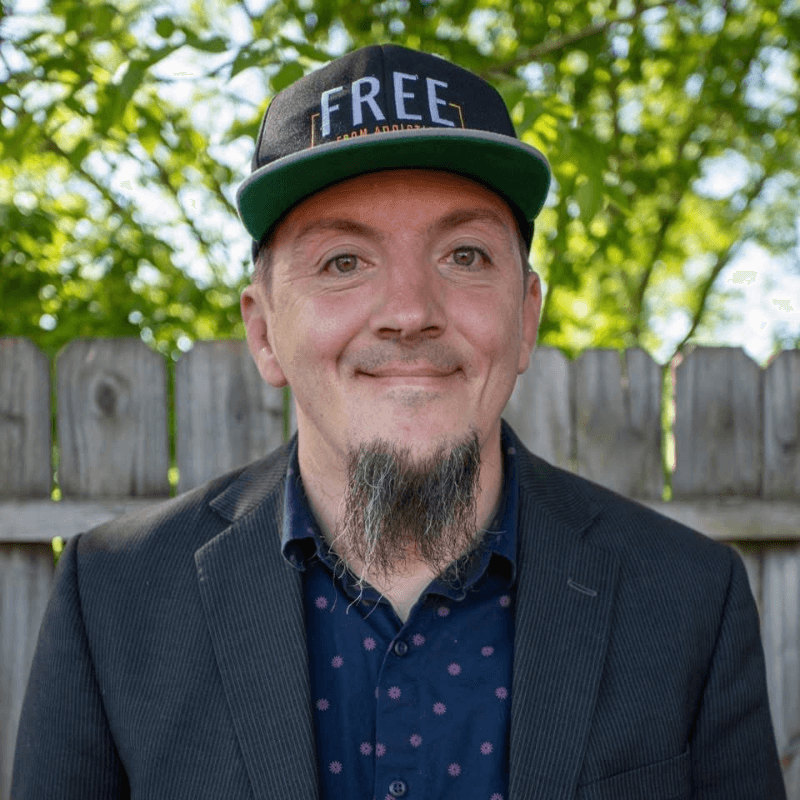
Justin Franich is a former meth addict, Teen Challenge graduate, and pastor who has been clean since 2005. Today he's a husband, father, and Executive Director of Shenandoah Valley Adult Teen Challenge. He hosts the Rebuilding Life After Addiction podcast and helps families across the U.S. navigate faith-based recovery options, compare programs, and rebuild life after addiction.
Read my storyKeep going
Monthly partners
Episodes like this stay free because partners keep them free.
Monthly partners cover the studio, the phone line, and the family guidance behind every episode — so the next family searching at 2 a.m. finds real help, not a paywall.
Become a monthly partner