Life After Addiction
Is Addiction Idolatry? What the Bible Says
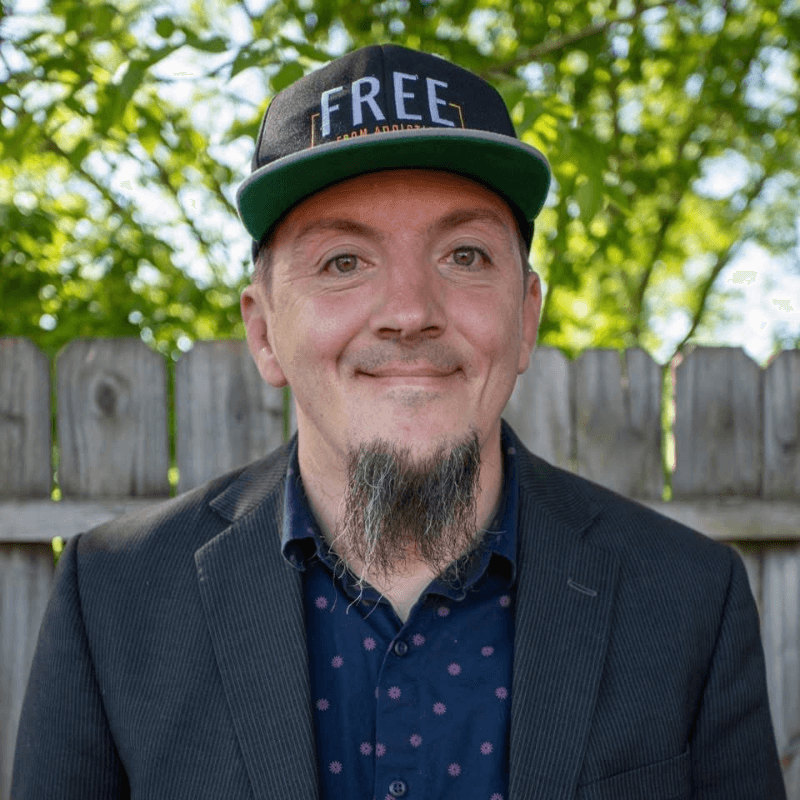
Justin Franich
June 1, 2026 · 5 min read

People ask whether addiction is a sin or a disease, like those are the only two boxes. The Bible offers a third word, and it's more honest than either. Idolatry.
Hang with me, because that word lands hard and I don't mean it as an insult. Idolatry just means worship pointed at the wrong thing. And worship isn't only what happens in a church building. Worship is what you organize your life around. What you sacrifice for. What you reach for when you're empty, what you trust to make the ache stop. By that definition every human being is worshiping something all the time. The question was never whether you'd worship. It's what.
Addiction answers that question with frightening clarity.
Think about what the substance actually became. It got your time. It got your money. It got your first thought in the morning and your last at night. You rearranged your relationships around it, defended it, lied for it, sacrificed things you loved to keep it. You trusted it to do for you what nothing else could, to make you feel okay, if only for an hour. Read that list back. That's not a habit. That's devotion. That's an altar, and you were on your knees at it.
The Bible saw this coming a long time ago. "Therefore put to death your members which are on the earth... and covetousness, which is idolatry" (Colossians 3:5, NKJV). Paul takes a craving, a wanting that won't quit, and calls it by its real name. Idolatry. The thing you can't stop reaching for has become a god to you, and gods demand sacrifice. That's why it kept costing you more. False gods always do. "They have ears, but they do not hear... those who make them are like them" (Psalm 115:6,8, NKJV). You slowly take on the character of whatever you bow to. Worship something hollow long enough and it hollows you out to match. If you want to see how deep that goes in Scripture, the whole-person picture is worth reading, because the Bible treats addiction as more than behavior. It treats it as a worship problem with your whole self at stake.
Now here's why this is better news than the other two answers, not worse.
If addiction is only a sin, the fix sounds like "try harder, do better," and you already know how far willpower gets you against this. If it's only a disease, then it's a permanent condition you manage forever and never really leave. But idolatry has a cure the other two don't. You don't manage an idol and you don't out-discipline it. You replace it. You tear down the altar and you put the true God back where the counterfeit was standing.
That's what the first commandment was always about. "You shall have no other gods before Me" (Exodus 20:3, NKJV). Not because God is insecure. Because He knows the other gods will eat you alive, and He's the only One who actually delivers what all of them only promise. The drug promised peace and gave you chaos. It promised escape and gave you a smaller and smaller cell. Jesus offers the real version of the thing the idol was counterfeiting. Real rest. Real escape from what's actually crushing you. "Come to Me, all you who labor and are heavy laden, and I will give you rest" (Matthew 11:28, NKJV).
There's a grace in that exchange that's easy to miss. You'd think tearing down an idol would be God collecting a debt, demanding you clean yourself up before He'll have you. It's the opposite. He meets you at the altar while it's still standing, while you're still on your knees to the wrong thing, and offers to take its place. That's the part of grace most people never get told, that it shows up before you've fixed anything, not after.
So the path out isn't mostly about the substance. Pull one idol down and leave the altar empty, and you'll just find something else to put up there. Plenty of people quit the drug and start worshiping the recovery, or the relationship, or the work, and wonder why they still feel enslaved. The altar can't stay empty. It was built for God. The freedom comes not when you stop worshiping but when you finally worship the One who won't consume you for it.
This is also where the past stops being a life sentence. If addiction were just the sum of your worst choices, you'd be stuck carrying them. But an idol torn down is an idol that no longer defines you, which is why so much of recovery is learning how to move past a history you can't undo. The altar you tore down doesn't get to name you anymore. The One you put up in its place does.
That's the difference between getting clean and getting free. Clean is an empty altar. Free is the right One standing on it. And the question of who you become once that swap happens, who you are when the idol's name comes off you, is the next honest thing to wrestle with, because your identity after addiction gets rebuilt on what you worship now. For the Scripture that speaks to all of it, we keep a collection of Bible verses for addiction worth returning to.
If your altar's still occupied and you don't know how to pull it down, you don't have to do it alone. Reach out.
Hear more on the Rebuilding Life podcast: Why Sobriety Didn't Save Me, But Jesus Did
You’re not alone in this
If addiction has someone you love, talk to someone who’s been there.
The conversation is free and confidential. Justin & Rob answer the phone — both in recovery themselves.
One quiet email a week
New articles and podcast episodes when they drop. No pressure, no spam.
Justin Franich
Justin Franich is a former meth addict, Teen Challenge graduate, and pastor who has been clean since 2005. Today he's a husband, father, and Executive Director of Shenandoah Valley Adult Teen Challenge. He hosts the Rebuilding Life After Addiction podcast and helps families across the U.S. navigate faith-based recovery options, compare programs, and rebuild life after addiction.
Read my storyKeep going

Know a family who needs this? Send it to them.
Monthly partners
Articles like this stay free because partners keep them free.
No paywall, no ads — monthly partners cover the writing, the phone line, and the guidance behind every page, so the next family searching at 2 a.m. finds real help.
Become a monthly partner