The Warning Signs of Relapse Most People Miss
Rebuilding Life After Addiction — with Nathaniel Gray
An Old Friend at the Center
Justin: Hey, thank you guys so much for tuning in to another episode of Rebuilding Life After Addiction. I'm here at the Teen Challenge Center today, and we are mid renovation. God has been so good the last couple of months. We're almost finished. We've got half the center completely set up, beds up, and three guys on the schedule to come move back in.
And today I'm sitting with an old friend I've known since 2008. That's when you know you're getting old, when you start counting in decades. Why don't you introduce yourself and let everybody know who you are?
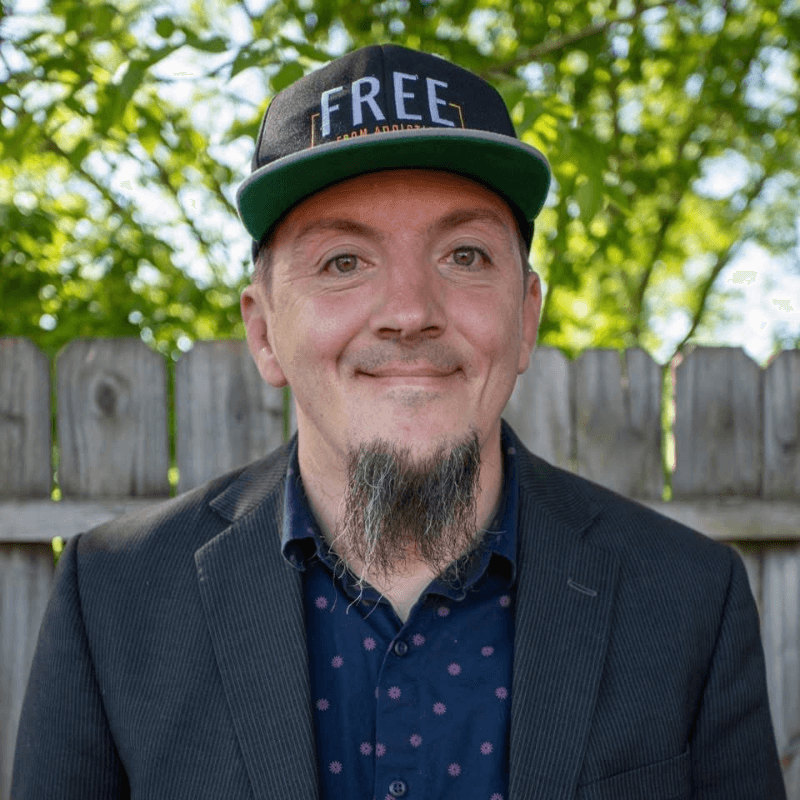
Nathaniel: My name is Nathaniel Gray. I'm a person in long term recovery. What that means to me today is that as of today, I do not choose to use any substance to deal with life on life's terms. And I'm grateful that God has allowed me to do what I do today.
Like Justin said, I met him in 2008, through the program of Teen Challenge.
A Cellmate's Letter and a Pastor in Court
Nathaniel: I came from Youth Challenge in Newport News. It's hard for me to speak about that time. Around 2006 and 2007 I found myself in a pinch in Newport News due to an active addiction. I got a drug charge. I got caught with 19 grams of heroin, a violation of probation, and so many other charges I've probably forgotten. At that time I didn't see a way out.
I got into the jail, and to be honest, I couldn't even read. Around 2006 I couldn't read or write. Not really. I was in a cell with a guy who was a Christian brother. He used to pray with me, always trying to get me to read. He told me about a program called Youth Challenge, which is a spin-off of Teen Challenge. A sister program. He told me if those people will come to court for you, it could change everything. I didn't even write the letter. He wrote it for me.
Long story short, they came to court for me. I'll never forget it. They were looking at my record, and they asked Pastor Troy Collier, do you know this guy's record? Do you even know this guy? Because I don't know if he's a good fit for your program. And Pastor Troy Collier told them, I don't know this guy, but I know that God told me to come here for him today.
More than anything, that touched my heart. I never had anyone step in and intercede for me like that. So I ended up getting out and coming into the program. Even then I wasn't sold out on God or Christ at that particular time. But I knew I was going to be obedient to the program for what they did for me.
Learning to Read Through the Word
Nathaniel: After four months in Newport News, they sent us to what was then called God's Mountain in Pennsylvania. When I got there, that's when God began to prick my heart.
What's funny is everybody had jobs there, and my job was to be the librarian. Out of everyone on the compound, they picked me to be the librarian. They gave me three months to get the library straight, and I got to choose people to help me. These guys were from Staten Island Teen Challenge, a bunch of reformers, and they had vicious study habits with the Word of God.
So here I am, can't read, in a library with these reformer guys. From that point on, God did a work in my life.
Justin: I remember when you were in Staunton I'd come in your room sometimes and you just had books everywhere. You were studying, digging into the Word. Going from not being able to read to that. What was that process like? Was that a spiritual thing God did, or was it a struggle?
Nathaniel: In the book of John, one of the first verses I learned, he says that God would teach you all things. Don't worry about what man would teach you. At that moment, God began to teach me how to read through His Word and how to study. I studied like crazy. Four or five different study Bibles. That's the fruit of hanging out with the reformers.
It was a challenge. But I had a passion to learn, and the Word of God did something to me. It transformed me. It set me in front of a mirror so I could see who I was. Then it let me see who I was in Christ.
A Father Who Showed Up
Justin: You told me a story yesterday about my dad coming to pick you up.
Nathaniel: We did a phone interview first, so nobody had ever physically seen me. Here your father comes in, and there's a crowd. I'm the only black guy in there, a bunch of white guys, Spanish guys sitting there. He's looking through the crowd, and here I come, this black guy with a bunch of goatee, and he didn't flinch. He welcomed me. When I got here, y'all welcomed me with open arms.
A little while later, maybe almost a year, my grandmother died. The funeral was in Portsmouth, Virginia, in Lincoln Park, in the projects. I asked your father, Pastor John, I need to take a break to go to my grandmother's funeral. Can you help me catch the train or the bus? And he said, why would you have to catch the train or the bus? I'm going to take you. You can't go down there alone. One of us has to go with you.
Your father taught us so much, especially about ministry. Not only that, about a relationship with God, and a relationship with him. He grew my zeal for the Word, because your dad was passionate about studying the Word of God too.
Justin: That made me smile when you told me yesterday. Ashley remembered that story about the funeral and I didn't. But that was my dad. He loved road trips, loved to take guys, would drive all over the country to pick people up and take them where they needed to go.
Past the Shock-Value Version of Recovery
Justin: I want to talk about the perspective shift. I get on the internet a lot and I see a lot of recovery content. It seems to go for shock value, the hard stories. I've leaned away from that. Not because I'm ashamed of my story, I'm comfortable sharing it. But I want to talk to people about the other stuff. How to sustain life. Not the in-and-out of programs.
You and I have been around a while. We've seen guys come in, do well, go out, and fall on their face. Everybody's got a different opinion on why it works for one person and not another. But it really comes down to building stability. Over the years, are there any boundaries you set early that you stuck with that helped you stay the course?
The Boundaries That Held
Nathaniel: Today I'm a CPRS, a peer recovery specialist, and a mobile crisis responder. I deal with mental health and substance use disorder. But my background and foundation is abstinence, a faith-based recovery background.
The earlier boundaries I set were the basics. They taught us the transformation of people, places, and things. When you're dealing with long-term recovery, you have to work an honest program. Honest with yourself. Today I know I can't go hang out in downtown Portsmouth with my Bible on the corner. Do I have a zeal to reach the lost? Absolutely. But today I know myself.
You change your people, places, and things in the beginning. Then you put up accountability in all different forms. Right now my wife is my accountability. She's right outside. I know if my wife is with me, I'm covered. I still have those people in place in my life.
When we talk about recovery, we're talking about character defects. If you're working the 12 steps and the 12 spiritual principles, one of them says we've admitted that the God of our understanding, who for me is Jesus Christ, can restore us back to sanity. So when these character defects get taken from us, we have to replace them with other things.
Justin: Did you ever struggle with it feeling like control? How did you work through that and come to see it as freedom?
Nathaniel: At first you do feel that. But I understood that to be successful in this new way of life I had to learn new things. To learn new things I had to have rules, regulations, and guidelines. At first it seems like control, but rules and regulations and commandments are only there to protect us. When we work the honest program, when we buy into the system, we begin to trust that the system works.
The Herd
Nathaniel: So you change the people, places, and things. You get around different people, new people. You come into the rooms, you keep coming back. You begin to be around like-minded people. You get into the herd.
If you've ever seen buffalo roaming, with the predators outside of them, what they do is put the weaker or the newer ones in the middle, and all the stronger ones move in unison to protect the weaker. So I get into that herd, into that middle part. While I'm in the middle, I learn from what everybody else is doing. As I continue, I get stronger, and then I begin to move a little farther out.
Justin: That's really good. Even from a Christian perspective, we believe we're a new creation in Christ. We're not the old person, but we're still susceptible to being picked off by the enemy.
The Warning Signs Before the Relapse
Justin: Relapse usually starts long before you go back to using. What are some of the quiet warning signs, when you were weaker, that you learned to see in your life or in others? The signs where if you don't check this, relapse is imminent?
Nathaniel: In early recovery we're already looking for a reservation. We're already looking for a reason to go back. If my mom argued with me, I'm going to go back. So we teach the family about recovery too, if they're willing, along with the individual. As counselors, the family, and the individual, we work collectively to set up boundaries and educate them on triggers and how to urge surf.
We set ourselves up for failure if we don't put boundaries in place, if we don't get educated. We're almost looking for reasons to go back a lot of times, even when we want recovery. You might have a person who used for three years straight, who used for every event. If he gets a raise, he's going to use. If he's feeling alone, he's going to use. There's always a reason and a good time to use.
Once we get clean, the first thing we deal with is new emotions we don't know how to handle, but medicate. So now when we don't have the medication, what are we going to do? We have to have these tools in place to prevent the relapse. And that goes along with educating the family too.
Faith Versus Willpower
Justin: There's a lot of effort to just do the willpower thing. From a Christian perspective we put the emphasis on the difference between faith and willpower, leaning on God. Was there a point you realized you needed more than willpower, that you couldn't ease yourself out of this alone?
Nathaniel: They say you have to hit rock bottom. Sometimes I question whether a person has really hit rock bottom, or whether they came to treatment just to get cleaned up and get the wheel back. To get the willpower back. I come in, Justin, I need help, but once I get cleaned up 30 days, now I've got it from here, I can steer myself. And the trick of the enemy is to make me feel like I'm different. That I'm the exception, that the thing everybody else does to stay sober doesn't apply to me.
I failed in that for so long before I got hold of what this was really about. Not just my relationship with God, but that alongside recovery, until I totally surrendered and bought into the system. Totally meaning I can't do it by myself. It has to be a community thing.
Justin: Sounds a lot like church.
Nathaniel: It's a lot like a relationship with Christ and growing as Christians. You have to have fellowship.
"Once an Addict, Always an Addict"
Justin: I put something on Facebook this morning pushing back on the "once an addict, always an addict" idea, thinking about it from the new creation perspective. I'm not saying that recklessly. Paul says we're a new creation, but you also see him in Second Corinthians wrestling with his weakness, needing God to hold the new creation together. So these recovery principles and Scripture aren't at odds.
Nathaniel: No, they're incredibly compatible. We just put biblical language on a lot of it.
If you had to point out one or two pieces of bad recovery advice, what would they be?
"Once an addict, always an addict." I can't stand on that. Anything you speak, you speak into existence, and I stand on the Word of God. AA was founded on biblical principles. We still say a power greater than ourselves can restore us. Even with our struggles, we are a new creation. I'm not that person anymore. I'm not the person I was 15 years ago. I don't hang with those same people. I don't drink, smoke, do those things. So how can I claim I'm still what I was getting away from?
Justin: I used to really not like the term recovery. Being old-school church folks, I had a problem with it. I'd say I'm not in recovery, I'm recovered, and poke fun. But then I started digging into Scripture, reading that we were created before the foundation of the world with purpose, designed by God in our mother's womb. So when I think of recovery, I think back to God's original intention.
Nathaniel: Absolutely. God's original design. That's what I want to see out of people. Purpose.
What He Loves Now
Justin: This new life is so much better when you grab hold of something and lean into the Lord. You won't want to go back because you won't want to see the new life fall apart. What's something about the life you have now that the person from 20 years ago wouldn't even recognize?
Nathaniel: I love servitude. I have such a heart for it. I freely give back what was freely given to me. Everything y'all gave me when I walked into the Staunton house, I mirror that today with all the organizations and people I help. The servitude of Christ that was instilled in me at Teen Challenge, I take it with me. In Corinthians it says that from the comfort God gave us when we were in trouble, we'd be able to comfort others in any trouble with that same comfort. I take that same comfort with me today.
The Morning Attitude Check
Justin: We talk about H.A.L.T. a lot. Hungry, angry, lonely, tired. When you feel off on a normal day, what's the first thing you check before it becomes a problem?
Nathaniel: My attitude. I check it every morning. As soon as I open my eyes, I look over at my wife, I pray for her, and I check my attitude. I make sure my attitude is right. I get an attitude of gratitude. I think about what I'm grateful for. My relationship with God. My health. My wife. Then I pray for help. God, please help. If You don't help me today, I might make the wrong mistake and easily fall into going back. So I just pray, God, help me today.
When I pray in a heart of gratitude, the loneliness is gone. He gives me strength. The joy of the Lord becomes my strength. Then I get up and start my day.
Justin: Are there non-negotiables in your week? Things you have to do to keep your mind where it needs to be?
Nathaniel: My prayer life. That's something I learned being knee-deep in ministry. Being connected to God and being obedient to schedules. Obedience is very important to me. When you and I said we'd be here today, that does something to me. It keeps me obedient and in the right place. I stay committed to schedules. And I don't fill my calendar up with a lot of things, because I don't want to take away from my family and my wife.
Guarding the Calendar
Justin: Recovery ministry will take everything you give it. How do you balance that and keep a healthy rhythm?
Nathaniel: I've got a lot of people in my life who think outside the box for me. My accountability people. My wife stays on me. Ten o'clock, get off the computer. She helps me a whole lot. My business partner Janetta James teaches me a lot too. On Fridays we don't even talk on the phone unless it's major. We barely text. We let ourselves have our family. I let everything have its place. I've got house managers I've trained, and they know not to call me at certain times.
Justin: When you've been deep in recovery a while and you've learned that whole willpower thing, that you can't fix everything, I think it makes you a better leader. You learn to delegate and trust other people instead of putting your hands on everything. People ask me my secret to staying free for 20 years, and you said it a few minutes ago. You met her early on.
Nathaniel: Absolutely. She was my relapse prevention tactic. She held me down in that regard.
Rebuilding Finances and Stewardship
Justin: You're leading businesses and nonprofits now. Coming out of the programs, how long did it take to get your finances back in order? A lot of people in recovery have credit scores in the single digits.
Nathaniel: I made a bad decision a couple years ago and my credit suffered for it. But I learned business through the eyes of nonprofit, in the days of Fridays and Thursdays praying, because if the money doesn't come in the staff doesn't get paid. I grew up early in Teen Challenge and Youth Challenge and ministry, and God put a zeal in my heart about taking care of those things. Fundraising. The basics. I did a business plan, but I already knew it wasn't my idea, it was God's idea. God gave me the idea, I put it on paper, I prayed about it. I told everybody around me this is going to happen because God said it would. I stayed standing on it and I was obedient to whatever was in front of me. Then God brought people into my life with the finances.
I worked on my personal finances too. I paid back everybody I owed. I pay my tithes. Because I was a good steward over the little things, God began to trust me with bigger things.
The Entrepreneurial Spark
Justin: Do you see that entrepreneurial spark in a lot of people in recovery? What contributes to it?
Nathaniel: What tends to happen with people who've used drugs for so long is you're innovative. You're chasing drugs, coming up with schemes and ways to get by. The skill sets you adopt while you're out there don't go away just because you get clean. When you get clean, those gifts God already gave you get enhanced, depending on whether you cultivate them. You become obedient and line them up right. Then it looks like this person did five years of work in 24 months, because the business grows. But they had the skill set. It was just tainted by drug abuse.
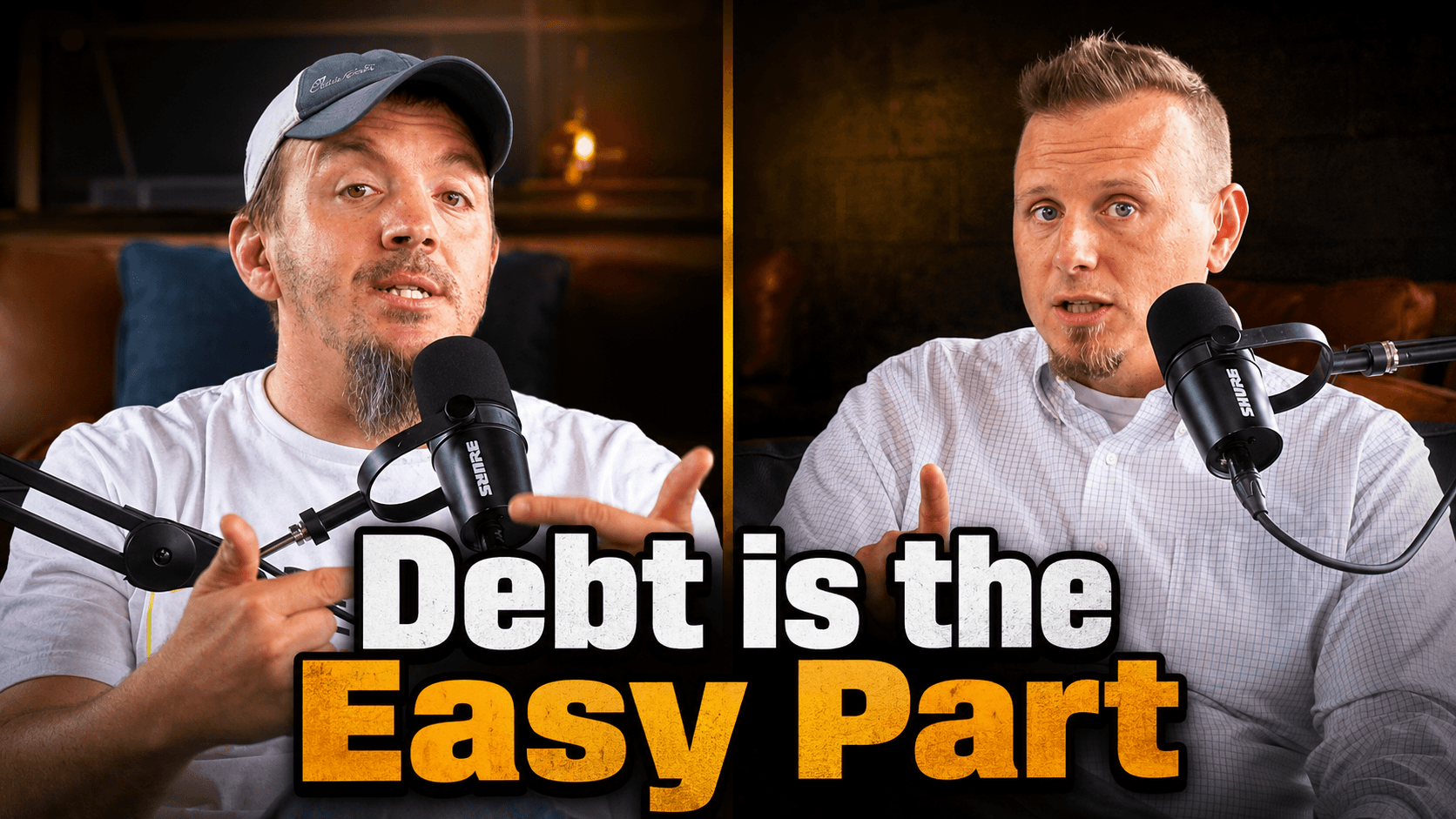
Justin: I interviewed a friend a few months ago who said he watched people who struggled with addiction stress about their finances and credit scores. He looked at one and said, you beat meth, you beat heroin, you did the hardest thing in the world. Your credit is just a numbers game. This is the easy part. You already did the hard thing.
You hear Nate's story, walking through what he went through, showing up in prison not being able to read, and then God peeling all those layers off the old life to reveal who he was really created to be. Now the multiplication, what God is using him to do in Richmond and other places. Like Joseph said, what the enemy meant for evil, God used for good.
A Word to the Person Slipping
Justin: Nate, as we wrap up, for the person listening who maybe feels himself starting to slip, speaking directly to them, what do you say?
Nathaniel: People will tell you relapse is a part of recovery. What I'd say to that person, wherever they are, is first and foremost seek out help outside of yourself. That's where the help always is, outside of ourselves. The enemy wants to trick us into believing no one else is going through this, that I'm the only one, so we don't want to bring it up.
The first thing I'd do is tell on your disease. Talk about it. Be transparent. Build your foundation on transparency and honesty. Any time you're having urges, triggers, trauma, anxiety, all the things that will challenge your sobriety, in those moments you've got that phone. Don't let that phone become a hundred pounds heavy. When you first get in recovery you get those rooms, you get phone numbers, you find your mentor, your sponsor. Go to church, go to Bible study, go to meetings. You have to be active, especially in early recovery.
You're the weaker one in the herd. But you can get hope. We overcome by the blood of the Lamb and the word of our testimony. You can go to a Bible study or a meeting on the verge of giving up, and hear one word, one testimony, and it makes you say, hold on, I do have hope. I don't have to do this. Let me go talk to that person. What must I do to be in right standing? Those connections are so important. I'll tell anybody to stay knee-deep in it. Build your foundation on connections.
If you or someone you love needs help, start here: https://svtc.info/get-help
More on what it takes to stay free: https://svtc.info/freedom-after-addiction
Learn more about Nathaniel's work: https://www.exquisitecarecompanies.com
Rebuilding Life After Addiction is a production of Shenandoah Valley Teen Challenge, a faith-based recovery and discipleship ministry in Mount Jackson, Virginia.