
Rebuilding Life After Addiction · June 9, 2024 · 55:27
Healing from Trauma as a Christian: Chipo Mathis
with Chipo Mathis
Chipo Mathis carried wounds most people never talk about in church. Deep hurt. The kind that makes you wonder if freedom is even real or just something other people get to experience. Her story isn't a clean before-and-after. It's messy, honest, and Christ-centered in a way that doesn't skip over the hard parts. She talks about what it actually looks like to surrender pain you've been gripping for years, how faith becomes the foundation when everything else crumbles, and why your trauma doesn't get the final word on your purpose. If you're past the crisis but still carrying weight that won't let go, Chipo's been there.
About Chipo Mathis
Chipo Mathis moved to Winchester in December 2021 and works at Valley Health. After her divorce, she hit rock bottom and began therapy with a Christian therapist, which helped her unpack decades of unresolved trauma from childhood abuse. She is now pursuing her doctorate while working full-time, has published a book from her therapy journals, and coaches and counsels women walking through similar struggles.
If this episode hits home
New episodes, straight to your inbox
One quiet email a week. No pressure, no spam.
Read the full transcript
Introduction to Healing and Trauma
Chipo, you went through that, so that you can be a voice, a true, an authentic voice. The somebody who is going through that in the future, oh my God, did we really have to go through that? Yeah. But that's because we are human and we are fallen, we are, we are all sinners. It's only through those lessons that we can build the muscle and the fortitude to be able to be a support for somebody else going through that. To say just pray, just pray, just pray. There's no transformation there. Yeah. The transformation comes through doing something about that trauma.
Introduction of Guests and Their Journey
Well, I'm excited to sit down and chat. Hey, we're doing these podcasts for a while now talking about the concept of addiction and helping people rebuild their lives after addiction. So Chiba, thank you for coming on. Maybe just before we jump into our conversation, if you want to give a few little bit of intro, kind of how we know each other and we go to church together, right? But nobody else knows that, so just kind of give a little intro and then we'll jump into our topic.
Okay. Yeah, my name is Chiba Mathes. I moved to Winchester, December of 2021, and started working at Valley and was working with, I still work with Lindsay, and she invited me to church here. Nice. I came once and then didn't come back again. Then I came for the women's conference, and that was it. I kept coming, and it just became my village. Nice. And you're my shepherd and we're here. Yeah, absolutely. And we're here living life and just helping each other to be the kingdom ambassadors that God wants us to be.
Chiba’s Journey and Overcoming Trauma
Yeah. I love your heart for people and your heart for prayer. You've really done a great job encouraging the church to go deeper in prayer and adding some elements that we were missing as a church. And you came in and brought that with you to the church, and it's been phenomenal. Now one of the things we've talked about a little bit, like you're working on your doctorate while working full-time, and I remember some conversations we had. You caught me in the hallway when I think I'm going to go get my doctorate. And it's like cool. I was like, what are you going to do with it? She's like, I don't know, the Lord just said to do it.
Yeah. And tell me a little bit about that. That's a great story. Yeah. I dealt with, lived with unresolved trauma for a very long time, and I didn't even know it until after my divorce. Then I hit kind of rock bottom. Then a friend of mine literally kicked me into a therapist office, who was a Christian therapist, and worked with me and then started to realize and unpack all that anger, which contributed to my divorce. And during the, before the divorce, you know, I was pointing fingers. I wanted to scratch my ex-husband's face thinking he did something wrong. But that helped me to realize that I came into the marriage with a lot of baggage that was unresolved, and it presented a lot of challenges. Yeah. And led to played a lot from my parts leading to the divorce.
Lessons Learned Through Pain and Healing
Good lessons learned there. And during that, as I was journaling through my therapy, it ended up being a book that was published. But I continue to sense this. I can't say that I had the voice of God telling me this. But I've always had this sense that I want to be a counselor. Okay. Yeah. And during that period, then it became so strong that I need to be sitting alongside other women, especially young women who might be going through the same thing that I went through and be a support to help them to give them that support because, you know, one of the biggest lessons that I learned that I did not like to learn is that, cheaper, you went through that so that you can be a voice, a true, an authentic voice.
Yeah, well. Somebody who is going through that in the future. I'm like, God, did we really have to go through that? Yeah. But that's because we are human and we are fallen, we are all sinners. It's only through those lessons that we can build the muscle and the fortitude to be able to be a support for somebody else going through that. That's really good. Just like if you had a garden, you have to prune some of those things. How do you prune your cutting? Your cutting is painful? So that's how it is even in our lives. The only way you can help sometimes is to learn the lesson, then you can give somebody else, because you can only give what you have in your heart.
Understanding the Complexity of Addiction and Community Support
And I had a lot of anger, a lot of resentment for a very long time. Yeah. And that's what colored the way that I presented myself in the world at work as a single parent. So God had to trim and to prune that. Yeah. And to be able to prune that, I had to go through the marriage, go through that divorce. You know, the divorce is one of the best things that ever happened in my life because it created an occasion for me to get on my knees. Yeah. Well. And say, God, if you don't fix this, I'm done.
Now, that's powerful perspective, like now, right? What did it take to get to that place, right? To where you have that perspective of those experiences? Because looking in the past, right, hindsight being what it is, is 20/20. But I know that that perspective didn't come overnight. No. And we say hindsight is 20/20. Yeah. Sometimes it goes down because it's a daily, a daily commitment, a daily walk. It's a journey, not an event. Right. Like you're saying, it's a process. When I was, you know, working with a therapist, I remember the first time, I think I've shared this with you. Within a few minutes, she was asking me, you know, you have unresolved trauma. And I'm thinking, what's wrong with this woman? I'm here because I'm dealing with my divorce. What trauma is she talking about?
The Ongoing Battle of Healing and Triggers
She worked with me until I realized that. And we worked through it for several months. And I'm like, OK, now I'm good. Yeah. Yeah. Until triggers come, reminders come. And the enemy is not sitting out there and just watching you, you know, reclaim your true identity in Christ. He would throw hurdles, triggers, and you go back. But the healing process, the journey that you described is, God knows what we can handle. Yeah. At any given time.
So one of the visions that it gave me when I was going through that trauma is that I've always had you in the palm of my hand. Wow. And I remember getting a vision of the first time that I experienced that trauma a long time ago. And I'm like, God, even then I had you in the palm of my hand. But the healing, we heal at a certain level, and then something else happens, we are triggered. That's an occasion to heal even deeper.
Exploring Therapy and Self-Discovery
Now, when you mentioned, you were going through therapy, right? And dealing with some of the stuff that the therapist was helping you work through, and then you said, I was good until... Did you re-emerge yourself in therapy? Or were you in therapy the whole time? And are you taking a break? Or what did that look like? The first time that it happened, I was still in therapy. OK. And I remember calling her thinking, it's not working. Yeah. And because how come I'm still feeling this way? I felt like last week I was good. But now I'm still coming to see you every week, and this is happening. And I'm thankful that I had a lot of friends who were praying me through. Yeah. And helped me to just be brave enough to say, OK, I'll come for one more session. Right.
I'll come for one more session, not I'm going to come for the next year, just one session at a time going back. And after I had stopped going, then the triggers even were even more. I remember even just hearing my ex-husband's name would throw me off. Yeah. And that's why it is really, really important to unpack and know what triggers you. Right. So that you can begin to prepare. Yeah. Even before it happens. So that when you see it coming, you know, you are able to mitigate it. Otherwise, you end up going back.
The Hidden Struggles of Addiction and Coping Mechanisms
For me, I'll end up working like 16 hours a day or just overworking and isolating myself. Yeah, it's good. I was about to ask you that. How did that look like going back for you? Right? Like you mentioned, you made a statement at the beginning. I'm just here to deal with my divorce. Right? Yeah. And I'm in therapy. That's why I'm here. I don't want to talk about trauma. I don't want to talk about all this other stuff. Like, this is what I'm here for. And you and I were talking kind of in the context of this conversation, like working with Teen Challenge. Yes. I'm just here to get off drugs. Mm-hmm. And a lot of times it's like sometimes the family is even struggling. It's like, well, if they could just stop using.
Yes. You know, you mentioned that before. You know, like you just got to stop. And it's like, no, there's some layers underneath of that. Yes. And for you, from what I'm hearing is that when the triggers would happen, you'd bury yourself in work to escape the pain. Yes. And so how did you get to a point where you were able to kind of start recognizing those triggers? Mm-hmm. And then finding healthy outlets that weren't, you know, burying yourself in work or whatnot. I mean, what is that process? Was that something you worked through there? You worked through alone? The therapist helped you kind of unpack and get some healthy coping mechanisms?
It's a combination because I was talking about this earlier to say, you know, addictions look different for different people. And the path that addiction goes, it depends on the context. Are you in an environment that gives you an opportunity to go this way or that way? Right. If drugs are available or easy access, that becomes your escape. Mm-hmm. Right. If it is work, that becomes your escape. Yeah. If it is whatever it is, it becomes your escape to numb the pain. Yeah.
Because what happens when you go through a traumatic event physiologically? We're created in a way that, I'll give an example. If you are living our lives, and we're experiencing good things, those memories are stored nicely put together in shelves in our, you know, neurologically, so that we can recall those stories and relive those. But if you experience something that is traumatic, whether it's sexual abuse, whether it's physical abuse, whatever it looks like for you. When that trauma happens because it's a shock to the body.
The Complexities of Trauma and Recovery
But God created us in such a way that we end up, the way that that memory is stored, it is shattered. Mm-hmm. Though it's shattered into different small pieces so that we can be able to handle it. Right. Well, yeah. Because when you experience something traumatic, a lot of things happen in your brain, neurologically, physiologically. The hormones are being produced, you know, the flight or fight. It's because something is happening in your body. For a traumatic event, those memories are shattered into small pieces and stored in different places.
Wow. So it's not like one whole story in that shelf in the brain. It's little pieces. So when you're triggered, it is because just a little piece, one of those pieces of that memory comes back whether the event happened last week or 20 years ago, only that piece of memory. But it comes back with all the feelings on all that pain, like it happening now, that's the trigger. Yeah, that's wow.
So you're living 20 years ago into now because you smell something that triggered that memory. Yeah. But because it's just a little piece, it is so painful and they shock again, so we have to numb. Yeah. So for me, it was going to work. Or I ended up being very aggressive and very angry. That was my outlet. Overworking. Or just being angry or go running. Yeah. And people end up numbing in different ways. So when you go and numb, OK, you feel better like you have numb. OK, now I feel better. It does not necessarily mean that it's gone away.
Part of therapy is why it's a journey is because it takes time to take all those little pieces of that memory stored in different places to put them back together so that they are in the right perspective and nicely stored. Yeah. That's such a good description. Yeah. Oh my goodness. So that's the trigger.
Connections Between Addiction and Trauma
Yeah. And so let's have a little bit into, you know, individuals that are dealing with addiction. And, you know, it's interesting. I went through this whole journey. I went through my addiction journey. Once a Teen Challenge is a phenomenal program, found a relationship with Christ. Yes. But yet, I didn't go to therapy for the first time until COVID. Like it's 2020. Yeah. And I remember the therapist unpacking some stuff that I had just never dealt with.
Yeah. And you're kind of acknowledging some of those things and realizing, you know, some of my proclivities and why I ticked the way I ticked, some of the, you know, some even the escapes, you know, that weren't methamphetamines. But like you mentioned, addiction is so broad. It's like, it was acceptable. It wasn't acceptable as a rehab director to do meth, you know. But it was certainly acceptable to go disappear into my house and watch Netflix and, yeah, and just escape for the day instead of facing what I was facing. Yeah.
And so I wonder how many people are kind of walking through this addiction journey, and there's no question that addiction is a fruit of deeper issues, like it's just, that's just common no matter what. But what role specifically would you say trauma plays in pushing people toward addiction? I mean, you know, what is that connection there?
The connection. Many people who end up going, end up being addicted to substances or whatever that addiction is, is because that's an escape. Yeah. It's to deal with this issue, to numb it so that I don't feel that pain, so that I don't, almost like forget about it. And so, you know, you've heard it say that time heals. Time on does not heal. Right. It does not heal. What heals is dealing with it. But dealing with that trauma is so painful. Right. That's why people end up being addicted to substances is to take care of the pain.
The Importance of Integrating Therapy and Faith
You don't feel anything. That's right. Yeah. It's to deal with the pain. Yeah. And some addictions are labeled as not acceptable. Yeah. But some addictions are, society's labeled as acceptable. Like if somebody's overworking, it's like it's almost like a badge of honor. Yeah. Like to use a math. I mean, my struggle. It was my identity. I didn't feel good enough. I didn't feel confident enough. And when I would take a hit of meth, I felt super powerful. Until it wasn't. Yes. Right. And so for me, it was dealing with that. It was dealing with that identity and not feeling, I wasn't the guy that made the sports teams, even though I tried, didn't have the best grades in school.
You know, and so I could get, like, you're realizing that, like, man, that was, that was the fix. It was a resolve for the issues that I hadn't dealt with. Yeah. And even see in some of that. And so, let's say you're, you know, the dangers, right, of not dealing with trauma. So, you know, a lot of the people that are listening maybe are Christian, Christian discipleship folks. You know, have been through Teen Challenge Program, or they have some connection through discipleship ministry. And one of the things I think we covered here in the church when we did the series on Mental House is like, it's therapy and prayer.
Yes. It's not either or, right? And sometimes in the Christian circles, like, we can push back on therapy and dealing with some of this deeper trauma. Yeah. You know, it's like, well, let's just pray it all the way. And let's just hope that it gets better. Yeah. What are some of the dangers of that, you know, for individuals, like, you're just walking around with this unresolved trauma and hurt?
The Transformation That Comes Through Action
The danger of just separating them, to say, just pray, just pray, just pray. There's no transformation there. The transformation comes through doing something about that trauma. The transformation comes through, yes, through prayer, but yes, I pray right now, but God gives us resources to go then peg that. When you said a few minutes ago, your friends were praying, you went back to therapy. You know? Yeah. Yeah. That's so good. Yeah. So, prayer is like a catalyst to help us to do something about it.
That's so good. To do something about it. And prayer is almost like it's a gate that opens us to receive the power that we don't have to deal with it through Holy Spirit. It gives us the power, but God is not going to push us into doing anything. He's not going to squeeze that into doing anything, because we don't learn from that. Right. There's no transformation. We end up just holding on to that false identity.
The Importance of Understanding Trauma in Addiction
You know, that has to be broken down. Yeah. You have to really accept Christ as your personal savior. Yeah. And let Him sit there and really receive it. And let Him work in you. Yeah. So why are you praying? Yeah. Yeah, there's that work interworking happening. It's like, yeah, that's very good. Yeah. And I think that's part of where prayers become almost like it's not. It's a quote one up on our Facebook page. It is social media folks put it up, and it said, you know, when you're praying, don't seek answers to seek God. Yes. You may not always find answers, but you always find Jesus.
Mm-hmm. And I think a lot of times that's where prayer is. We're going looking for the answer. Yeah. And like Ephesians says, what is it? Ephesians 320, exceedingly abundantly above all we could ask or imagine by the power that works within you. With the, it's in there already, you know, and it's so it's really more about building that relationship than taking advantage of practical resources that are at our fingertips.
The Challenges of Unresolved Trauma in Society
Yeah, and so trauma specifically, though, like, we didn't start talking about this in our home. And I didn't, let me rephrase that I knew there was a root for addictions, obviously. Yeah. I didn't start putting language to trauma until we went through our foster care training. And they really educated us and brought Ashley and I up on learning a lot of that. Mm-hmm. So what would you say to somebody who's like, you know, I don't, or let me, let me rephrase that question. Like I don't, I wasn't in an abusive household. Mm-hmm. You know what I'm saying? Or I don't, I don't have any what my, some would say are significant.
And I put air quotes on that because all trauma is trauma. But on maybe somebody's kind of like, you know, what are some of the myths around like, yeah, this doesn't really affect me. Mm-hmm. And yeah, some of the myths are like, if you look at maybe siblings, for siblings, they grow up in the same household. There is no physical abuse from the parents. There is no any other abuse that's coming from the parents. But one event might happen. Maybe an uncle or whoever comes and visits. And maybe say something that triggers somebody and traumatizes them.
Or you're involved in an accident as a family. Some are more resilient and can deal with it and still that memory differently. And one person is traumatized by it. Right. And so it's like, well, I was there. Wasn't that bad, you know? Exactly. And sometimes we might be pointing what's wrong with you. Right. And even in families, like, we grew up together. I mean, I come from a very big family. If we are all in this room and we started talking about certain issues, you'll be like, wait. I thought you were from the same family. Yes, we are.
Embracing Individual Experiences and Healing
But each one of us are uniquely created. Mm-hmm. Yeah. With different personalities, with different gifts, with different, you know, resources that we have within us for a reason that God has put us on this earth. Yeah. And how I respond to anything is different from how my sister or my brother will respond to it. So whether it doesn't have to be physical abuse. Yeah. It could be an event or it could be you as a family and no issues in a family. And you're all watching an accident or the shootings on TV. Right. Well, yeah.
That can traumatize somebody just like they were there. Yeah. We had a guy on the podcast a while ago. He was on, he was a respiratory therapist. And he served in the ER during the first community-acquired COVID patient. And he was one of the guys that served him. And he watched all this death and destruction during all of that. And he's now, I mean, he's in PTSD support groups. He's dealing with that stuff now. But he went through a spiral in a battle with addiction on the other side of dealing with that, those traumatic experiences.
Strategies for Recognizing and Preventing Trauma
Yeah. And, you know, it's amazing. You and I were having a brief conversation about secondary trauma. Yeah. And now like, you know, we don't even necessarily like just kind of interacting and stuff and dealing with that. So I mean, I guess the question would be like, how do we, I don't know, can you guard yourself against trauma? Like, you know, like, what does that look like, you know, in regards to like, how do, how do I ensure that I'm like in a healthy space, right? That I'm not, you know, being impacted or, or at least if I am impacted, I'm recognizing it and dealing with it. Do you understand kind of what I'm asking?
Yeah. And what I'm hearing, and sometimes I used to think maybe this like a formula where now that I know that I went through that and I'm healing, how can I insulate myself from experiencing that ever again? Yeah. As long as we're on this side of eternity, right? We cannot completely insulate ourselves. That's good. We can't completely insulate ourselves. That's why being in community is really, really important, having people who really know you. But the first thing is just knowing who you are in Christ, knowing your identity, to the point where if somebody came here and said, oh, Chip, oh, you have seven feet toe, I'm not.
Right. So knowing who you are, knowing the resources that you have and knowing and embracing it, like really embracing it, not knowing off. Yeah. But knowing, because that's what helps me. Yeah. And now I have get triggered sometimes, but then the time between being triggered and coming back gets shorter and shorter and shorter. Yeah, it gets shorter and shorter and shorter because I'm learning who I am in Christ. Yeah. And really learning to recognize, to say, when the enemy tries to remind me that, oh, you're a divorced, you're a single parent and you're old, this, that's not good.
The Healing Nature of Sharing and Community
I can say, no, I'm not. Yeah. Because I know who I am. So what part would you say that? Because you're, you know, you share your story, you've written a book, and you're going out more to speak. Like what part has kind of telling your story helped in keeping, I guess, victory, right, over those lies? I mean, what part is that played in that journey? When I'm like even coaching somebody or even counseling someone, that helps me. It's like I'm helping them, but I'm also helping myself.
Yeah. In a way, when scripture says, you know, we conquer by our testimony, you know, as we are sharing, it actually strengthens me because helping somebody is therapy. Yeah. It is therapy because it's almost like, almost like a reminder that is well for myself to say, yes, remember what God did. Yeah. He's still doing it, but at the same time knowing that how He did it then, it's not the same way that He's going to help you now.
Embracing the Journey of Healing
It's not the same way that He's going to help this person that you're talking to or helping. Yeah. But just look at the concept of who God is. Yeah. And who is Christ? Who is God? Yeah. And who are you in Christ? What resources is God giving us in your situation, in my situation, because we are all different. Yeah. Yeah. And that takes time. That takes time. So it needs a lot of grace, a lot of patience. Yeah. That's what I was saying, prayed or just get over it. Yeah. Time or hell, no sitting in God's presence being saturated by His grace.
Yeah, that's really good. Yeah. That process, I think the sharing, even before I felt like I was completely free. Like I didn't feel it all the way, but starting to kind of speak that out and start to talk into the future, me. And that's kind of where I was at. But I think even now it's like, like on, I still share the stories of it having yesterday, because it's still that real. And I've never wanted to lose that memory. Yeah. Like, you know, that like, man, God did a miracle for me that I could never do for myself. And just consistently remembering that.
And when the recovery world, we celebrate our sober birthdays every year. And it's my salvation date for me. You know, it's the same day I got saved was the day that I stopped using. But like, that's just a reminder, constantly, of the positive that happened. Not the worst parts of my story, you know. And at one point, I used to think, why can't I just forget it ever happened? Yeah. There's a reason for that. It is because that's what made me to be the person that I am today.
Adapting to Change and Growth
So I have to go back and say, oh, wow, look at it in the right perspective. That's what God did. Yeah. Take those lessons and apply them to my life today. And apply them as I'm sharing with somebody else. Yeah, that's good. So we heal. We forgive. We reconcile. Yeah. But we cannot forget. But we will have to remember from a different perspective because now our identity is different. When my identity was an angry woman, when I remembered, I became even more angry here.
Yeah. But as a woman who was very angry, who was still in that space, I can go back and say, no, that's not who I am. That was my identity that somebody else gave me and I embraced it. But now I am a woman of God who experienced that because somebody who is also a sinner had their own issues and abused me. That's on them. And I pray for them to say, I hope whatever they are, God, I hope you are healing them. Yeah. You are giving them grace and showing them that that's not okay.
Finding Strength in the Journey
That journey of walking through that and talking about the abuse and whatnot, like, the journey to getting out of that, you know, that's a tough journey. I can't even imagine. Yeah. I mean, what did that look like? Do you mind going into that, kind of how you ended up being able to walk away or pull back from that and pull yourself into a safe situation? For decades, I felt dirty because that's the only way because when the first time that had happened, the first time that my uncle abused me, I told my dad, and he responded the best way that he knew.
Like I said, you can always give what you have and nothing else. Yeah. And we pushed it under the carpet. I couldn't talk about it. Yeah. Any more. But it continued to happen. So I blamed myself. It became my identity. I don't know anything. That's why you have to go through this pain. Yeah. Wow. Many times I tried even to commit suicide because why should I continue? And blaming God, God is just real. Why would you allow this to happen to a child?
The Importance of Seeking Help and Healing
Yeah. But through therapy, the therapist helped me to put all those things in perspective to say, that's not your identity, that's not who you are. First, let's work on that. Who are you? You are a child of God. Yeah. God loves you, and He promises that everything that happens, He works it out together for my good. Yeah. He has a lot of grace for me and everybody else. So I had to accept that and walk into my identity in Christ first. Receive God's grace, God's forgiveness, even for thinking that He was just a bully and He didn't love me, but embracing His love and receiving it.
Navigating the Journey of Healing Together
Yeah, that was the point where I could be able to go back and even not physically to go and talk to the uncle who abused me, but just to release them and to forgive and to say, that's not who I am. Yeah. Yes, you did that to a child because I worked with a life coach as well. And she helped me, this exercise that she did for me is that we went into a long hallway, because I was sobbing like a little girl because of the pain that I was going through.
And she said, okay, let's walk. It was a very long hallway. And she was like, who are you? And I said, what do you mean? I'm Chile. I said, you are a child of God. You're a woman of God. And I said, of course, I know that. And she said, but there is a little girl who's still in pain. And they said, I don't want to be there. And she said, okay, metaphorically, we're going to leave that little girl here. We're going to pray for her. We're going to leave her right here.
Embracing the Process of Healing
And when we walk back, we'll continue to pray for her. Yeah. And we'll walk back slowly into the room and sit down. For me personally, that exercise helped me to separate that pain. Because like I said, we don't forget it's still there. But now I look at it in a different perspective. That happened to that little girl. Not because she was unworthy. Because the uncle was up to just doing that. Yeah. Because we're all born in a world of sin. And if we don't deal with that, then we're going to hurt somebody else.
Understanding the Complexity of Trauma and Its Effects
So there's that girl. But God has given me grace, and I receive it. Yeah, that's very good. I receive it. And God has forgiven my sins. Yeah. God has reminded me who I am in Him. Yeah, that's so good. He has me in the palm of His hand. Yeah. I heard a lot of people. But He has even forgiven me for that. Yeah. And I remember talking to my son, you know, asking for forgiveness for him because I heard him because I was a very angry mother. You know, and that was a very painful healing process for me and for him.
The Ongoing Struggles of Addiction and Support
Yeah. He's part of the healing. It's all part of it. Yeah. I heard Tim, who also on the basement, he does podcasts on YouTube. It's blown up. But he was sharing a similar story about his journey and realizing. And he had, you seen the movie with Russell Crow, A Beautiful Mind? And he shared the story about how like during the movie, the voices that were there. As he got on the other side and got healed, the voices were still in the room, but they were just tucked away in the corner.
Yeah. And he wasn't taking direction from them anymore. And he shared that illustration, and the same reaction, it just blew my mind like that. That's what it is. Like that's still there. It's part of our past and our history, but we don't take our cues from it any longer. There is a voice that's much louder. Yeah. That's so good. Because when you're experiencing trauma, there is a reason why people end up in addiction. It's to numb those voices that are telling us you're not good enough. You need to... you're not worthy.
Strengthening Our Identity in Christ
Those voices are so loud and want to just shut them up. Yeah. And people end up in drug addiction to numb those voices. But the healing part of the healing process is the world is loud with or without addiction. Right? It's very loud, especially now. Just go on Instagram or Facebook. Yeah. That's the spirit of comparison. Those voices are so loud. But if you have the voice that is louder, is God. Yeah. So, let's say I have white-knuckled my way through sobriety, right? You know, well power, fought through it. I'm not using today.
And like I'm not dealt with anything else. Yeah. Just a physical substance at that point. You know, what are some steps identified? You know, of course, you know, I know we both agree. Like therapy is a great place to start. But for somebody who maybe isn't willing to take that leap yet and is trying to like determine like, I'm holding on right now. You know, but I don't know how long this is going to last.
Identifying Healthy Coping Mechanisms
You know, what would some advice be? And it's a broad question. Yeah, it's a broad question because we, like I said, we are all created uniquely, each of us are different. And our genes are different for every reason. And we can learn from each other. There are some people that are just not made for therapy. Right. For somebody like that, I would say learn what are your triggers. Because just stopping to use the drug is not enough. Yeah. You have to replace, because you're using because you're numbing.
You're feeling a void that's inside. Until you fill that void with something else, you're going to end up with maybe a different kind of addiction.
The Importance of Recognizing Triggers
You have to know what your triggers are. And the way that you identify your triggers, there are certain situations where you're like, why did I just respond like that? Yeah. Or why did I react like that? Think about those things and why. That could be your trigger. It could be a smell. You smell something and it just makes you react in an unusual way. Yeah. Identify those things and think about them. Talk to somebody, a friend, and say, what do you think about this?
Yeah. Once you learn those, you can be able to, you know, meet to get them before they happen. It's helping you to understand yourselves. Yeah. You know, it's odd. I joke about it a lot now. But like, I don't do many hospital visits even as a pastor. I overdid it with meth one time. I went into the hospital, you dropped me off of the front door, and I ended up in the ER.
And I went through this whole experience. They were trying to take the IV. The nurse made a mistake, and there's blood squirting everywhere. Oh, yeah. And like, I'm freaking out because I'm out of my mind to a method this time. Already, yeah. And they gave me something to knock me out. And I don't, that was the last thing I remember.
The Importance of Community and Support
Even now, almost 20 years later. Yeah. If I had been in ER and they're trying to give, I get lightheaded. Yeah. And it physically shows up. Exactly. And I've always wondered like, because I had a friend that got sick and was in the hospital and never can't. And I went in to see him. And I almost blocked out in the other room. And it happens every single time I go to the ER. Yeah. And I tell the doctors, now I've gotten smart. I hate, like, when my second child was born, the first one, I almost passed out when Chloe was born.
The second one. And it wasn't even the birth. It was the epidural, the needle. Mm-hmm. The needle, there's just a state when needles. And it's wild how that shows up. Yeah. And I know that's not necessarily talking about going to get high again. Which is that experience, that trigger. Yeah. And it shows up every single time. It's so, so interesting. Yeah.
It's the kind of thing you know. Yeah. And now you know, even you're only going to a hospital to tell somebody, or go with somebody. Yeah. Because you know, hey, can you go with me? I need to go and see my loved one at the end of the hospital. But this is what happens when I'm there. I need some moral support. Yeah, the second time I walked out of the room. And the nurse was like, I'm like, can you give me an arm? And she said, and it's like, of course, actually gave me a hard time afterwards. I'm like, you're the one giving birth. And I'm here, drinking our juice from the site.
The Importance of Acknowledging Triggers
Yeah. But she was like, the nurse had something to me after. She was like, thank you for walking out. Yeah. I said, yeah, I know better. And I don't want your attention on me. Yeah, exactly. You know. And so, so that process. It's a concept. Yeah. That process then of identifying, being able to call on a friend. And it's just, I would assume. Just consistently doing that over a period of time allows us to put a little bit more resilience.
Exactly. And we need community. We need community. Yeah. Because the isolation, if you don't have one or two people that you trust to walk you through those things or to bounce off what you're feeling, what you think are your triggers, to talk to them about, you don't talk to them, let them support you. You need community. Because if without that community, then those negative voices become louder. You end up isolating yourself.
Reflecting on the Struggles of Addiction
Yeah. And then that becomes the devil's, you know, workshop. Yeah. Yeah, that's really good. Mm-hmm. Yeah. Now, I think we covered it. Sorry. I can't have it in the cell. It falls in for a second. Mm-hmm. Yeah. So, in closing, I think maybe on, and we may have covered this already, but it's all right on, we talk about like the misconceptions right around, and I think that's one of the parts that like I, I think even having going into this topic is like, you know, there is a link which I'm in a dictionary, you know, and there's no question, and kind of breaking down some of those misconceptions.
And we did talk about that a little bit earlier, but like, sheep of you, any parting words, you know, for, let's just say the audience that we're talking to is on. Yeah, I want to speak to the families for a second that are kind of walking with their loved ones through this journey, and like, man, but I was a good parent. I provided, you know, and how did they become an addict? It's like, how did they end up in this spot?
Like, I don't know that I caused any trauma, you know what I'm saying? And kind of speaking to that situation, do you have any words, I mean, words of courage in a direction? Yeah. Family members, especially parents of children that end up, you know, in addiction, yeah, that can be a very painful experience because it's not only the person who is using who's addicted, that's affected. Yeah. Especially those closest around, because they are walking that journey of addiction as well.
Supporting Loved Ones in Their Journey
Yeah. And the toughest part is, you know, supporting without enabling. That can be a very thin line there. You have to continue supporting, almost like separating the behavior from your child. Right. Yeah. Talking to your child and not the behavior and not the addiction. Yeah. To say you are a man of God. Yeah. You are a woman of God. And speaking to them for who you know they were created to be.
Consistent Support Through the Struggles
Yeah. Supporting them for who you know they were created to be. Yeah. That's the hardest part, because you have to continue to support them, and they will reject it. Yes. They will reject it, and then reject it some more. Yeah. But as parents, just as the person who's directly affected, you have to be brave enough, have a lot of grace. Yeah. Have a lot of patience to continue, because that consistency in staying and addressing them for who they were created to be.
Yeah. Consistently, no matter how hard it is, because it will be hard, and is a journey consistently. And seeking God's guidance, and receiving His grace, and His patience, so that you can give it to them. Yeah. Consistently, consistently spiritually separating the behavior, the addiction from these child of mine. Yeah, that's really good. And addressing these child of mine.
Reflection and Growth Through Adversity
Yeah. Yeah. That's such a difficult battle to walk through, and I never realized what my parents walk through until I got on the phone with parents of those trying to get help. And the Lord kind of gave me a view into what people walk through, and I think specifically in this area of drama, I appreciate early on that you said, like, again, air quotes, it doesn't have to be what we would label as a big deal, whether it be physical abuse or whatever that might be.
Like, we can pick up trauma through... Like, seriously? Yeah, and that part, I think, was eye-opening for me, and I think it would be to many of the audience as well, because it's like, I don't know that I've been traumatized. I've been traumatized. It's like, yeah. Like, there's something there, especially if you're coping with it. Like, there is something driving that. And that's where we, you know, we talk a lot about, I love the 12-seppers. We do a fearless self-inventory, and we start going deep and trying to figure out what it is driving the stuff and get to the why, be brave enough, and bold enough to address it, and that stuff has worked.
And yeah, but it's so worth it. Like, there's a whole and healed person on the other side of that, and God already sees us that way, you know? He already did the blood. And that's the beauty of this relationship with the Lord. It's so phenomenal. Yeah. It's only by God's grace that we are still sitting here. Yeah. It's only by God's grace that any parent that has a child that's going through it right now, by God's grace, you continue to be brave to support your child.
Trusting in God's Plan Through Difficult Times
By God's grace, you continue to fight if you're going through an addiction. By God's grace to be brave enough, because there's not two ways about it. It's a hard journey, with a lot of ups and downs. But if you consistently stay on that journey of healing, those ups and downs become smoother. They are not as steep as they can be. They become smoother. That's really good. And the time that you trigger to go or even relapse, becomes shorter and shorter, only if you're consistent.
Yeah. Walk through the pain, because you're not alone. Time does not heal. That heals. And he puts people around us to support us. They are therapists, friends, parents, pastors, you know, the church. Yeah. People around us don't bottle it. Don't hide. Yeah, that's right. What voice are you listening? What voice is loudest? Yeah. If any voice is telling you you're not worth it, you need to die. You don't belong. Those are voices from that you should not even be listening to.
Encouragement for Healing and Growth
But you have to replace them from a louder voice that comes from here who created you. Yeah, that's so good. It's somebody who is loud, who has a purpose. Yeah. That voice eventually becomes louder. Yeah, that's really good. I used to ask the question to close out if you could change one thing from your pastful. It would be, and I stopped asking that question. Yeah. And I started asking it differently. Yeah.
And I want to ask you a question kind of in closing. If you could hop in a time machine and tell people right to be getting on a therapy journey, something that Chippo today knows. And so not what would you change? Yeah. But what would Chippo today tell Chippo from back then? Having all of your wisdom, all of your experience, and all the stuff that you've walked through. Yeah. Like when you're just getting started on this journey of healing, what piece of advice would you give her?
Reflecting on Your Journey
I would say three things: That God has you in the palm of His hand. It doesn't matter what you're going through, Chippo. God has you in the palm of His hands. Which means you might fall. Which means you will stumble. Which means you will mess up. Which means you will hurt other people. Yeah. God has you in the palm of your hand. Stay the course. Hold on to Him. He is the source of everything that you need to walk through whatever you walk through.
Yeah. You are okay. Not until you are going to be okay. You are okay. Yeah. Focus on that. I am okay. Not because I am all that, but because God has me in the palm of His hand. Focus on that. Yeah. Focus on that. That's so good. But you are okay. Not you are broken. Not you are not worth anything. Focus on that. I used to pray that God just takes this pain away. I don't pray that anymore either. Yeah.
Embracing Pain as Part of Growth
My prayer now is that if I am going through a difficult time, is that give me the fortitude, open my eyes and ears to see and hear the lesson that I need to learn from this. Yeah. However long it's going to take. Yeah. I don't like it. And I am honest when I am talking to God about that. Right. It doesn't feel good. I don't like it. God, I don't like it. Yeah. But I know that your promises are true. Yeah.
We are going to go through. We're not going to sit in here. But as I walk through this desert, this valley, make a way, and help me to see that way, help me to learn what I need to learn from this. Yeah.
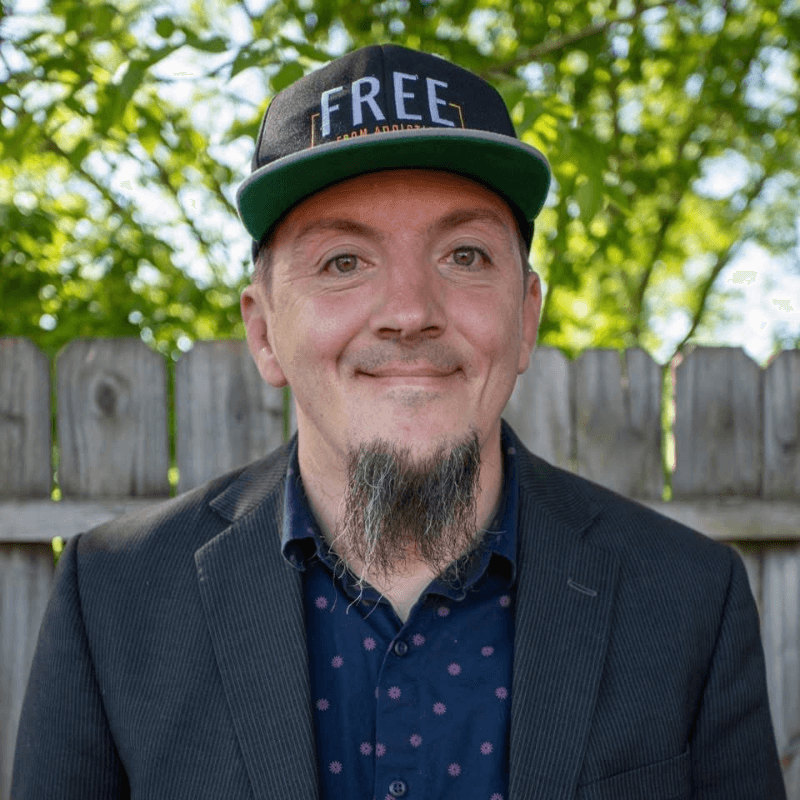
Justin Franich
Justin Franich is a former meth addict, Teen Challenge graduate, and pastor who has been clean since 2005. Today he's a husband, father, and Executive Director of Shenandoah Valley Adult Teen Challenge. He hosts the Rebuilding Life After Addiction podcast and helps families across the U.S. navigate faith-based recovery options, compare programs, and rebuild life after addiction.
Read my storyKeep going


Monthly partners
Episodes like this stay free because partners keep them free.
Monthly partners cover the studio, the phone line, and the family guidance behind every episode — so the next family searching at 2 a.m. finds real help, not a paywall.
Become a monthly partner