
Life After Addiction
What Does the Bible Say About Depression?

Justin Franich
February 7, 2025 · 12 min read

What does the Bible say about depression? More than most churches do. Scripture never treats depression as a faith failure. It shows prophets, kings, and Jesus himself walking through real darkness. Elijah asked God to let him die, and God answered with food and sleep, not a rebuke (1 Kings 19). David wrote whole psalms from the pit. Jesus said his soul was overwhelmed with sorrow to the point of death (Matthew 26:38).
So here is the short answer. Depression is real. It is not a sin. God stays close to the brokenhearted (Psalm 34:18). And He heals through rest, community, and professional help as well as prayer.
This page walks through what Scripture actually says and what it looked like in my own life. If you want the verses themselves, organized by what you're feeling, they live on our full page of bible verses for depression.
Here is how I learned it the hard way.
My daughter Chloe was turning six or seven. The house was full of people. Kids laughing downstairs. Cake and streamers and all the noise that comes with a birthday party.
I told everyone I was sick.
I wasn't sick. I was upstairs in my bedroom with the door shut, tears running down my face, trying to figure out why I couldn't make myself go downstairs and celebrate my own kid's birthday.
Ministry was going well. The church was growing. My family was healthy. And I was drowning. No energy. No joy. Just this weight on my chest that wouldn't move no matter what I did. I couldn't be around people. Couldn't fake the smile. Couldn't pretend.
I'm a pastor. I'm supposed to help people through this stuff.
That thought made it worse. I've written about what that darkness feels like when you can't name it or explain it to anyone.
The Church's Biggest Miss
I'll say this straight: I am not a doctor. I'm not a psychiatrist. I'm not a mental health professional. I'm a pastor.
And as a pastor, I will never tell somebody they shouldn't go see a professional and get therapy when they're dealing with something deep. If you break your arm and come up front for prayer, I'm going to pray. I'm going to trust God. But I'm also going to tell you to go get a cast on that arm.
That needs to be said up front because the church has gotten this wrong for a long time. If you've been hurt by a church that didn't know what to do with your pain, you're not alone in that either. The messaging, spoken or implied, has been: if you're dealing with depression, you're a bad Christian. You don't have enough faith. You're not reading your word enough. Maybe you're hiding some gross sin.
All of those things could be true. But they also might not be true.
And the well-meaning advice makes it worse. Friends told me to cheer up. To focus on the positive. To look at everything I had to be thankful for.
Depression isn't sadness you shake off with a gratitude list. It's deeper than that. It's a constant darkness. A place where there's no feeling, no motivation, and no hope. And then shame piles on top until you can barely breathe.
So what does the Bible actually say about it?
The Bible Doesn't Edit Out the Mess
Scripture is remarkably honest about this stuff. It doesn't airbrush its heroes.
David wrote some of the most anguished words in all of Scripture. Psalm 88:3-4, 18:
"For my soul is full of troubles, and my life draws near to the grave. I am counted among those who go down to the pit; I am like a man who has no strength... Loved one and friend You have put far from me, and my acquaintances into darkness."
If David posted that on social media, he'd never be able to preach again.
Jeremiah cursed the day he was born. "Why did I come forth from the womb to see labor and sorrow, that my days should be consumed with shame?" (Jeremiah 20:18). The weeping prophet carried the weight of an entire nation's rebellion and felt every ounce of it.
Job lost his children, his wealth, his health. His wife told him to curse God and die. His friends told him it was his fault. He sat in ashes scraping his skin with broken pottery. "Why did I not die at birth?" (Job 3:11). God never rebuked him for the grief.
Moses got so overwhelmed by the burden of leadership that he begged God to kill him. "If You treat me like this, please kill me here and now" (Numbers 11:15). Burnout in ministry is nothing new. God's response wasn't condemnation. It was delegation and relief. I wrote about what that cost looks like when nobody's watching.
And Jesus himself said His soul was "exceedingly sorrowful, even to death" in the Garden of Gethsemane (Matthew 26:38).
God didn't scold any of them. He didn't edit out the messy parts. He preserved them as Scripture for every generation that would come after.
The Bible says depression is real. It says God is near to the brokenhearted. It says you can bring every dark feeling to Him without shame. And it says you are never alone in it.
If you want to sit with the specific verses that carried me through, I wrote about all thirty of them in Bible Verses for Depression: 30 Scriptures That Carried Me Through.
If someone you love is in addiction and you don't know what to pray anymore, grab our free guide: 5 Prayers for Families Still in the Fight.
No spam. Unsubscribe anytime.
Elijah: The Mightiest and the Most Suicidal
I want to walk you through the story of a prophet who wanted to die. Because if you're in a dark place right now, I think you need to see what God does with that.
Elijah was a big deal. He raised a widow's son from the dead. He spoke out against a tyrannical monarchy. He got fed by ravens. He outran a horse on foot. And in First Kings 18, he called down fire from heaven on Mount Carmel and defeated 450 prophets of Baal in a single day.
Greatest victory of his life.
Then Jezebel sent a message: "So let the gods do to me, and more also, if I do not make your life as the life of one of them by tomorrow about this time" (1 Kings 19:2).
One threat.
After the greatest spiritual victory he'd ever experienced, one threat from one woman sent him running.
"But he himself went a day's journey into the wilderness, and came and sat down under a broom tree. And he prayed that he might die, and said, 'It is enough! Now, Lord, take my life, for I am no better than my fathers!'" (1 Kings 19:4).
That's depression. That's the crash after the mountaintop. That's the valley that was waiting on the other side of the victory he didn't see coming.
I've been there. Climbed a mountain, accomplished something significant, looked around expecting to feel alive, and instead felt emptier than before I started. And the thought creeps in: was that my best? Do I have it in me to do that again? Maybe my greatest days aren't ahead of me. Maybe they're behind me.
Depression loves to show up after achievement. It's the blindside nobody warns you about.
What God Did Next
This is the part that changes everything for me.
God didn't give Elijah a sermon. He didn't rebuke him. He didn't tell him to read his Bible more or pray harder.
He sent an angel with food and water. And let the man sleep.
Twice.
"Then as he lay and slept under a broom tree, suddenly an angel touched him, and said to him, 'Arise and eat.' Then he looked, and there by his head was a cake baked on coals, and a jar of water. So he ate and drank, and lay down again" (1 Kings 19:5-6).
Food. Water. Sleep. Then food and water again. Then He spoke.
That's the order. Care for the body first. Then care for the soul.
When I was working at Teen Challenge, we used an acronym for people on the edge of relapse: HALT. Hungry. Angry. Lonely. Tired. Before you do something destructive, ask yourself: am I actually in crisis, or do I just need to eat something and go to bed? If setbacks in recovery are part of what's fueling the darkness, this matters even more.
God basically HALT-ed Elijah under that tree.
Sometimes the most spiritual thing you can do is get some food and close your eyes. Not everything needs a prayer meeting. Sometimes it needs a sandwich.
The Lies Depression Tells
After Elijah ate and rested, he told God: "I have been very zealous for the Lord God of hosts; for the children of Israel have forsaken Your covenant, torn down Your altars, and killed Your prophets with the sword. I alone am left; and they seek to take my life" (1 Kings 19:10).
I'm the only one left. Nobody else is fighting. Nobody sees what I'm going through. I'm alone.
Sound familiar?
Depression tells you that nobody knows, nobody cares, nobody understands. And it feels completely real. In that moment under the tree, Elijah's isolation felt like fact. He'd cut himself off from the crowd of supporters who had just watched him call down fire. He left them behind and walked into the wilderness alone.
There's a difference between isolation and rest. Jesus withdrew to rest. Elijah withdrew to languish. One is healthy. The other lets depression compound.
And Elijah wasn't just a little wrong about being alone. He was wildly wrong. God told him there were seven thousand others in Israel who hadn't bowed to Baal (1 Kings 19:18). Seven thousand. He thought he was the last man standing and there was an army behind him he couldn't see.
That's what depression does. It narrows your vision until all you can see is the darkness immediately in front of you. Reality is wider than your feelings are telling you.
Then God Gave Him Something to Do
After the food, the water, the sleep, the honest conversation, God didn't send Elijah to therapy (though I would have been fine with that). He gave him an assignment.
"Then the Lord said to him: 'Go, return on your way to the Wilderness of Damascus; and when you arrive, anoint Hazael as king over Syria. Also you shall anoint Jehu the son of Nimshi as king over Israel. And Elisha the son of Shaphat of Abel Meholah you shall anoint as prophet in your place'" (1 Kings 19:15-16).
Purpose. Direction. A future. And not just any future. God directly addressed every lie Elijah had believed. You think you're alone? Here are kings and a successor coming. You think it's over? The best part hasn't happened yet. You think your greatest days are behind you? Elijah's ultimate exit was a chariot of fire, and his mantle fell to the next generation.
His greatest moment wasn't Mount Carmel. It was still coming.
Purpose doesn't cure depression. But knowing God isn't finished with you gives you a reason to get up from under the tree. He fed the body. He corrected the lies. And He gave Elijah a reason to keep walking. Faith in the hard places looks exactly like this. Not triumphant. Not loud. Just getting up and going where He said to go.
The Boy on the Rock
I heard a story about a village where they have a coming-of-age ceremony. They take a teenage boy, give him his weapons, and walk him out into the deepest part of the jungle. There's a rock in the middle of it all, and the father tells his son: sit here. Don't move. You'll be safe. We'll be back in the morning.
Night comes. Every noise is a predator. Every shadow moves. The boy grips his weapons tighter because he's convinced he's been left out there to die.
Hours pass. Dawn starts breaking. Light filters through the trees. And as it gets brighter, the boy hears rustling. He looks up.
His father is in the trees. The entire village is there. They've been there all night.
He was never alone. He just couldn't see them in the dark.
If you're sitting on a rock right now in the middle of the darkest night you've ever known, the Father is closer than you think. He hasn't left. The darkness doesn't change His position. It only changes what you can see.
Stay on the rock. Morning is coming.
Paul said it in 2 Corinthians 4:8-9: "We are hard-pressed on every side, yet not crushed; we are perplexed, but not in despair; persecuted, but not forsaken; struck down, but not destroyed."
And the psalmist promised: "Weeping may endure for a night, but joy comes in the morning" (Psalm 30:5).
You're Not Disqualified
If depression has convinced you that something is broken in your faith, look at the list again. David. Elijah. Jeremiah. Job. Moses. Jesus in the garden. These are not minor characters. These are the pillars of Scripture. And every one of them knew what it felt like to want to quit.
God didn't disqualify a single one of them. He drew near. He provided. And He gave them something to do next.
Your greatest days are not behind you. That's a lie from the pit, and it needs to be treated as one. There is more that God has for your life, for your family, and for the people you haven't met yet who need what you've been through.
If your family is dealing with addiction alongside depression, we can help you find the right program.
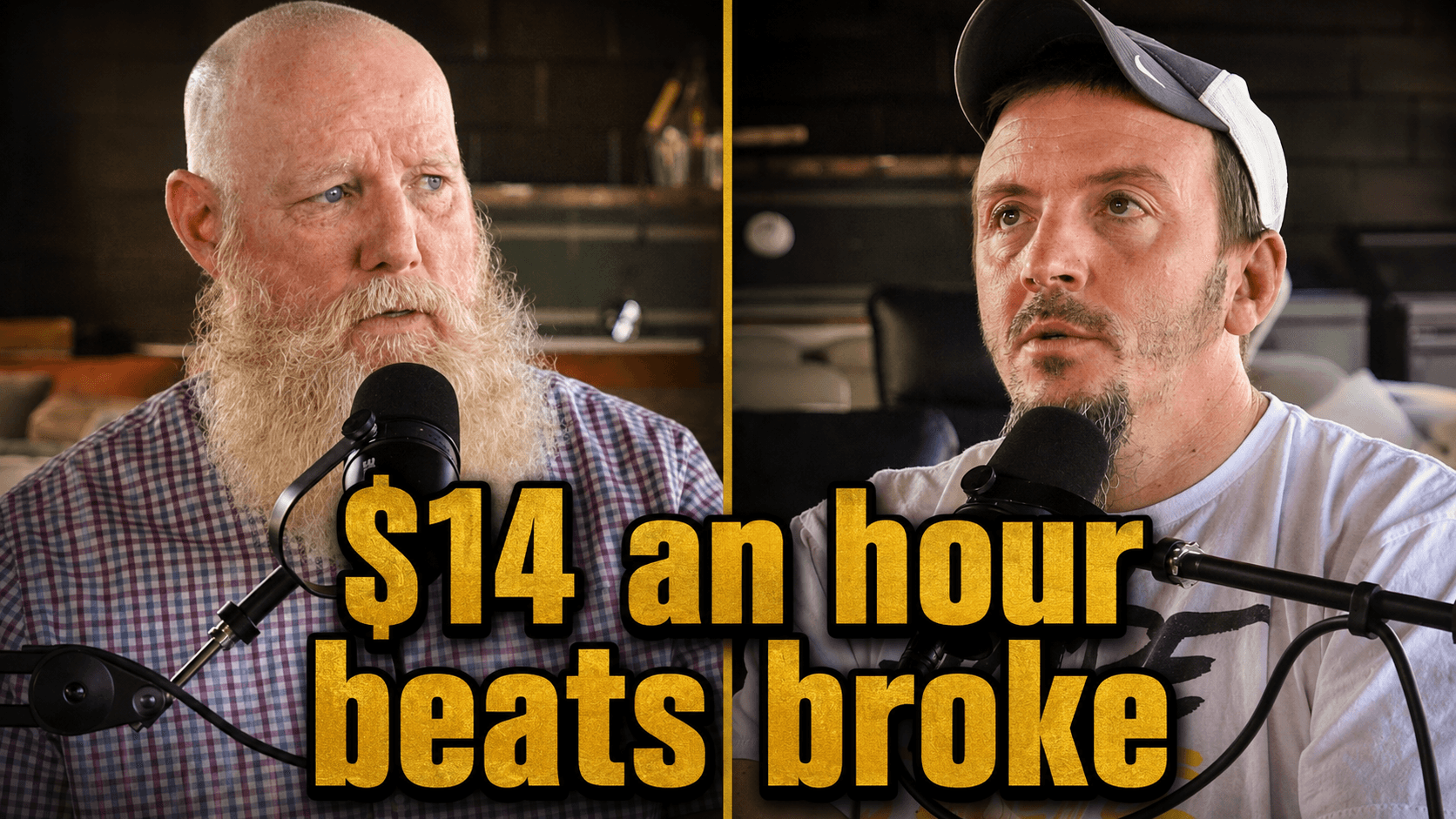
Hear more on our podcast: God Hasn't Forgotten You (Even in This Season)
You’re not alone in this
If addiction has someone you love, talk to someone who’s been there.
The conversation is free and confidential. Justin & Rob answer the phone — both in recovery themselves.
One quiet email a week
New articles and podcast episodes when they drop. No pressure, no spam.
Justin Franich
Justin Franich is a former meth addict, Teen Challenge graduate, and pastor who has been clean since 2005. Today he's a husband, father, and Executive Director of Shenandoah Valley Adult Teen Challenge. He hosts the Rebuilding Life After Addiction podcast and helps families across the U.S. navigate faith-based recovery options, compare programs, and rebuild life after addiction.
Read my storyKeep going

Know a family who needs this? Send it to them.
Monthly partners
Articles like this stay free because partners keep them free.
No paywall, no ads — monthly partners cover the writing, the phone line, and the guidance behind every page, so the next family searching at 2 a.m. finds real help.
Become a monthly partner