
Recovery Stories
Celebrity
Sobriety
Famous People Who Found God in Recovery
Every “celebrity sobriety” article on the internet reads the same way. Name, drug, rehab stint, years sober. Maybe a quote about gratitude. Maybe a stock photo. Then on to the next one.
This isn't that article.
The seven people on this list didn't just get clean. They found God on the other side of the wreckage, and that changed what recovery even meant for them. Because there's a difference between being sober and being free. Sobriety is the absence of a substance. Freedom is the presence of something bigger.
I know because I've lived it. And I've sat with enough people in early recovery to know that the ones who stay clean but never find purpose are the ones who white-knuckle it for years until they can't anymore. The people on this list found purpose. Specific, God-given, can't-shut-up-about-it purpose.
One of these stories comes from a conversation we had on our podcast. You won't find the details we share anywhere else. The rest are public stories I've researched and verified, not because they're famous, but because their testimonies actually say something worth hearing about what happens when God shows up in the middle of addiction.
01 / Rock
Brian “Head” Welch
The Guitarist Who Walked Away from $23 Million
In 2005, Brian “Head” Welch was co-founder and lead guitarist of Korn, one of the biggest rock bands on the planet. He had the cars. The houses. The women. The screaming fans. And a meth habit he couldn't kick no matter how many times he tried.
He was using every single day just to function. Snort meth, make breakfast for his daughter Jennea. Snort meth, drive to rehearsal. There was no version of his day that didn't start with a line.
“I could not stay sober. I did not know how. I hit rock bottom.”
The turning point started with an email. He sent a message to a friend he trusted, basically a cry for help, and the friend sent back a Bible verse: “Come to me, all you who are weary and burdened, and I will give you rest” (Matthew 11:28). Brian read it and something cracked open. That Sunday, the same friend invited him to church. He didn't want to be there. The singing felt awkward. The praying felt foreign. But the pastor started talking about how God had pulled him out of alcoholism and violence, and Brian felt something stir. He needed what that pastor had. He needed to be free.
Brian left Korn that year. Walked away from a $23 million record deal. Not because he found a better deal. Because he had a daughter named Jennea who needed a father more than the music industry needed another strung-out guitarist. He was baptized in the Jordan River. He wrote a book called Save Me from Myself. He started making music again, this time with a band called Love and Death, and the message was different because the man was different.
The years after leaving weren't a highlight reel. His career stalled. Finances got tight. He's talked about getting “crushed for a reason,” about God letting the pressure build until something new could come out of it.
And then, eight years later, he went back. He rejoined Korn in 2013 -something almost nobody saw coming -and has been open about the fact that God led him right back into the band. Not to escape it this time, but to be present in it differently. His story became the documentary Loud Krazy Love, which chronicles his relationship with Jennea through the meth years, the leaving, and the rebuilding. That's over 20 years sober now.
What hits me about Brian's story isn't the fame or the money he walked away from. It's that God didn't just get him clean. God sent him back into the exact environment that almost killed him, but this time as a different man. That's not white-knuckling sobriety. That's freedom.
02 / Baseball
Darryl Strawberry
The All-Star Who Found His Mother's Prayer Journal Under Her Bed
Darryl Strawberry was the first overall pick in the 1980 MLB Draft. Eight-time All-Star. Four World Series rings. One of the most feared hitters in baseball for the better part of two decades.
He was also a cocaine addict, an alcoholic, and a womanizer who burned through two marriages and more money than most people will see in ten lifetimes. He was suspended from baseball three separate times for substance abuse. He served 11 months in a Florida state prison, inmate number T17169.
Strawberry has said his addictions were rooted in bitterness toward his father, an alcoholic who was physically and verbally abusive. The fame and the money didn't fix what was broken underneath. They just gave him more ways to numb it.
“God, knock him off his throne. Save him. I don't care what you do.”
His mother was a woman of deep, quiet faith. She never cared about his celebrity. She prayed one prayer over and over. When she was dying of breast cancer at fifty-five, the family found a prayer journal under her bed. Page after page, she'd written prayers for all five of her children. “God, save them from the drugs. Save them from this lifestyle.” She never got to see the answer in person.
But the answer came. After prison, he met his wife Tracy at a Narcotics Anonymous convention in Fort Lauderdale. They started over together with nothing. Today Darryl Strawberry is an ordained minister. He and Tracy run Strawberry Ministries and spend over 200 days a year on the road. The Mets retired his number 18 in June 2024, and he received a presidential pardon in November 2025. His response: “I'm thanking God for setting me free from my past.”
The detail that stays with me is the prayer journal. A dying woman, writing prayers for her son while he was getting high in mansions and sitting in courtrooms. She never saw the fruit. But every single one of her five children eventually came to faith. If you're a parent praying for someone who seems too far gone, Darryl Strawberry's story is evidence that those prayers land somewhere, even when you can't see it.
03 / On Our Podcast -First-Person Account
Ben Fuller
From a Vermont Dairy Farm to 20 Million Streams (And the 14 Years In Between)
We got to sit down with Ben Fuller for our podcast, and the conversation went places that his official bio doesn't cover. Most articles about Ben mention the dairy farm and the addiction and skip to the music career. The in-between is where the real story lives.
Ben grew up in southern Vermont on a dairy farm with 180 black and white Holstein cows. Vermont is about 2% Christian. His family didn't go to church. Jesus was a swear word, not a savior. His dad was a hard worker who expected the same from his only son, but the relationship was complicated. Ben spent his childhood looking for approval he never heard put into words.
At sixteen, he walked into the woods with a gun and nearly ended his life.
He survived, but he didn't get better. What started with alcohol became cocaine, and for the next fourteen and a half years, Ben lived two lives. A house, a truck, a landscaping business, a college degree -he looked like he had it together. On the inside, he was using every weekend and most weeknights, filling one void after another with substances that kept promising relief and delivering emptiness.
Two things cracked the wall. The first was Ryan. Ben's best friend died of a heroin overdose on December 16, 2017. But even that didn't stop the using, not immediately. Addiction doesn't care about grief. It feeds on it.
The second was Nashville. Ben sold his house in the fall of 2018 to chase a country music career. He moved south, started playing covers on Broadway at Tootsies, and drank twenty beers a night. He was 1,250 miles from Vermont and still running.
Here's where it gets specific -and this is the part Ben told us that you won't find in most write-ups. God had moved a family from Vermont to Nashville a full year before Ben got there. The Davenport family. They tracked down his number in the fall of 2019 and invited him to dinner. He said yes because he was hungry. They didn't try to fix him. They didn't judge his language or his drinking. They just loved him the way he was. And at the end of dinner, they asked: “Will you come to church with us?”
“God, if you're real, take this from me. The cocaine, the alcohol, the sex, the swearing. All of it. I dare you.”
The next morning, Ben walked into Church of the City in Franklin, Tennessee, and heard worship music for the first time in his life. Not hymns at a funeral. Not background noise. Worship. He left the family he was sitting with and walked straight down the aisle.
“I felt like my feet came off the ground,” he told us.
Ben gave his life to Christ and was baptized on November 10, 2019. The addictions broke. Not slowly, not through a twelve-step process, but in a way that Ben himself says he can't fully explain except that God showed up. About two months of wrestling, showing up, learning to pray, falling on his face, and getting back up. But the cocaine stopped. The alcohol stopped. The old patterns that had owned him for fourteen and a half years lost their grip.
Ben started writing. Not country covers. Songs that came straight from the wreckage. “Who Am I” was one of the first, and it hit because it asked the question every person in early recovery asks when they look in the mirror and don't recognize the person staring back. That song has over 20 million streams now. Not because it's polished. Because it's true.
One more thing that didn't make the headlines. His dad eventually sent him a text message one Sunday morning. Two words that took decades to arrive: “I love you.”Ben was nervous about posting a vulnerable video about his suicide attempt at sixteen. His dad's text came that same morning. Three decades of silence, broken in a text. You never know when a prayer is going to land. Sometimes it takes thirty years. Sometimes it arrives on a Sunday morning when you need it most.
What makes Ben's story different from the others on this list is where he started. He didn't grow up in church and walk away. He never had it to begin with. Vermont, 2% Christian, no gospel, no framework for God whatsoever. He came to faith from absolute zero. There is no prerequisite. You don't need a church background. You don't need to clean up first. You just need to show up hungry. Literally, in his case.
Hear the Full Story
We covered all of this and more on our podcast -the dairy farm, the suicide attempt, Nashville, the Davenport family, and the dad who finally said the words.
Listen to the Episode →04 / Country
Walker Hayes
The Alcoholic Atheist Who Met a Man Named Craig
Walker Hayes moved to Nashville in 2005 with his wife Laney and their growing family, hoping to make it as a country singer. He got signed to a label. Then he got dropped. Then he ended up working at Costco to pay the bills -six kids, one car that didn't have enough seatbelts for all of them. And a drinking problem that had been building since he was thirteen years old.
Walker was an atheist. Not the quiet kind. The kind who had active contempt for church people. His wife dragged him to church one night. He showed up a little drunk from watching football all day. That's where he met Craig Cooper.
Craig was genuine. He didn't flinch at Walker's mess. And then Craig did something that broke the script entirely: he gave the Hayes family a minivan. Just handed them the keys. Walker had six kids crammed into one car without enough seatbelts, and Craig showed up with a vehicle because he believed that's what Jesus would want him to do. Not as a bribe. Not as a conversion tool. Just because somebody had done the same thing for him once.
“Craig didn't preach at Walker. He served him. And Walker couldn't argue with that.”
Walker got sober. He went to AA. He's been sober for over eight years now. In 2018, Walker and Laney lost their daughter Oakleigh Klover Hayes during childbirth. Walker has been open that his faith -still relatively new at that point -was what held him and Laney together through the grief. Not in a “God has a plan” bumper sticker kind of way. In a “we would not have survived this without something bigger than us” kind of way.
His song “Craig” tells the whole story. The Costco. The minivan. The friendship. The faith. It's one of the most honest songs in country music about what it actually looks like when a Christian shows up and does something instead of just posting a Bible verse about it. You want to know what faith-based recovery looks like in practice? It looks like car keys in the hand of a drunk guy who thinks your religion is nonsense.
05 / CCM
Zach Williams
The Song He Heard Driving Through Spain Changed Everything
“If you're God, if you're who you say you are, prove it. I'm done with all this.”
Zach Williams grew up in a Christian home in Jonesboro, Arkansas. His dad led worship. His mom sang in the choir. He went to church every Sunday and Wednesday. He knew the gospel. He had the head knowledge. And none of it stuck.
“I knew better,” he's said. “I was raised in church. I was raised to put my faith in Jesus. My parents really planted that seed at an early age for me.” But knowing and living are two different things, and Zach spent the next fifteen years proving it.
A basketball injury ended his shot at a college scholarship, so he picked up a guitar and started a band. The touring lifestyle gave him permission to live however he wanted, hundreds of miles from anyone who knew him. “I started justifying it with the fact that I was gonna be a rockstar and that's what they did,” he's said. For fifteen years, Zach used drugs and alcohol, escalating steadily, while his parents kept praying. His wife Crystal told him if he didn't make changes, she and the kids weren't going to stick around. He left for another European tour anyway.
But this time, somewhere on the road, something shifted. He prayed a dare: “If you're God, if you're who you say you are, prove it. I'm done with all this.”
Two weeks later, the band was driving across Spain. Eight hours on the road. The bus driver stopped on a signal playing “Redeemed” by Big Daddy Weave. In Spain. A Christian worship song, in English, on a random frequency, in the middle of a country that doesn't program American Christian radio. Zach heard it and knew God was answering.
He called Crystal and told her he was coming home, canceling his shows, and going to church. On June 10, 2012, he gave his life to Christ. He and Crystal were baptized the day before their daughter was born. A year after his conversion, he was leading worship at a church plant. His song “Chain Breaker” hit number one on Christian charts for fifteen weeks and won the Grammy for Best Contemporary Christian Music Album in 2018.
Today Zach does prison ministry. He's not just performing. He's standing in front of inmates and telling them the same thing God told him on a bus in Spain: you're not too far gone. If you've been sober for a while but something still feels hollow, Zach's story is a picture of what happens when sobriety stops being the finish line and starts being the starting line.
06 / Hollywood
Rob Lowe
35 Years Sober and He Credits “Faith and Relationship with God”
Rob Lowe got sober on May 10, 1990. He was twenty-six years old. He hasn't had a drink since. That's over 35 years.
What makes Rob's story relevant to this list isn't just the longevity. It's what he says about it. In 2015, Lowe received the Spirit of Sobriety Award, and during his acceptance speech he listed what recovery had given him: “Integrity, honesty, fearlessness, faith, relationship with God, gratitude.” That's not a guy nodding politely at the higher power concept in a twelve-step meeting. That's a man naming God specifically, in public, in an industry where that kind of talk doesn't earn you points.
“Nothing can make you get sober except you wanting to do it.”
The moment that hit hardest came on The Drew Barrymore Show in April 2023. Rob reached into his pocket and pulled out his son John Owen's five-year sobriety chip. “Johnny's five-year birthday was on Saturday. Johnny, I want to give you your five-year chip. I love you. I'm proud of you, buddy.”
John Owen has said his dad is the main reason he's sober. If you're a parent who wonders whether your own sobriety matters to your kids, Rob Lowe's family is a living answer. They're watching. And sometimes the most powerful thing you can hand your child isn't advice. It's a chip.
07 / Country
Whey Jennings
Waylon's Grandson Chose a Different Road
“Getting clean answers ‘what are you going to stop doing?’ Faith-based recovery asks the harder follow-up: ‘What are you going to live for now?’”
If your last name is Jennings and your grandfather is Waylon, the expectations write themselves. Outlaw country. Hard living. Whiskey and highway lines. Whey Jennings inherited all of it, including the parts that kill people.
Whey struggled with addiction for twenty-seven years. Twenty-seven years is most of an adult life. That's not a phase or a rough patch. That's waking up every morning inside a pattern you can't break, for longer than some people's entire careers. The outlaw country lineage didn't help. When your family name is synonymous with hard living, people don't just accept your addiction. They romanticize it. There's a version of Whey Jennings that stays on that path and becomes another cautionary tale dressed up as a legacy story. Country music has plenty of those.
In 2020, when he finally hit a wall he couldn't climb over, Whey made a choice that broke from the family script. He chose a faith-based rehab program. Not the secular celebrity rehab route. Not the thirty-day detox and back to touring. A program that doesn't just take away the substance but asks who you're going to become without it.
He married Taryn Rae and started making music that sounded different because he was different. Not different like he put a cross on his album cover and called it Christian. Different like the anger and the self-destruction that used to fuel his writing got replaced with something quieter and more honest. His single “Billboard Jesus” premiered on American Country Network on Easter Sunday. His album “Baptized By Fire” dropped in March 2026 and leans all the way into his testimony.
Whey's story belongs on this list because of what he walked away from. Not money or fame in the traditional sense, but something almost harder to reject: an identity. The Jennings name comes with a built-in persona. Outlaw. Rebel. Hard drinker. It's a comfortable cage because everyone applauds you for staying in it. Choosing a different road took more guts than living up to the outlaw image ever would.
What Every One of These Stories Has in Common
Seven people. Different substances, different industries, different levels of fame. A rock guitarist, a baseball legend, a country singer from Vermont, an atheist-turned-songwriter, a Grammy winner, a Hollywood actor, and an outlaw's grandson. On the surface they have nothing in common.
But underneath, the same pattern shows up in every single story.
Getting clean wasn't enough.
Brian “Head” Welch could have left Korn, kicked the meth, and disappeared into quiet retirement. Darryl Strawberry could have stayed sober after prison and played golf for the rest of his life. Ben Fuller could have gone to Nashville, put down the cocaine, and kept playing covers on Broadway. They all could have stopped at sober.
But sober wasn't the finish line. It was the starting line.
Every one of these people hit a point where the absence of a substance wasn't the same as the presence of a purpose. They were clean, but they weren't free. And freedom only showed up when they found something -or Someone -to be sober for. That gap between clean and free is where a lot of people in recovery get stuck. The substance is gone but the emptiness is still there. The routine works but the meaning doesn't.
Faith didn't just help these seven people stop using. It gave them an answer to the question that sobriety alone can't answer: “Now what?” Brian Head Welch went back into Korn as a different man. Darryl Strawberry became an ordained minister. Ben Fuller turned his wreckage into worship music. Walker Hayes let a guy named Craig rewrite his entire worldview. Zach Williams heard a song in Spain and built a Grammy-winning career on the back of it. Rob Lowe gave his son a sobriety chip on national television. Whey Jennings broke from the family script and chose a different road.
None of them just stopped using. They all started living for something. And that something had a name.
If you're in that gap right now -sober but searching -you're not broken. You might just be standing at the same crossroads every person on this list stood at. The substance was never the real problem. It was the painkiller. And the real healing started when they let God address what was underneath.
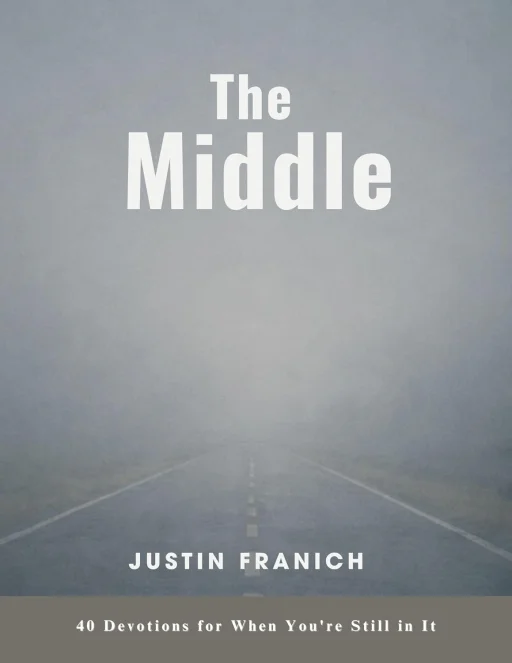
The Middle
Devotions for When You're Still Becoming
A 40-day devotional for the Christ-centered space between where you've been and where you're headed. For anyone past rock bottom but not yet at the finish line.
Available on Amazon Kindle
Frequently Asked Questions
Justin Franich
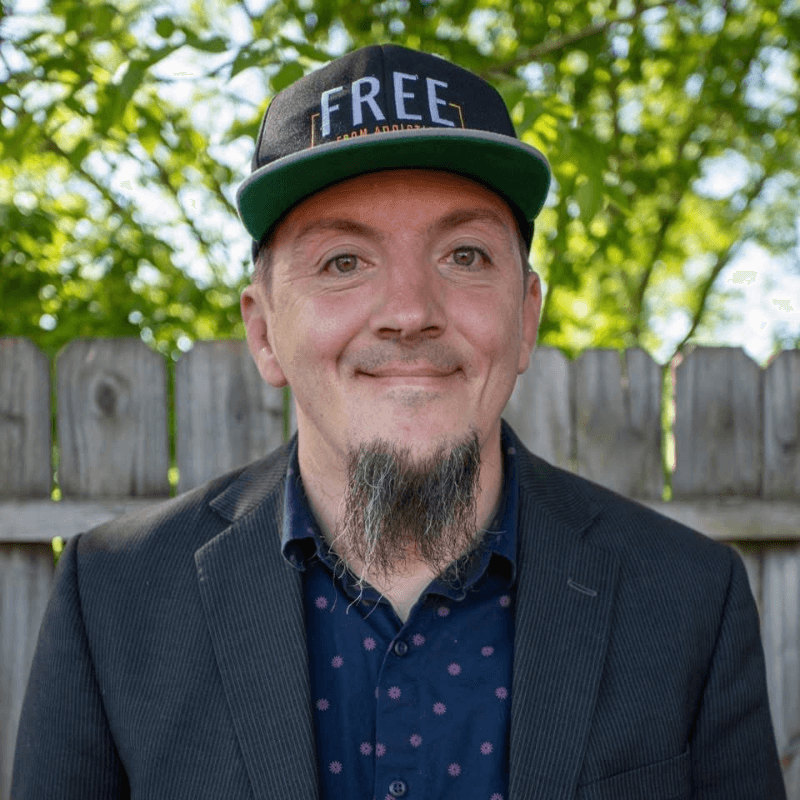
Justin Franich is a former meth addict, Teen Challenge graduate, and pastor who has been clean since 2005. Today he's a husband, father, and Executive Director of Shenandoah Valley Adult Teen Challenge. He hosts the Rebuilding Life After Addiction podcast and helps families across the U.S. navigate faith-based recovery options, compare programs, and rebuild life after addiction.
Read my story →This content is free. The work behind it isn't.