Finding Help
Faith-Based Recovery Programs: What Families Need to Know
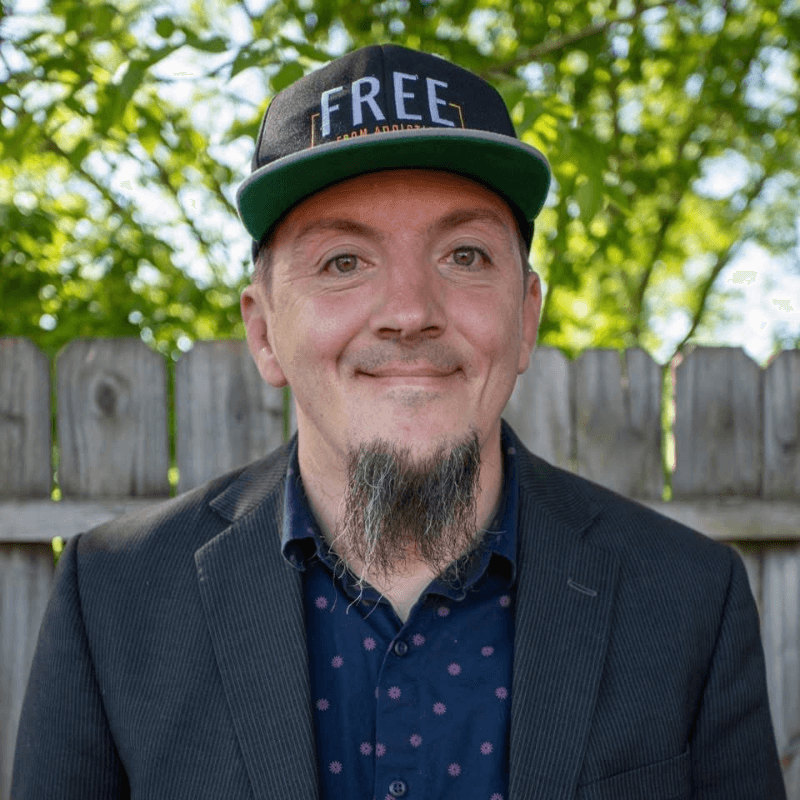
Justin Franich
June 3, 2026 · 11 min read
Most families don't start out looking for a faith-based recovery program. They start desperate.
They've watched someone they love spiral. They've made calls to facilities with names they can't keep straight, sat through consultations that felt more like sales pitches than help, and hung up no closer to an answer than when they dialed. Somewhere in there, someone says the words "he needs something deeper than thirty days." That's usually when "faith-based" enters the conversation.
The phrase gets used loosely. Some programs put a cross on the brochure and call it faith-based. Others borrow a vague "higher power" from twelve-step language and never get specific about who that higher power is. So the label by itself doesn't tell you much. What matters is what's actually happening inside, day to day, and whether it touches the real problem.
What Makes Recovery "Faith-Based"
A faith-based recovery program is built on a simple conviction. Addiction is not only a behavior to correct or a chemical to taper. It's whole-person bondage. Physical, emotional, relational, spiritual, all of it tangled together. The substance is part of the problem. So is the man or woman underneath it, and the wounds nobody ever dealt with.
A program that understands this isn't only trying to get someone to stop. It's after restoration of the whole person.
That's different from a program that mentions faith without building on it. Plenty of facilities will acknowledge that spirituality can help. They might offer a chaplain visit or encourage residents to explore whatever they believe. A faith-based program puts the relationship with God at the center of everything instead of off to the side. Bible study isn't an elective. Chapel isn't optional. The whole structure assumes that lasting freedom comes through Jesus, not just better coping skills.
Teen Challenge, founded in 1958, grew into the largest faith-based recovery network in the world, with over 1,400 centers across more than 100 countries. The approach has held steady for a long time because the foundation hasn't moved. People don't only need to get clean. They need to be made new. Paul put it to the Corinthians this way: "If anyone is in Christ, he is a new creation; old things have passed away; behold, all things have become new" (2 Corinthians 5:17, NKJV).
That's the goal. Not managed sobriety. Newness.
The Different Shapes Faith-Based Recovery Takes

Here's something most families don't realize at the start. "Faith-based recovery" isn't one thing. It's a wide lane with very different programs in it, and part of the confusion at 1 a.m. is not knowing which kind you're even looking at.
A few of the shapes it takes.
Some are long-term residential programs. Adult & Teen Challenge is the one most people have heard of, a network of Christ-centered programs that bring someone in to live, work, study Scripture, and rebuild daily life over months rather than weeks. The focus is discipleship and structure, not a short stay.
Some are weekly church-based meetings. Celebrate Recovery is the largest of these. It started in 1991 at Saddleback Church, founded by John and Cheryl Baker with Rick Warren's backing, and it's a Christ-centered twelve-step ministry built around what they call "hurts, habits, and hang-ups." It runs in thousands of churches now. re:generation is another church-based model along similar lines. These meet once a week and tend to fit people who need ongoing accountability and community rather than a residential program, or who need something steady after finishing one. If weekly meetings are what you're after, our page on Christian recovery meetings is a good place to start.
Some are rescue missions and gospel missions. In a lot of towns, the local mission is one of the biggest Christian recovery providers there is, often pulling shelter, addiction recovery, work, and biblical teaching under one roof. Salvation Army Adult Rehabilitation Centers run in a similar vein, with a long history and a work-based program.
And some are Christian sober living homes, family support groups, or one-on-one mentoring and pastoral care, for people who don't need a full residential program but can't do it alone either.
I'm not listing these to rank them. There's no single best one. The right fit depends on where your person is right now, and honestly on what kind of help you're able to find near you. Someone fresh out of detox needs something different from someone who's been clean a year and keeps slipping in the same spot.
If someone you love is in addiction and you don't know what to pray anymore, grab our free guide: 5 Prayers for Families Still in the Fight.
No spam. Unsubscribe anytime.
What Faith-Based Programs Are Built to Do
Clinical and medical programs do real work, often in the worst moments, when someone's body needs to be stabilized before anything else is even possible. That work keeps people alive. This isn't a knock on it.
A faith-based program is built for a different stretch of the road. The aim isn't only to interrupt the substance. It's to rebuild the whole life around it. Identity. Relationships. Purpose. Direction. Sobriety becomes the starting line instead of the finish.
That difference matters for families trying to figure out what their person actually needs. Most of you already learned the hard way that getting clean doesn't fix everything by itself. They come home from a short program sober, and they're still carrying the same wounds, the same broken relationships, the same blank where a sense of purpose should be. Within months, sometimes weeks, they're back where they started.
Faith-based programs take longer because they're trying to do more. It isn't enough to help someone detox and teach them to spot a trigger. The work is helping them understand who they are apart from the addiction, giving them spiritual ground to stand on for the fights ahead, and sending them out with something to live for.
Think of the prodigal son. He didn't only need to come home. His father restored his identity as a son, his place in the family, his purpose going forward. That's the kind of restoration these programs are reaching for.
If someone you love is in addiction and you don't know what to pray anymore, we built a free guide for that: 5 Prayers for Families Still in the Fight.
What to Expect in a Faith-Based Program
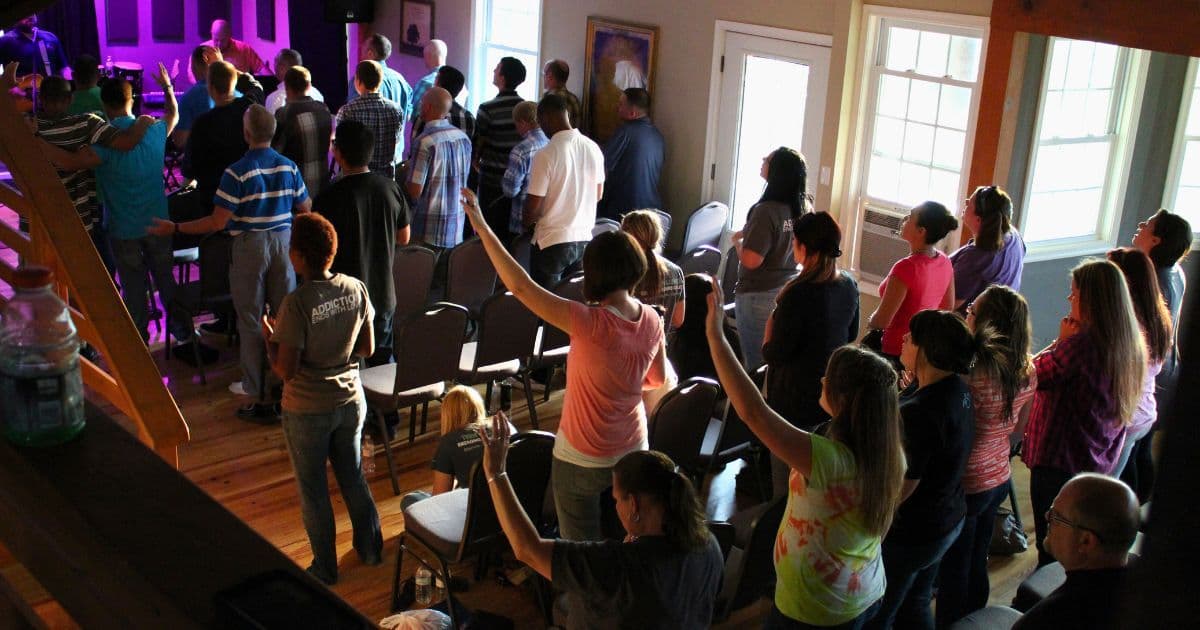
If your loved one enters a residential faith-based program, the daily rhythm looks different from what you might picture. The days are full on purpose. Morning devotions, Bible study, chapel, work, life-skills classes, group discipleship. There isn't much idle time, and that's by design. Empty hours early in recovery rarely help anyone.
Most faith-based programs run twelve to eighteen months rather than thirty to ninety days. That isn't arbitrary. The longer window makes room for real change instead of just stabilizing and sending someone back out. The early months are about getting physically healthy, building routine, starting to engage Scripture and community. The middle months go deeper into identity and relationships. The last phase turns toward reentry. Where will they live. What will they do. How will they stay connected to a church.

Work is a real part of it. Residents don't only sit in classes, they work. Landscaping, kitchen, maintenance, building. The point isn't cheap labor. It's learning to show up, carry responsibility, and find some dignity in honest work. A lot of people walk in not having held a job in years. Learning to work again is part of learning to live again.
Family involvement varies. Most programs know addiction hits the whole household, so many offer family weekends or resources for parents and spouses. Reconciliation where it's possible. Honest boundaries where it's needed. If you want to know what that looks like from the family's side of the door, what to expect while a loved one is in a faith-based programwalks through it.
Cost is usually on every family's mind, and this is one place faith-based programs often differ. Many centers run on a donation-based model, so families pay little or nothing out of pocket. They're funded by churches, donors, and the work residents put in. That doesn't mean there's never a cost, but it's often far below what private programs charge. We lay the numbers out plainly on the Teen Challenge cost page.
Is Faith-Based Recovery Right for Your Loved One?
Not every program fits every person. Faith-based recovery tends to work best for someone who's at least open to spiritual change, even if they don't know what they believe yet. Plenty of people walk in skeptics and walk out believers. What sinks it is flat-out hostility to anything spiritual. There has to be some willingness to engage.
It often makes sense when the shorter attempts haven't held. If your loved one has been through detox more than once, finished a program or two, and keeps landing in the same ditch, it may be time for something built differently. The brief approach may have steadied the body without ever reaching the deeper wreckage.
These programs also tend to draw people who want more than sobriety. They're tired of just surviving. If your loved one has ever said they hate the idea of being "in recovery" forever and that being the best they can hope for, a faith-based program offers another vision. Freedom is possible. A new name is possible. A purpose past staying clean is possible.
Whatever program you're weighing, faith-based or not, some questions are worth asking. What's the spiritual foundation, and how central is it really? What happens after the first phase? How do they prepare someone for actual life, not just life inside the building? What does alumni support look like? The answers tell you whether you're looking at a program that takes transformation seriously or one checking boxes. How to choose a faith-based recovery program lays those questions out in order.
Be careful with programs that use Christian language but don't actually disciple anyone. A cross in the logo doesn't mean much if the daily schedule is identical to a secular one. Ask specifically about Bible study, chapel, and spiritual mentorship. If those are add-ons instead of the foundation, you're probably looking at Christian branding, not faith-based recovery.
Finding a Faith-Based Program
The Teen Challenge network includes hundreds of centers across the United States. Each one runs independently, so availability, offerings, and cost differ from place to place. It's worth calling more than one if the first has a waitlist or isn't the right match.
When you call, expect questions about the person who needs help. What substances. How long. Any legal situations or medical needs. Whether they're willing to come in voluntarily. Those questions help intake staff figure out whether their program is the right fit.
Come with your own questions too. How long is the program. What does a day look like. What's the cost and what does it cover. What happens after graduation. Is there a waitlist. The more you understand up front, the better you can prepare your loved one for what's coming.
If you want sober living that's built on the same foundation rather than a clean bed and a curfew, faith-based sober living in Virginia explains how that's meant to work. And if you're trying to picture how a faith-based program compares to a clinical one before you decide, Teen Challenge vs rehab sets them side by side.
If you're in Virginia, Shenandoah Valley Teen Challenge can help you find the right program. We connect families with Teen Challenge centers that fit their loved one's situation, whether that's a men's program, a women's program, or help for an adolescent. You can start on the Teen Challenge Virginia page, or reach us directly through get help.
The Real Goal
Families looking for help often feel stuck choosing between bad options and worse ones. The short programs feel too short. The long-term ones feel too expensive. The free ones have waitlists. The faith-based ones sound intense. Every call feels like another dead end.
Here's what I'd want you to carry out of all of it. There's no perfect program, but there is a path to freedom. The goal was never to find a facility that fixes your loved one. No facility can do that. The goal is to find a place where they can meet God, where there's time and structure to rebuild, where someone is getting them ready for what comes after the program ends.
Sobriety is the starting line. Identity, purpose, relationships, a reason to get up. Those are what make a life worth living once the substances are gone.
If that's what you've been hoping was possible, it might be worth a phone call.
You’re not alone in this
If addiction has someone you love, talk to someone who’s been there.
The conversation is free and confidential. Justin & Rob answer the phone — both in recovery themselves.
One quiet email a week
New articles and podcast episodes when they drop. No pressure, no spam.
Justin Franich
Justin Franich is a former meth addict, Teen Challenge graduate, and pastor who has been clean since 2005. Today he's a husband, father, and Executive Director of Shenandoah Valley Adult Teen Challenge. He hosts the Rebuilding Life After Addiction podcast and helps families across the U.S. navigate faith-based recovery options, compare programs, and rebuild life after addiction.
Read my storyKeep going
 Beyond Addiction: Building Strength & Wellness with John HigginbothamPodcast episode
 Food Addiction Is Real: Here’s How to Fight BackPodcast episode What Level of Care Does Your Loved One Need? A Family Decision GuideArticleA Federal Judge Just Said What We Already Knew: A Recovery Home Is a HomeArticle
Know a family who needs this? Send it to them.
Monthly partners
Articles like this stay free because partners keep them free.
No paywall, no ads — monthly partners cover the writing, the phone line, and the guidance behind every page, so the next family searching at 2 a.m. finds real help.
Become a monthly partner