Life After Addiction
How to Rewire Your Brain From Addiction
Justin Franich
June 1, 2026 · 6 min read

If you've heard that addiction changes your brain, you heard right. That part isn't a scare tactic and it isn't a metaphor. The wiring actually changes.
Here's roughly what happens. Your brain runs on pathways, physical routes that signals travel down, and the more a route gets used the stronger and faster it gets. It's the same reason the hundredth time you drive somewhere is easier than the first. The route is worn in. Addiction takes that ordinary feature of how God built the brain and hijacks it. Every time the substance hits, the brain gets a flood of reward chemistry and learns, fast, that this is the shortest path to feeling okay. Do it enough and that path gets carved deep. Deep enough that your brain starts treating the drug like it's necessary for survival, filing it next to food and water.
That's why willpower alone feels like bringing a spoon to a landslide. You're not weak. You're walking against a groove that years of use cut into you.
This is also why so many people get clean and still feel like strangers in their own heads. They expected sobriety to flip a switch, and instead the old wiring kept firing. If that's you, you're not failing. You're meeting the part nobody warned you about, the long work that happens after the substance is gone. It's worth understanding who you actually are once the drugs are out of the picture, because the brain isn't the only thing that has to relearn. So does your sense of who you are.
So people want to know, reasonably, how long does it take to rewire your brain from addiction. And the honest answer is that there isn't a clean number. The early fog starts lifting in a few weeks, but the deep pathways, the cravings that ambush you out of nowhere months later, those take a lot longer, and some of it depends on what you used, how long, and what you're putting in its place. Anyone who gives you an exact timeline is guessing. What I can tell you is that the brain does heal. Scientists call the brain's ability to form new pathways neuroplasticity, which is a long word for a hopeful fact: the same brain that got grooved one direction can get grooved another. The road you wore in is not the only road you'll ever have.
But here's where I want to be careful, because this is exactly where most of what you'll read online takes a turn I won't take.
Almost every article on this topic ends in the same place. Your brain is sick, here are the treatments, here are the medications, manage it for life. And look, the science they're describing is real. I'm not arguing with the brain scans. What I'm telling you is that the scan isn't the whole person. You are not just a malfunctioning organ that needs its chemistry adjusted. You're a person, body and soul, and the rewiring God offers goes deeper than anything that stops at the skull. This is the bigger question underneath the brain science, and it's worth sitting with what the Bible actually says about addiction as a whole-person thing, not just a brain thing.
Paul wrote something two thousand years before anyone had a brain scan, and it reads like he knew exactly how this works.
"And do not be conformed to this world, but be transformed by the renewing of your mind, that you may prove what is that good and acceptable and perfect will of God" (Romans 12:2, NKJV).
Transformed by the renewing of your mind. Not the renewing of your behavior, not the renewing of your circumstances. Your mind. The very thing addiction reprogrammed is the thing God says He'll renew. And the word transformed there is the same root we get "metamorphosis" from. Not a touch-up. A creature changing into something else.
So how does that renewing actually happen, in a way that lines up with how the brain works? The same way the addiction got carved in. Repetition. New paths get worn by walking them, over and over, until the new route is the one your mind reaches for by default. You wore the old groove in one hit at a time. You wear the new one in one choice at a time.
Practically, in the body before the spirit, that looks like this. You feed your mind something other than the old loop. You put truth in front of yourself on purpose, before you need it, the way you'd stretch before you run. "Finally, brethren, whatever things are true, whatever things are noble, whatever things are just, whatever things are pure... meditate on these things" (Philippians 4:8, NKJV). Meditate there means chew on it, return to it, run the route again. Every time you choose the true thought over the old reflex, you're laying track. It feels fake at first, like talking to yourself, because the new path is faint and the old one is a highway. Keep walking it. Faint paths become roads.
The trouble is that a brand-new path is fragile, and the old highway is right there next to it. This is the stretch where most relapses happen, not because the person stopped wanting freedom, but because the new wiring wasn't load-bearing yet. That's why the practical guardrails matter so much in the early going. Knowing how to prevent relapse isn't a lack of faith. It's protecting the new path long enough for it to harden. The people who stay free tend to be the ones who built systems that hold them up when the feelings don't, because you can't rewire anything if you keep getting dragged back onto the old road before the new one sets.
And here's the part the brain science can't give you, the part that makes this more than self-improvement. You are not doing the renewing alone by sheer grit. "I can do all things through Christ who strengthens me" (Philippians 4:13, NKJV). The Holy Spirit does the deep work you can't reach. You show up, you walk the new path, you put the truth in front of you, and He transforms what's underneath. Jesus isn't asking you to white-knuckle your way to a new brain. He's offering to renew the mind while you do the walking. If you want the verses that do this work, the ones worth memorizing and running on repeat until they wear a groove, we keep a collection of Bible verses for addiction for exactly that.
The old road is still there. It probably always will be, the way a healed bone remembers where it broke. But a worn path you stop walking grows over. Grass comes back. And the new road, the one that felt impossible and fake at the start, becomes the one your feet find on their own.
That's not a feeling. That's how He made you to heal.
You don't have to rewire anything alone. Reach out. Sometimes the first new path is just one honest conversation.
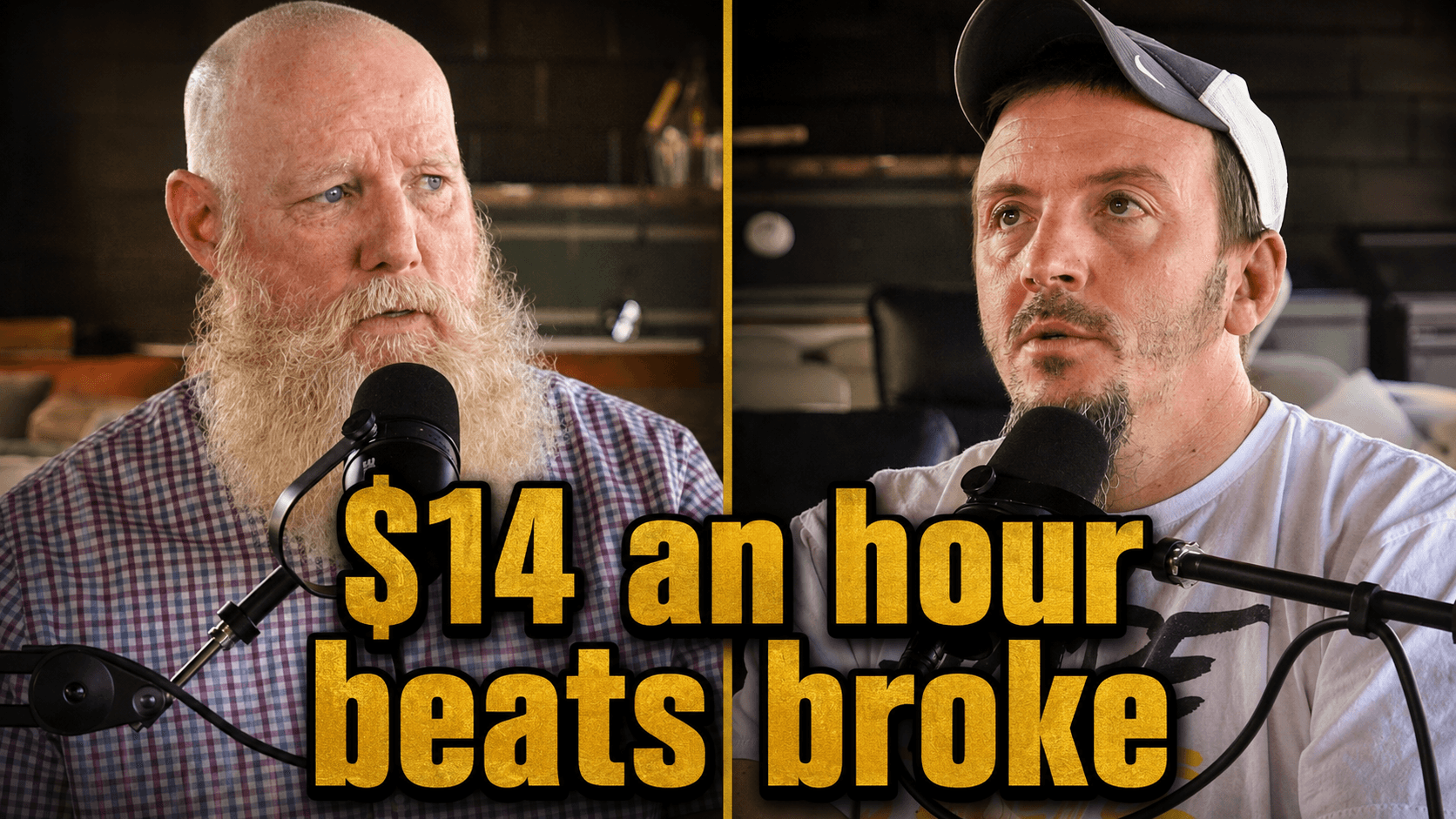
Hear more on the Rebuilding Life podcast: The Habits That Keep Me Sober and Spiritually Strong
You’re not alone in this
If addiction has someone you love, talk to someone who’s been there.
The conversation is free and confidential. Justin & Rob answer the phone — both in recovery themselves.
One quiet email a week
New articles and podcast episodes when they drop. No pressure, no spam.
Justin Franich
Justin Franich is a former meth addict, Teen Challenge graduate, and pastor who has been clean since 2005. Today he's a husband, father, and Executive Director of Shenandoah Valley Adult Teen Challenge. He hosts the Rebuilding Life After Addiction podcast and helps families across the U.S. navigate faith-based recovery options, compare programs, and rebuild life after addiction.
Read my storyKeep going

Know a family who needs this? Send it to them.
Monthly partners
Articles like this stay free because partners keep them free.
No paywall, no ads — monthly partners cover the writing, the phone line, and the guidance behind every page, so the next family searching at 2 a.m. finds real help.
Become a monthly partner