Justin Franich: It's Justin Franich here with the podcast. I hope you're having a phenomenal day. Today I'm coming at you with one of our recovery conversations where I interview somebody I know, a good friend of mine, and we discuss issues that are pertinent to recovery. My hope here is to provide encouragement and hope. As the name says, Anchor of Hope Recovery, we believe that hope is the anchor for the soul, that true recovery only comes through a relationship with Jesus Christ. Once you dig into that relationship with Jesus and find out who He is and the purpose and plan God has for your life, you begin to truly live a life of freedom, clean from drug and alcohol addiction, just as I've done for the past 15 years now.
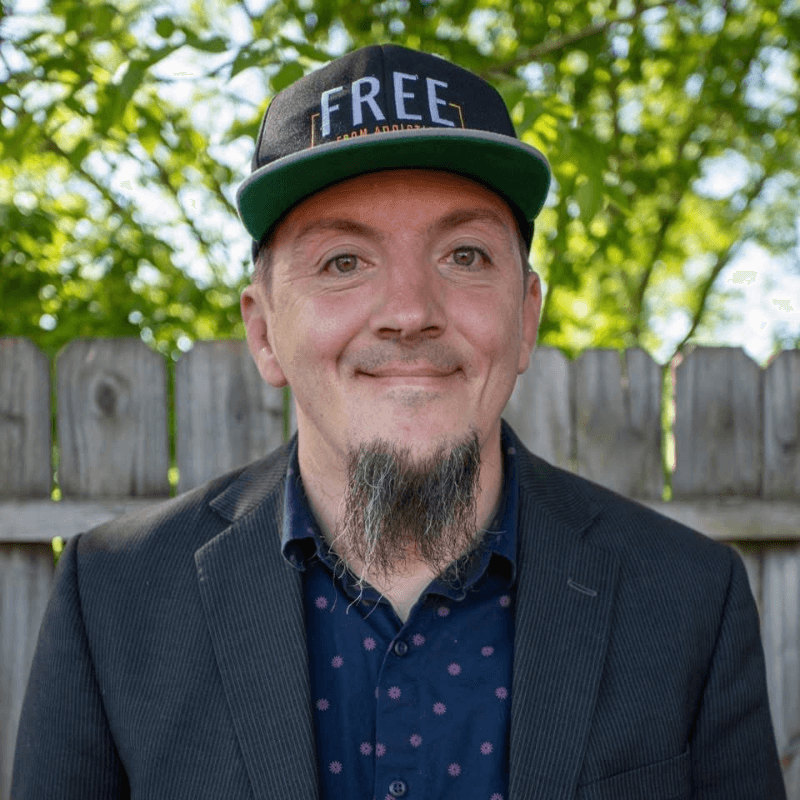
Today we're going to have a conversation with a good friend of mine, his name is John Frost. I met John about ten, eleven years ago when a mutual friend brought him out to minister to the students at the Teen Challenge campus back when I was directing the program. John crossed my mind for the podcast not only because of our friendship but because I remember when he came out to the students, he did such a fantastic job connecting with them and bringing the Scriptures alive to the men and women struggling with drug and alcohol addiction. So I've got John on here with me today. John, go ahead and say a few words, introduce yourself.
John Frost: Man, thanks for having me on here. This is fun and exciting. I'm glad that you have finally yielded to the two-year itch that you carried around and here you are. For me, obviously, we know each other from a ministry side. Definitely have more in common than that. One of the things I've valued is knowing Justin's heart. While addiction was never really my issue with drugs, the truth is the Lord has really helped me overcome a great amount through my lifetime. Growing up fatherless, levels of child abuse, growing up in isolation, overcoming a massive amount of depression to the point that I had actually attempted to take my own life when I was ten. I am one of those people that was either going to go one of two ways, and by the grace of God, we headed the right direction. I now have an amazing family and an amazing testimony.
Justin: It's interesting you share that, that you never necessarily fell into addiction but certainly had plenty of trauma in your life that could have led you down that path. I'd be interested to hear what clicked. One of the things I got from my time going through recovery was this misnomer that it takes an addict to reach an addict. While I certainly think addicts can be helpful in ministering to other addicts, I don't necessarily think it's the case. I was always one of those people that wanted to find somebody who never used drugs or alcohol, or somebody who had a similar story but was able to abstain and find freedom. Was there something that clicked in you, a moment where drugs and alcohol were offered and you just chose to turn away?
John: There are two things. There was a point where alcohol was available, but I think what tamed that in me was the fact that I knew the story of my father, at least the perspective I had been given. Even by his own account, alcohol had ruled his life. At a very early age, when he was still around, I saw alcohol in action. There was no moderation. I saw what excess did. You can imagine how that hits you as a child. So it was easy to stay away from that.
The one thing that actually kept me away from drugs was the fact that I grew up in so much isolation. When I went through school, I was just a loner. There was no connectivity with anyone that would have an influence to take me that direction. And that's one of the things I've found through ministry and dealing with people in addiction. They have a lot of dysfunctional relationships, and in those relationships they have a hard time being honest. There's such a culture of protecting each other that no one's actually helping each other get whole and healthy. That's one of the biggest mountains I've found with people. They have a hard time breaking ties because somebody is either going to lead you to a place that's going to make you whole, or you're going to continue in a relationship where you just throw dirt on each other and bury one another.
Justin: Absolutely. It's interesting you point that out, because the isolation almost protected you from all that nonsense. That became my story when I first got home from Teen Challenge. All those old friends, all those old relationships had to be cut off. I just didn't reach out to anybody. As a result, there was nobody in my life offering me drugs anymore. Everybody was inviting me to church instead. That radical shift in my relationships, from surrounding myself with people who didn't have my best interests at heart, we call them our friends, our good buddies and pals, but the reality is when I needed to get help or go to rehab, none of those people were there to cheer me on. I took the scissors out and just cut the ties, and it really made a huge difference.
John: I think that's maybe the second most powerful decision anyone in any type of addiction will have to make. God designed us for relationship. So the hard part for people stuck in addiction is you may end up in a place of isolation when you start, or maybe you end up in the wrong crowd to begin with. Either way, you're having to untie yourself from something that is actually a need God designed you to have, and you're having to have the courage to break off and actually attach to people who defy every urge and temptation you have and will hold you accountable.
Justin: You mentioned this culture of protecting relationships in the drug-addicted lifestyle. Even in Teen Challenge, teaching accountability was so difficult because we try to protect our friends. Accountability often gets mislabeled as snitching or "it's not my business." The important thing is we've got to find people that will make accountability their business, that aren't afraid to speak into our lives and want to protect the good in us rather than the bad.
John: Absolutely. That leads me to the number one most courageous decision I personally think any addict will have to make, and that is absolutely choosing to love the truth about themselves and about their situation more than anything else. Accountability begins with absolutes. The hardest thing for people in general, let alone addicts, is being honest about who they are. We like to quote the Scripture, "You'll know the truth and the truth will set you free," but it actually says the truth will make you free. My point is that knowing is a relationship. It's not a drive-through experience. There's something where you're willing to take every aspect of who you are, even if it makes you look bad for a moment, because the truth will ultimately force you to sow proper things into your life. The truth will force you to hold yourself accountable, as well as hold yourself accountable with people, when you have to be honest and say, "I can't do it on my own."
Justin: It's interesting, I just posted a short podcast today called Surrender Sunday, just a bite-sized nugget to encourage people. I talked about that process fear, where we know the destination we want to get to but there's a fear of the process. That truth you talked about that makes us free, as we submit to the truth and begin to know it, there's this process of making us free. And it's ugly sometimes because things have to shift in our lives, things have to change about us. The Bible is like a mirror. As we read the Word of God, it reflects back who we are and we see the discrepancies, maybe some issues in our character. We have to address that. But in order to really address that, we can't be afraid of the process.
John: I think every human being has to have that experience with truth. Obviously we're talking about Jesus. We know that the Word of God is quick and powerful, sharper than any two-edged sword. It's a discerner of the thoughts and intent of our heart. The Word of God cuts and separates soul from spirit. It's constantly showing us who we are. We're naked before God. We can put on a show before people, and that's the problem with most addicts I've encountered. They'll tell you enough to feel good about who they feel like they are around you, but they won't tell you the whole truth to air out everything and really get free.
Justin: Yeah, the master manipulator. That was me. Always giving just part of the story, never the whole story. Learning to find that place where we can be honest about who we are and not being afraid to confront that is a huge part of freedom. Let's talk about identity for a minute. Addiction is born in trauma a lot of times. There are experiences in our lives that cause us to question who we are as people. I know for myself, I turned to drugs because I just wasn't happy with who I was. I didn't have any clear direction. So addiction became my identity.
One of the things that drives me crazy about the recovery world is this misnomer that we always have to be addicts. I've gotten pushback, but I really believe that as we step away from those labels and those places in our identity that identify who we used to be, we can start to develop our character into the people we're becoming. How does somebody coming out of addiction grasp ahold of a new identity and break off the labels of the old?
John: Identity ultimately starts with an internal dialogue. Most people, because internally they're having the wrong conversation with themselves, that's where addiction kicks in, because we have to begin to drown out the internal conversation. We have to drown out the level of pain. Whether you're dealing with illegal or prescription drugs, the identity of pain is real. Even in recovery, when you're dealing with that "what you see in the mirror" type of identity, it's important to draw attention to the fact that especially in Christ, that's where it drives me crazy that people say, "Well, you're always an addict." Could you look Jesus in the face and tell Him that? The one who died, shed His blood, baptized you in fire and in the Spirit of God? Can you look Him in the eye and tell Him you'll always be an addict?
That's the reality check we've got to have. Are we really connecting with Jesus, or are we just connecting with principles found in Scripture and trying to make ourselves feel better?
Justin: That is a powerful question.
John: And I think sometimes when people get injured or hurt, if they're not able to check themselves and talk about what they're experiencing, because they can't do what they used to do or feel the way they used to feel, that doesn't get talked about. In the pain of that moment, people end up running into these addictions. That's why I say embracing truth is the number one most courageous decision any addict is going to have to make. Show me your relationship with truth, and I'll show you your relationship with yourself. If you are running from a shattered identity or one that is pain-filled...
Justin: Hold on, John. Can you repeat that? That's quotable. That's tweetable.
John: Show me your relationship with truth, and I'll show you your relationship with yourself. Because the reality is, if you're playing the game where you're lying to people, manipulating them, telling half-truths, it tells me the relationship you have with truth, and it says why you're in bondage to a broken image of pain. But if you have a relationship with truth where it's solid and truth is put in front of everything you do, then you're going to develop through the course of time a healthy identity, because your absolute is the truth.
If your issue is rejection, well, what is the truth? At some point you have to stand on your own feet. Does it matter that someone has rejected you? If it does, then let's take time to heal from that pain and talk about it. But at some point, you have to be a whole person where you can stand on your own two feet. If you have people whose rejection is so painful because they won't give you space, maybe you need to find new space with new people, because the truth will make you whole.
Justin: I think that's powerful. Until we're confident in who we are in Christ, we're never really going to develop that new life that Scripture promises. Going through that process of identifying our relationship with truth, then taking on the mind of Christ as Paul said, being transformed by the renewing of our mind. But that only happens once we embrace it.
John: And here's the second part. If you're putting truth in the forefront of everything, sometimes in the process of healing you encounter truth that is painful. This is where some people get lost in addiction. They do real good for a moment, but then they encounter truth that becomes painful and hurts. That's where you've got to have the right people around you, because your old crew is going to take you to old places. But if you surround yourself with a new crew, new friends, the right people, they're going to help you process the pain.
There's going to be pain if you stay in addiction. There's going to be pain if you heal. The difference is that healing has an end date, and pain will no longer be your master.
Justin: I remember literally two weeks after I got out of Teen Challenge, we talked about those old relationships. I had just gotten home, still trying to get my feet together, my first couple weeks back in the real world out of the accountability and safety of a rehab program. My grandmother passed away, and that was my first real painful moment that tested my recovery. In the past, rather than dealing with that pain, I would have reached out to a friend, copped some drugs, and gotten high so I didn't have to deal with it.
That night I had an old friend reach out to me and ask if I wanted to hang out. Right around the same time, I also had a friend reach out and ask if I wanted to go to a worship concert. Two opportunities on the table. Thank God I chose the worship concert. It was like a four-hour worship service. A lot of things said and done in that moment allowed me to reconcile with the fact that my grandmother was gone. We missed her, knowing she was with Jesus. Getting in that place of worship gave me hope that I was going to see her again one day.
That night I met my wife. She wasn't my wife at the time, she was just a girl I thought was cute. My entire life today was predicated on that one decision. The individual who reached out to me that night ended up reaching out seven years later asking about how they could get into Teen Challenge. My entire life as I knew it came down to that moment. How was I going to react to my pain?
John: That's powerful. And if I can address this as a dad for a second. Scripture talks about training up your children in the way they should go. If there are areas of your children's life that you're not touching, they'll figure it out for themselves. I work on this with all six of my kids. I throw that in there so people know I've had some practice.
I think we're so soft as a society. You need to teach your kids how to process pain and disappointment and move on. Because if you don't teach them how to handle it the right way, they'll figure out how to handle it on their own. That's why you've got a bunch of 40-year-olds who clock out of work Friday afternoon and go buy a huge container of alcohol from the local 7-Eleven because that's how they process life and disappointment and the mundane.
There are grown-ups who have to learn how to retrain themselves. That's a serious thing, especially if you're close to your family and you lose them and you're in the middle of trying to walk your way out of addiction. That's a serious decision. We're kind of soft as a society and we're almost open to addiction because we don't teach each other how to dust off their feet after disappointment, after painful things happen, and keep moving on. Have a relationship with truth. Own your life.
Justin: Yeah, but it's just deciding in life that we want to confront the tough choices, the difficult places, so that we can really be healthy people that are strong and thriving rather than just stuffing everything down and waiting until it eventually blows up. There's no evidence I would have relapsed that night had I went out with that friend. But by choosing correctly, God set me up for an incredible future. Our decisions, no matter how small or big they may seem in the moment, can have extremely long-term consequences. We have to evaluate them on a decision-by-decision basis.
John: Your example is a snapshot for anyone listening who's in addiction. You've got to begin to break down your life into those moments, because those are the moments you will either drown or learn to walk on some water.
Justin: We're one decision away from becoming who we were yesterday. That's all it takes. One choice, one decision, one moment. As we build up the discipline of making the right choices, they come easier. That becomes part of our identity.
John: That's the truth. And if we're going to trade in addiction for having vision and dreams, there's always pain involved in walking out the promise on your life. From a biblical perspective, we talk about reaping a harvest like it's a magical experience, but there is labor involved. If you don't learn how to process pain appropriately, how are you going to be able to reap a harvest in your life? That is true labor. You sweat, you bleed, you sacrifice. It is so important to be able to handle pain, manage it, keep walking forward based on the promise that is in you.
Justin: That's one of the things I talked about earlier, that process pain. Nothing worth having doesn't require work. If we're willing to work on the right things, we'll begin to see that purpose fulfilled. I promised my audience I'd try to keep this around 30 minutes so we're coming to the end. John, anything you've got going on?
John: God has been, dude, I am just amazed at this place in my life. So many things God has spoken into my life, I am walking in it. If I could put an exclamation mark on what you're talking about, the process, the pain, the ability to go from where I came from in my youth to see what God is doing now. I'm 44. Some of those years have been agony. But I am in a place where He is fulfilling His word over my life. I'm not saying that because I want to talk about me. I'm not really that unique. God loves every single individual.
If I could encourage anybody with anything, I would say this: have a real honest moment with God. Figure out where you stand with the truth, and you'll know how much you're ready to have the Lord in your life. He is for you. He is not against you. But He will not lie to you, and you cannot lie to Him. I'll leave that there.
Justin: That's good. I appreciate it, man. Thank you so much for taking the time to come on the show. For everybody out there listening, thank you for tuning in to this episode. I hope you found some value. There were several takeaways you may want to rewind and write down. Hit the subscribe button, and if you could share it as much as possible and invite some people you think could benefit from this content, I'd appreciate it. Thank you again, John.