
Rebuilding Life After Addiction · July 6, 2023 · 54:15
What It's Like to Walk Through Celebrate Recovery
with Joel
Joel is a Celebrate Recovery leader with 10 years sober from alcohol and crack that started at 14. He calls Celebrate Recovery 'Surrender for Dummies.' Straightforward. Honest. No pretending. What changed for Joel wasn't just stopping drugs. He realized drugs were a symptom. The real roots were anger, fear of confrontation, and a lifetime of avoiding discomfort. The Lord told him to stop saying 'I'm sorry' for his past and start saying 'thank you.' That's the difference between shame and gratitude.
If this episode hits home
New episodes, straight to your inbox
One quiet email a week. No pressure, no spam.
Read the full transcript
Introduction of Joel and the Importance of Community
I think so, yeah. Rob, do you want to go ahead and introduce Joel, your friend, and then yeah, we'll jump into the rest of it? Yeah, what's going on, guys? I hope you guys are having a wonderful day. Had a happy Fourth of July. I'm privileged and honored to introduce you guys to a gentleman. I'm a father of certain children—a father of Christ—an individual that has changed lives through a program called Celebrate Recovery. So he and I went through Teen Challenge together, and he just has a crazy testimony, a crazy story, but he was a pivotal individual in my faith that helped carry me through the program.
Not only did he teach me practical skills outside, whether it was drywall or painting, he's just a jack of all trades. If you needed something, you could go to him. So I hope that you guys have your ears tuned to hear what he has to say and what values you can reach in your lives. Kind of just give you some context of the importance of community. And that's why we brought him on here, because it's part of a community, and that's what sustained his faith. So welcome my brother in Christ, Joel.
Thank you, sir. Good to be here. Don't blow me up like that, you know? People hear something awesome, you know? But, yeah, so let's dive into the discussion about community, man. So we all went through TC, right? And I think most people that I've heard that have had a great experience in the program, like Teen Challenge, get out of the program and talk about the value of the relationships that were built in a place like Teen Challenge. It's hard to replicate that. You spend 12 months with people in some of your worst moments.
Challenges of Leaving Teen Challenge and the Search for Community
It's the brothers in the program. I mean, I ran a program for years, and I know that the students have a greater impact on one another than I ever had in their lives. And it's just the reality of living next to people. You're rubbing elbows with them; they help walk you through your deepest moments, your struggles, the days that you pack your stuff. I don't know about y'all, but I packed my stuff three or four times, and it wasn't the staff that kept me there. It was the brothers, right? But yet getting out of TC, life hits you in the face. And if you're anything like me, it was hard to replicate that community, right?
That community that kept me sober, that kept me, you know, away from meth and all of the stuff that I was struggling with, all of a sudden disappears overnight. And now I've got to figure it out. I'd love to hear either of you guys. Joel, you're here as a guest. What were some of your struggles? Did you have any struggles coming out of the program? I know you said you're in Celebrate Recovery now, right? But how was that journey for you trying to replicate that community?
It was kind of a culture shock, if you will. You know, I get out, I'm going to chapel every morning, every night. I got brothers that pray with me at the drop of a hat. And then you just get out, and then you're basically hoping you’re amongst family. But, for instance, my household that I moved in with my mom straight out of TC, I had lost my house. I lost everything before I went to TC. She was going into the program—alcohol and crack. Okay, yeah, get me drinking and I'll do anything, you know? So my biggest struggle was that all of my brothers were mainly still in the program. I had one Brett Cooper. He had graduated, but he was always busy helping the guys out at Teen Challenge. And basically, I didn't have any of that, so I was pretty much alone and isolated for a good little minute.
When I jumped out, one of the conditions for me to live at my mom's house was to go to Celebrate Recovery. And I was like, yeah, cool, man, I'm going to go, I'll do it, you know, maintain my recovery—quote unquote, maintain my recovery. And man, I tell you what, God showed me so many things, so many things that I needed to work on. Well, drugs and alcohol were not my problem; they were only a symptom of my problem.
Root Issues Behind Addiction and the Role of Celebrate Recovery
So I started that journey. Can you speak to that a little bit more? You said drugs and alcohol weren't your problem?
Yeah, so what were some of the root issues that drove you to use during your struggles? Well, I started using real early on. I'd say every day, I started about 14. Before that, it was just experimentation. When you start smoking weed every day, drinking every weekend, I didn't learn coping skills that a lot of people get to learn if they don't start using until maybe they're 18 or 20. So emotionally, I was emotionally handicapped because getting high and drinking was my cure-all. You know, if I was happy, I got high. If I was sad, I got high. If I was angry, I got high.
So that was my big problem: I didn't know how to first identify what I was feeling because a lot of the time, sadness would create anger because I didn't want to feel sad. I didn't want to feel hurt. So I didn't even know what I was really feeling. All I knew was that I was angry, and I was either going to hurt someone or I was going to self-medicate.
Right. So the biggest part for me was communication—understanding what I'm feeling and then expressing what I'm feeling. I had no clue how to do that in a healthy way.
Yeah, that's good, isn't it? Go ahead, Rob.
Yeah, it's interesting that you say this, right? Because even for me, there's a lot of things that surface themselves. It's like, you remember the games at Chuck E. Cheese or it's like the mole game where the little moles pop up and you have to hit them on the head? Well, it's like you're like, no, don't like—don't surface yourself. And so issues coming out of Teen Challenge would begin to surface themselves. And I've said this on the podcast before, but the busyness of life will cause you to ignore the problems that you have deep within.
And it's when God's removed you from something that He reveals truth. It's like, I have to bring you through the valley in order for my light to shine on your darkness. So can you? Right. But the thing is, right, like when you think about this community, it starts with whom? Not with the people around us, but with God. Because before God birthed the heavens and the earth, He was already in communion with the triune God—God the Father, Son, and the Holy Spirit. He’s the community of Himself, right? So there was already unity there.
Understanding Community and Forgiveness Through Celebrate Recovery
And so what He's teaching us as He births us and brings us forth is that community derives from Him, and everything else follows. And so through our fallen nature and the things in which we've gone through, God's like, look, I have to bring you back into a covenant relationship with me so that you can learn how to live again and replicate that here on earth. That's why His prayer, when He taught His disciples, was, "Let your kingdom come on earth as it is in heaven."
And so what we're doing is really learning everything all over again. So it's really awesome, brother, you bring this up because coming out of Teen Challenge and learning how to address that, that mold, if you will, right, like that dark area of your life stemming from an early age, right? When you look back at it, what happened at 14? You know, what did the Lord reveal to you throughout this whole process to drive you to a place of community through Celebrate Recovery?
First of all, I’m going to reflect on who I surround myself with. So if I surround myself with godly men, I have a good chance of reflecting a godly man. If I surround myself with people who are just going through the motions, then I’ll just be going through the motions. If I surround myself with people who live in the street life, I’m going to eventually go back to the street life.
Recovery can be a very lonely journey sometimes, especially in the beginning. Oh, you have God. So when I got out of TC, man, that’s all I had. I would sit at the table, and I was like, I know one thing for a fact: seek first the kingdom of God and all will be added to me. Lord, show me, as long as I stay connected to you, I know it’s going to be okay. It’s definitely not going to be easy. It’s definitely not going to be smooth sailing. But I know if my eyes are on you and not my problems that you have control because what we focus on has power in our life. We focus on God; He’s got the power. We focus on a problem; the problem has the power.
That’s so good. That’s good. That’s good.
Yeah, it’s crazy. I mean, you think about starting so young—14—and that was about the age that I got going. And you know, with the drugs, I never built good friendships, you know? And so I went to TC in New York, which is like four states away from home. All those friends I left behind, it was maybe a text message, you know? But it wasn’t people that I could go spend time with. I think there was a—you mentioned recovery can be a lonely place. It’s that reality check that I’ve got to be okay with being alone for a little bit.
Because my alternative is to engage in these old relationships. I used to call it the Superman syndrome. You know, everybody comes out of TC thinking they’re going to save everybody that they used to hang out with. While that may be true eventually, it’s probably not true right now, you know? And there’s nothing more important in the moment than guarding who I let in my life. You hit it on—we reflect who we become.
How did—Joel, let me just be curious—how did some of those relationships you said during your time at Celebrate Recovery in that community help you uncover some of those root issues? What did that look like?
So basically, doing the 12 steps. So if anyone doesn’t know, Celebrate Recovery is a Christ-centered recovery program. They actually have a set curriculum or four books that you go through. And basically, it’s about trusting God, cleaning house, and helping others. So first, you establish the foundation and your view and perspective of who God is and who He is in your life.
Then we get into the harder part, which is looking at all the things that I’ve done to other people and the things that other people have done to me. Learning how to authentically forgive yourself and others and kind of like just shed the snake skin of all the old resentments. Because in addiction, you know, we gather a lot of baggage, and we're carrying around some heavy stones. Just because we’ve given our hearts to God doesn’t mean we’re absolved from all the baggage that we’ve created through our behavior and actions.
Wait, say that again, bro. Say that again, dude. That is just because we give our hearts to God does not mean we’re absolved from all of the baggage that we carried and developed through our addiction.
You know, it’s funny that you’re bringing this up because you didn’t even see our podcast softly, but last week we talked about forgiveness, and this was pretty weighty. But you said authentically, authentically. So can you dive deep on that a little bit, if you don’t mind?
Absolutely. One second. So basically, I’ll give you the one that had the biggest impact on me. Okay, so when I first felt the presence of God and I knew that I was forgiven at Teen Challenge, I fell to my knees and I cried. And I can count on my hands how many times in my whole life I’ve cried—probably on one hand before that day.
And so I knew that I was forgiven. I read scripture; it tells me that you’re forgiven, right? But I drove past—so I moved right back into my old stomping grounds where I did all my dirt. And I drove past this neighborhood with a house that had specific memories plaguing to me. Even to this day, it hits my soul, put it that way— the things that I did. So basically, I would drive, and I used to drive by there almost every day on the way to work.
And every time I drive by, I’m like, “Lord, forgive me. I’m so sorry. Lord, I’m sorry. Lord, I’m sorry.” And sometimes it was twice a day. I passed it on the way to church every single week, and I passed it to go into CR every single week. And so in Celebrate Recovery, I had already done one round of the 12 steps, and I go, and I think I’m on maybe my third year doing the 12 steps because I became a co-facilitator at that time.
I was driving home after the lesson on forgiveness, and I was like, “God, please forgive me. I’m so sorry.” And God, He just hit me like a ton of bricks. He goes, “Joel, you are forgiven. You need to forgive yourself. You are not that man anymore. Instead of saying, ‘I’m sorry,’ say ‘Thank you!’”
And so it was all about gratitude that He—the new creation that He created within me—the old was gone. And the new, I’m living the new right now, but I’m still stuck in the old in my mind. And that’s where I was fighting it, was in my mind. So the things that grieve my soul, the things that I did, I can’t change. I can never change. I’ll probably never see those people again in my life. But it doesn’t stop the fact of how much it still impacts me. Since God—even when I was running around in addiction, I still felt bad about it. But when God changed my heart, it grieves my soul to even think about it.
And so that day, instead of saying, “God, forgive me,” I just say, “Thank you, Jesus.”
How did that play out? Did that struggle with forgiving yourself impact your relationships with other people at all?
What that did is give me—I would say—a deeper understanding of grace. So in order for me to give grace to somebody else, I have to—even if, okay, say, for instance, you get into an argument with a friend or your wife, right? And they say something that’s totally just hurts you, breaks your heart. So a lot of the time, God, through those words that they say, some key words, will reveal where that person is at.
So I realized my revelation of grace was that in order for me to give the same grace that I receive, I have to first accept where somebody is at. Then I can—once I accept where they’re at, I can respect where they’re at. And then once I respect where they’re at, I can meet them where they’re at, just like God meets me where I’m at.
Yeah. Man, that’s great. So found right there.
Yeah, and it’s hard to do that, right? When we haven’t received the grace ourselves fully, when we’re living in that spot where we’re still apologizing instead of saying thank you. It’s such a powerful revelation, that peace right there about shifting from this, like—like, stop apologizing, give me—like, that’s good. That’s a tweetable. By the way, that’s one of those quotes. We’re going to turn that one into a reel.
```
```markdown
The Ripple Effect of Vulnerability in Recovery
struggle with this. You know, I had people like, hey, you know, I've been molested and I feel horrible about that or I did this and I feel horrible about that. And so, people who weren't even there for drugs, they weren't even there for drugs. And so, there it was, it's a ripple effect. The Lord, the God of all comfort who comforts us allows us to give that same comfort just by speaking that one word, making ourselves vulnerable, putting our pride down and saying, hey, you know what? This happened to me. And it just, it ignites. It's a fire. It's so much harder to do that.
I say real world versus teen challenge because right, like we all show up at a rehab program at our lowest point. You know what I'm saying? So it's pretty easy to be vulnerable. They’re like, everybody already knows that you've blown your life. Like so, what am I going to hide here? You know, I'm in rehab. I used to say all the time, like all my best efforts landed me in teen challenge. Right. Like that was my best, my absolute best manipulation and best efforts to try to get my life together, got me in rehab. Way to go, Justin, you know, like here I am. But like we hit that we, there's a vulnerability there because of that. But then sometimes like we don't experience that same vulnerability and so Joe, it sounds like you found that at Celebrate at CR, you found people who were willing to just be raw and honest.
Barriers to Vulnerability and the Need for Community
And let me ask you a question. And I know you can't speak for the entire church at all. But just people in general, just being who we are. Like what do you think the barriers are for people to be vulnerable? You know, like stick on weakness, pride, denial. I'd say, well, you know that well pride is fear-based. So let me just go back to say fear, pride, denial. Yeah. So either one they don't want people to know that they're not perfect or know they have an issue. Right. They don't want to, they don't want to be discovered, if you will. You know what I mean? They don't want to seem, they don't want to seem weak. You know, pride is a beast for men. For us, it is hard. And the stigma that is attached to it.
So right now here in Lake Placid, there was no recovery here. And when I moved up here, it would just put on. I've been running from CR because the last time me and my wife both gave our testimony at CR, we were put under fire. Like you know the song, another in the fire? Yeah. That was my anthem. It should have played when I walked in. And we were just going through it, man. I was like, yeah, forget it, man. Just, just not going to do it. I was scared of the devil, man. I didn't want any more attacks on my family. I was like, yeah, I'm going to put that on the back burner. Thank you, Jesus. I'm going to just keep going to church. And you know what I mean? And for me, it was fear.
But so we come to these churches here in this little small town. And we stand outside with a CR table trying to advertise. And no one's like, I don't have a problem. And we're like, it's not just drugs and alcohol. You know what I mean? This is anything that you need to surrender to God. This is, remember the little books that were like "computers for dummies" and stuff like that? Yeah, the little yellow books, "computers for dummies." Well, Celebrate Recovery is "surrender for dummies." Okay. This is outlined in a curriculum. They ask all the questions. All you have to do is answer honestly. And you can find out. And that's where I found out that my issues weren't drinking and using drugs—that was solely a symptom. It was my coping mechanism. It was my escape. It was what was my cure-all for life.
You know, some of my biggest issues were communication, identifying my feelings, and then articulating those feelings. Like that, I would say those are the biggest ones. Confrontation with women. I had a real strong Southern mom. And her opinion is always right. You're never going to win that argument. So at an early age, I just would back down from confrontation with the woman. If you were a guy, I'm going to bow up, and I want to fight you. You know what I mean? But with a woman, I carried that into my marriage. And so it would cause me to go from zero to a hundred at the snap of a finger. Because I wouldn't say anything for so long. I'd stuff all my feelings down. I didn't know how to express those feelings. And then with finally one little thing, I pop off. And I'll get angry. You know what I mean? So like that was, I discovered that was a trigger—me bottling my emotions. Not knowing how to express what I'm feeling. It was a trigger for anger.
And so a lot of the times when I became frustrated and I'd lash out. You know, a lot of times it's something's real funny. You know, like, hey, can you get me this? Oh, what? I got to do everything around here. You know, you kind of flip out. You know what I mean? And that's because for the past month, I've been stuffing everything that's been bothering me away. Because of my fear of confrontation with a woman. That literally stemmed from my childhood with my mom. I found that. You know what I'm saying? So like, I carried that bag of rocks all the way. And I was probably maybe four or five years deep in CR until I figured that out. Wow. Yeah.
And so the onion continues to peel. The more we do it, the more we press in, the more we allow God to sanctify us. And we embrace the uncomfortable process of sanctification. The more we can reflect Christ to the world. But especially to the ones in our home. Yeah. That's so good. Yeah. That's really good. Chief, I want to toss this comment up real quick. Chief, I said the biggest barrier is people because of misinformation. And not knowing what to do or how to help makes us afraid to be open, real, and vulnerable. So help us, Lord. And then she said, we all react to get triggered based on past experiences, which covet how we react and respond in the present. But God, that's really good.
I mean, it is those past experiences. You know, we talked about the community and all of that and how that community aspect was part of pulling that out of you, you know, like other people. And I think that's part of like, like sometimes you hear the mindset, you know, it's just my relationship with God is personal. It's just me and the Lord, you know, I'm just going to do this. I'm going to go to the Lord consistently and we don't ever get other people around us. We don't benefit from that sharpening, you know, some of these principles that you're uncovering now four to five years after being in a place like Celebrate Recovery. Some of the stuff that is driven by the people in your life, you know, and the ability just to be vulnerable and say, you know, this is what I'm going through. This is what I'm struggling with. And I need my brothers or my sisters in Christ to encourage me through that.
The cool thing is, man, it's because the scriptures say that the judge shall live by faith. There was a leap of faith that you took that we've taken and that you have to take in order to get to that place, right? Because one, on the same hand, you can't just share your information with any and everybody, right? But two, I think it's kind of like twofold. Like you can, in the sense of you understand who you are because you're exposing that darkness and so like people can't hold that against you. But when things are kept secret, it's like people expose that and then it gets out and gossip and things like that. Oh, and so, yeah.
You want to say something on that? Yeah. Well, you're talking about my writings, the things that I write my brother. So I wrote something quick and simple for Celebrate Recovery for that. Okay. Wait, one second, man. Justin, he froze. Yeah. Yeah. Okay. He's not moving. Cool. I just keep speaking, bro. Hold on. Well, do I have, does I have to be on the screen? I know. Okay. I'm going to go to my notes because I'll probably talk a lot longer. If I don't go to my notes, this should just be brief real quick.
The Power of Secrets and Identity in Recovery
Secrets live in darkness. And when I try to live in the light, I will never have any peace if there's darkness. People are only as sick as their secrets. And I can't live at peace when there are secrets and darkness in my life. Everybody is broken. It has their defects of character. But one thing I always have control over is the darkness that I allow in my life. Secrets create bondage, but the truth will set you free. Let's go. Yeah. That's really good. Yeah, man, because it's important. And I think I wear mine as a badge of honor. Amen. I have learned to carry my past as a badge of honor because one I survived. Two, I'm not living in addiction. And three, I know the identity that I have in Christ. That's it. I'm seven.
You set it there. And I think this is what's pivotal for people to rise above the very thing that's holding them in bondage is their identity. This has been something that has crippled the church, but even society today, right? We are dealing with people that don't know if they're male or female. We're dealing with people that are trying to identify as a them, a giraffe. I don't care what it is, but it's—it's no, but it's funny, but it's sad at the same time. It is because addiction. And this is what addiction did for me. I began to identify as an addict. But I never was. And so this was my problem with NA and AA. It's like, hi, I'm Rob, I'm an alcoholic or hi, I'm Rob. I'm an addict. It's like, no, no, no, no, no, no, no, no. Because just as if we speak things and they have power, life and death is in the power of the tongue, then if you begin to identify with that, it's stuck in a past that God has pulled you out of already.
And this is why the children of Israel kept going in circles is because they didn't understand what God had pulled them out of. Yeah. And where he was bringing them. But if you understand where God has taken you, then you can shorten that process. And that's our hope for this podcast is really to shorten the process and to give the wisdom that we've received over the years. To our labor and our journey and our faith and our addiction. To give hope to the hopeless. And to get them to understand the importance of forgiveness, community, et cetera, et cetera.
Yeah, you know, I heard somebody say the other day, I was listening and I listen to a ton of podcasts and so I can't quote the guy. Because I don't remember which guy said it because I listen to so many of them. But I heard somebody say we've got to break the mindset as men and as people that the only way to learn is by experience. That is such a dangerous mindset. When you're learning by experience with addiction, it can kill you. It can take your life. Like we don't learn by experience, we learn by faith. I would prefer that my kids have the faith in me to never put their hand on the stove. Like that they just trust that when dad says don’t put your hand on the stove because it's going to burn you. That they just don't do it because they have faith in me as their father to give them good direction.
And I think it's the same thing with our relationships, right? We connect with people who we can be vulnerable with, trustworthy people. And from that place, we learn by faith. We learn from their experiences. If they've been through it and we're able to, again, like I said earlier, find that shortcut, you know, and get to enter healing faster. The work's still going to be hard. It's still going to be difficult. It's not easy drumming up the past, you know. I mean, it's been 17 years for me. I'm still uncovering crap from when I was a teenager, you know, and doing all the stuff that I did on a lot of times because I neglected it.
Like I got out of rehab and recovery and I went right to work in the ministry. Like my life was drugs for five years and then my entire adult life has been helping other people. And for me personally, my issue was that I used serving others as a tool to cover up all the stuff that I was dealing with on the inside, you know, and so it's really good stuff. Chippo said knowing my identity is healing. And then on Tiffany over here said your testimony is vital in shutting down the lies of the enemy. Amen. Absolutely. Amen.
Yeah, and you know, the thing is like you said, what did what a John the Baptist say. Behold the Lamb of God. Behold. And you said this, Joe, you said basically whom we associate with is whom we become. So we behold the Lamb of God. We are focused on the Lamb of God and we become like the Lamb of God. And so in other words, we need to as people begin to identify where they're broken in the lost heart and bring them in. And so once you cross the side, it's not like, oh, I've gotten the victory. The victory is when you bring others out of the same mess that you were just in and show them the way.
Because it's like when you were a kid and used to play in the yards and in the fields. And you remember we're like doing the short cuts to neighborhoods and stuff like that. But somebody older than you paid it and made that way way before you ever did or maybe you were the one that created that pathway. And so rather than you having to go to the labor and the work, somebody has already done it for you. And that's what crisis crisis paved the way for our success. But we are willing to follow and take, you know, to basically take his lead. Right. And so it's calling us out of one place.
The next level is what you're doing right now, Joel. And if you can speak on this a little bit, but the community that you've established, you celebrate recovery. I think you mentioned to me offline that you have two now that you're running. Is that correct? I've been a part of the team to start to this town had they had, you know, AA meetings and some NA meetings. But nothing Christ-centered. And it's a heck of a story. It's a guy from Fort Lauderdale that was up here and older guy. And yeah, I've been a part of the team. We started one. It's been up and running for about a year now. And now we're just finishing the training process and we'll be opening August 16th. A second one at a church just down the street, but the whole goal is to get one every day of the week. So no matter what day of the week it is that, you know, someone is free that they can always go. And they can get some worship and they can, you know, basically mingle with some like-minded individuals. You know, or just find help for anyone who's sick and suffering.
You know, I like CR because I've been, I’ve been walking with the Lord and sober for 10 years. Praise God. 10 years. And but for me, it never gets old because whether I'm talking to someone who's been in the program as long as me or longer or someone who just walked in off the street. I'm going to I'm going to pretty much I get to talk about Jesus, man. I can talk about the good things that he's done in my life. And it's all about staying connected. You got to stay connected. And as long as, you know, when we share our testimony, it promotes gratitude in our life. We're thankful where we get to share a lesson that we have learned with somebody else. And then that also reiterates that lesson in our life. So I mean, so whether, you know, you're soaking it in from someone else or you're sharing something with somebody. It's a win-win every time in this community.
And, you know, we face a lot of the stigma problems. But I just I wear it as a badge of honor. God delivered me. You know, you say, hey. When you say stigma, are you seeing that from church people like when trying to start this? Oh, yeah. Okay. Can you speak to me? Yeah. Like I'm a local church pastor and I'm a former addict. So I don't I'm comfortable hanging around with people like that were like me, you know. But I'm not everybody feels that way. So like what is some of that? Can you speak to that a little bit more? A lot of it is just people saying, well, I don't have a problem. I don't have any issues. You know, when the truth is, if anybody strives to be a better father, a better husband, or just a better man or woman, you know what I mean? The hope, the process, the sanctification.
Alright. So when we meet Christ, are we done? No, there’s a long journey ahead. And so through the rest of our life, we're in the pro as long as we're connected to the Lord. We'll go through seasons of complacency, we're on fire, we're cold, and it'll fluctuate. But our sanctification process never ends. We never stop the growth, the learning, and ultimately striving to be a better reflection of Christ, right? We're trying to leave the bad character defects and trying to gain the positive, you know, attributes in our life and be consistent with it. You know, like from I teach my kids, I teach them one word, integrity. And so integrity is so hard to just get and just, you know, everything that's composed and integrity is so hard to just describe and, you know, a sentence.
There's so many different aspects. And so I think so many people at the churches have this idea that, well, they're on drugs, they have a problem. I don't have a problem. And so we just try and convey the message that, hey, look, you know, this is for any kind of life's hurts, habits, and hang-ups. You know what I mean? If not just the simple fact to have camaraderie with individuals who are not afraid to come and say, hey, you know what? I am broken. I don't have it all together. I need help here. You know what I mean? And so just trying to get people to confess that because the church is supposed to be a hospital for the sinner, right? It's a hospital for the sick. But if everyone who comes to church, only said it tells everyone around them that they've got...
```
```markdown
Getting Connected After Recovery
It all together. How is anybody ever going to grow and learn from each other? Yeah. Yeah, that's good. That's really good. So, let me ask you for then the individual that may jump on this show, Joe, that's fresh out of a recovery program, fresh out of rehab and getting ready to start that long path that you did 10 years ago, right? You said about a decade ago. Speaking to their life for a second, right? What should they do right now? If they're fresh out of it? Get connected. Okay. Get connected. And if you can't find it, keep looking. That is the biggest, most important thing. Get connected. You know, find a recovery meeting, find a church that, like my church—they’re actually known. There are a bunch of addicts that go there, a bunch of people who are messed up, and it's like, well, duh. That's why I need Jesus.
Yeah. Yeah. Yeah. And so, Joe, is there a website that has like that Celebrate Recovery has that you can basically put in an address? Yeah. Yeah. Yeah. There's a meeting locator, Celebrate Recovery meeting locator. It's on celebraterecovery.com. Nice. Yep. We'll drop a link for those that are listening so you guys can search up Celebrate Recovery in your city. For anyone that's just getting out of T.C., man, stay in the word, stay in prayer, and get connected. That is the key vital element. And without it, you know, we start to lean on our own understanding.
Reflections on Past Relationships
I've got a question that I ask from time to time when we have guests. We have guests, and we talk to them, and I've got—you can't see it right now because of the framing—but I've got a Delorean back here. It's a Lego Delorean. It's got my lights in it, and it's my favorite. But I love the Delorean because Marty McFly and Doc Brown could go back to the future, right? They could go back to any time period. Knowing what you know now, Joe, if you could happen to have a Delorean that works, and you could go back to that period in your life where you're coming out of T.C. and you're getting ready to face everything that you faced over the last decade, having the wisdom and the experience that you have now, what would you tell your past self to prepare him?
Stop looking for a woman and look at God. I think relationships are such a big part; we don't realize when people say codependency, they think it's people-pleasing. But codependency is relying on other things for affirmation or it can even be a sense of having no personal identity. I would say don't rush into a relationship. We want it, because we haven't had one for a year or longer. Obviously, Teen Challenge is 12 months, but a lot of times it's even longer. Get out. And I tell you, don’t go hunting for a woman. God has something planned for you. If you are still and you recognize that He is God and you seek first the kingdom of God, He will bring you the person you're supposed to spend the rest of your life with. He might be preparing them or more than likely, still preparing you so that you will be a good steward with that person.
Yeah, that's really good. I mean, that's the single outside of your relationship with Christ—it's going to be the single most important decision you make, right? Who you're going to spend your life with—and just jumping into it. Yeah, don't jump into it. That’s really good. That’s the place. And listen, I was quick to jump into it, so I can say nothing, man. I told my wife about three days in.
Listen, I did too. I married a girl that was—we both—you know, if you count the TC without Teen Challenge, I had only been out for a year, and she was fresh in recovery. We're both new believers; we're both on fire for the Lord. But we had both done drugs, and now, you know, we did. We used our whole life from teenagers all the way up into our 30s. So neither of us was prepared emotionally for what was to come, the roller coasters. I mean, don’t get me wrong, God got us through. I mean, we were telling back. But I would say do not—do not—there's a reason when Paul says he goes, you know, you’re going to have worldly trouble.
You know, I wish you would all remain like me as I am and single and don’t get married. But if you can’t control your passions, then you should get married. And that was my problem. I was just like, well, I don’t want to have sex before I’m married, so, you know, I want to honor God. So, yeah, I've been dating you for two months; let’s get married. You know, it incurs a lot of problems sometimes unless—you know, unless you can sit down and pray and say, ‘Lord, is this the person for me?’ Not with the flesh, not in your mind, and leaning on your own understanding, but acknowledge God and just pray about it. Pray about everything.
My wife threw a wet blanket on my passion. I went chasing after a Bible school graduate, and she did that. Like, I'm like, hey, you want to date? She’s like, I don’t know; I got to pray about it. I'm like, what is this? Like, why are we praying? Come on. Like, you know you want me, you know? So we're talking about that.
No, no, no. What did you say? I was like, I'm going to tell you said that. You won't. Oh, it's out there. It's on my head. If I could, if I could speak to this really quickly, because you are speaking to the Joel that would step out of Teen Challenge. I'm grateful for where I met my marriage, right? But I just want to say maybe three months ago, my wife and I actually had this discussion.
What’s so crazy is, is we step out of Teen Challenge. And I talked to you about this, Justin, but we step out of Teen Challenge not being able to really address any of the root issues because most of us—many of us—don’t even really surrender until like four, maybe about six months in the Teen Challenge. Some people later. And so you step out, and you still have all these undelt issues, even though you've received Christ. And then you step into a relationship. So now you've got to deal with not only your problems and your issues, but theirs as well. And so things will begin to surface and it causes some friction, right?
And so I’ve had that even in my own marriage. But I have to learn how to, like, deal with that, process through that, right? But I guess how would you speak to somebody that's in a relationship now, right? They get out and they’re like, "You know what? I'm now discovering that I have some rooted issues." I've only tapped in, but also share that grace as you mentioned earlier towards your spouse and their brokenness without making irrational decisions.
Because I think that’s something that's accustomed because we’re so fleshly natured in the sense that we want to pursue the opposite sex that we don’t pray about, as you mentioned. And so we don’t think before we act and so on and so forth. And so it causes some troubles, but then we get ourselves in the situations where we’re already married, so we can't just say, "I want a divorce. I've got to deal with myself." How do people walk through that now? What would you say in your?
You already know I'm an advocate for Celebrate Recovery. And I would say, right, and I'll get—even if the partner wasn't in addiction, I would say both go or go to counseling, something to be— you need to be proactive and not reactive. You know what I mean? When you're doing this, don’t just wait until it happens to say, "Oh, you know, I got a problem." You know, try and find it before.
But if you're at the place where it’s already there and you’re having issues, you know, you got to get plugged in. And you each have to have your own safe place to go and share and learn and grow. It can't be—most of the time, it cannot be together. You could do together in addition to, but the individual has to be—okay?—has to be worked on before they can work collectively as a couple.
You know what I mean? So we have to figure the root issue over fighting or arguing or you're always angry. Well, you have to separate the two people and you have to find out what one is the issue and what the other's issue is. And then can you come together with it? You know, it's like a bicycle. You know, if you have one flat tire, can you ride? Maybe a little bit. If you have two flat tires, you're going anywhere? No. So each tire has to be pumped up individually so the bike can ride collectively.
That's good. Hey, Marty, I just wanted to say—I already commented. I saw your message, Ran. We’ll definitely reach out after the live stream. He just said that this is the first time ever watching the show, and he's battling on some stuff, some anxiety and whatnot, and needs somebody to chat with. So one of us will definitely follow up with you, my man, and see how we can help. Thank you for being bold enough and being vulnerable enough to drop that in a comment feed on a live stream with three people you don’t know.
I mean, that goes back to what Joel's been talking about the entire conversation: pushing past that stigma, you know, and just being willing to reach out and being hungry for that help. So, man, I just want to acknowledge you on this live stream publicly, but just also let you know that we will reach out to you privately so that we can break free, brother.
Well, man, as we wrap up—we're coming up on an hour and I like to keep these things tight, even though I spent 10 minutes trying to get the technology right together. But Joel, thank you so much for jumping on, man, and sharing your story and being such an outspoken advocate for a program as vital as Celebrate Recovery and, man, just being you, you know? Being willing to continue to be passionate about helping others through.
I know the slogan: the hurts, habits, and the hang-ups, right? I love that. I read on—I did a series at chapel. I've taught through John Baker's Life Healing Choices on the Beatitudes, and that book just changed—it wrecked my world. That was such a powerful book. I taught that eight-series at T.C. chapel when I was up there, and such good stuff, man. Do you have any parting words that you would want to just drop out there? You’ve already left some pretty solid nuggets in the last few minutes, but do you have any parting words that you would want to say?
No matter, God is in the business of restoring hopelessness; He is in the business of resurrecting our life, no matter where it is. So seek first the kingdom of God, and all will be given to you. That's the biggest thing that I can say in these 10 years. All I know is when I seek Him, it doesn’t matter what I’m going through. It's like I'm walking through a tunnel of fire, but I can have total peace with–with my life circumstances, you know? And only the power of God and the Holy Spirit can we accomplish that.
And remember, life happens. Life happens and it’s going to happen. It’s going to be overwhelming. But remember, when you walk with the Lord, you're never overpowered. Remember that.
And that's so good. Amen. Rob, did you have anything you wanted to drop in? No, man, I can’t stand my voice, thunder, man. I'm just so grateful to even still be in connection with him. Man, I send out scriptures to him and a couple of the other guys in T.C. that I was close with. And so, dude, it's an honor to have you on, man. I'd love to have you on again.
Honor to be here anytime, brother, anytime. Yeah. Well, some will. Thanks everybody for jumping on and watching all of you guys who jumped in, some of the newcomers and some of y’all that have been jumping on for a while; we appreciate it. And again, as Rob and I have been chatting about this, man, the heart here is to provide resources for those that are trying to rebuild their lives.
And we're going to be talking about some more stuff in the future regarding some coaching and stuff that we want to offer to help people and really just, you know, again, learning by faith—you do not have to experience. I don’t want to have to put my hand on the stove every time to know that it's hot. I want to be able to suggest that. And I'm stubborn just like the rest of the men; I like to burn myself, you know? But on one of these days I wasn't up, but hey, I appreciate you guys. I'm going to hit the end broadcast now before I say something stupid.
Justin Franich
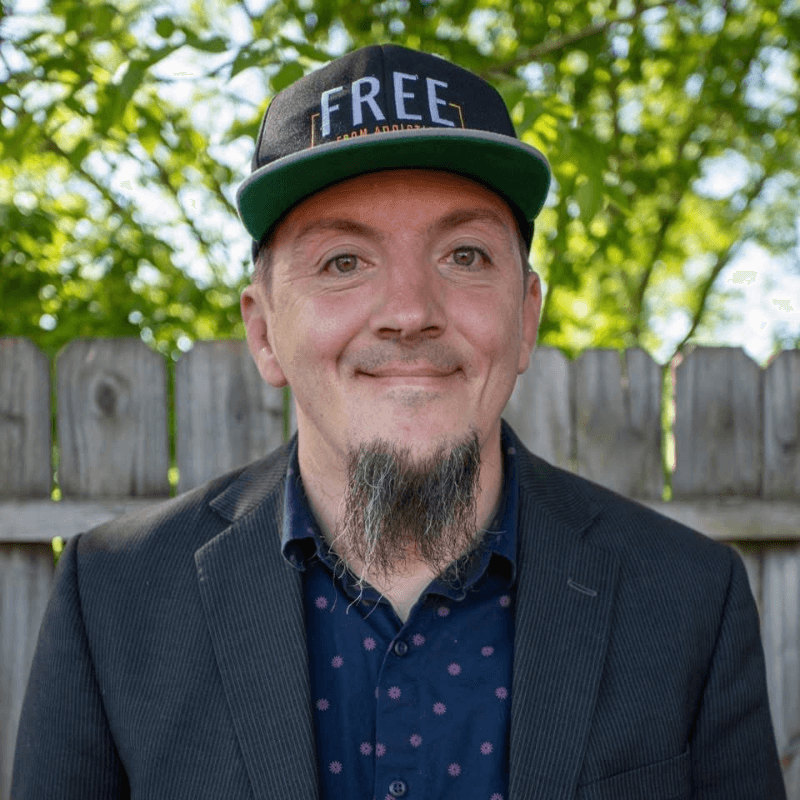
Justin Franich is a former meth addict, Teen Challenge graduate, and pastor who has been clean since 2005. Today he's a husband, father, and Executive Director of Shenandoah Valley Adult Teen Challenge. He hosts the Rebuilding Life After Addiction podcast and helps families across the U.S. navigate faith-based recovery options, compare programs, and rebuild life after addiction.
Read my storyKeep going
Monthly partners
Episodes like this stay free because partners keep them free.
Monthly partners cover the studio, the phone line, and the family guidance behind every episode — so the next family searching at 2 a.m. finds real help, not a paywall.
Become a monthly partner