Finding Help
Celebrate Recovery vs AA: What's the Difference?
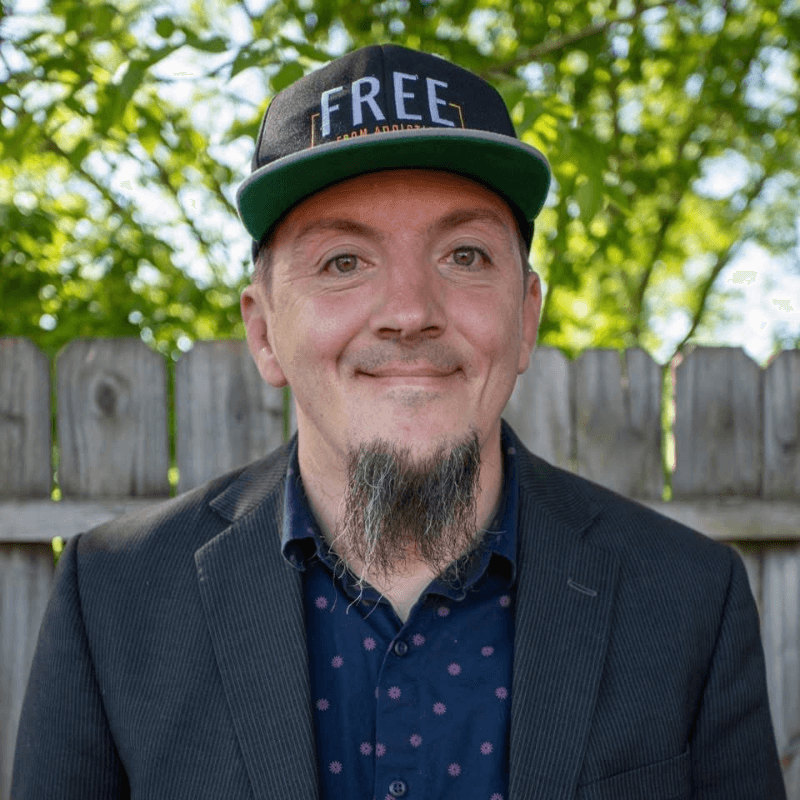
Justin Franich
June 4, 2026 · 9 min read

If you've started looking for help, you've probably run into both names within about ten minutes. Alcoholics Anonymous, which almost everyone has heard of. And Celebrate Recovery, which shows up the second you add the word "Christian" to your search.
They look similar from the outside. Both meet in rooms with folding chairs and coffee. Both use twelve steps. Both ask you to admit you can't fix yourself alone. So a fair question, and one a lot of families ask us, is whether they're basically the same thing with different branding.
They're not. The difference is real, and it actually matters depending on what you're looking for. Here's the honest version.

What Celebrate Recovery Is
Celebrate Recovery is a Christ-centered recovery ministry that meets in churches. It started in 1991 at Saddleback Church, founded by John and Cheryl Baker with the backing of Pastor Rick Warren. The origin story is the whole point, so it's worth knowing. John Baker had gotten sober through AA. It worked, and he was grateful for it. But he kept running into the same wall: AA asked him to lean on a "higher power" he wasn't allowed to name, and the higher power he'd actually met was Jesus. So he wrote out a plan for a Christian twelve-step program and brought it to Rick Warren, who told him to go do it.
That's the seam the whole thing runs along. Celebrate Recovery took the structure that was already helping millions of people and made the higher power explicit. Not a vague force. Jesus.
A couple of things that surprise families. It isn't only for addiction. Celebrate Recovery is built around what they call "hurts, habits, and hang-ups," which covers codependency, anger, grief, food, and a lot more. By their own accounting, only about a third of people in the rooms are there for drugs or alcohol. And it isn't anonymous the way AA is. Where AA protects anonymity as a core principle, Celebrate Recovery pushes the other direction, toward being known, toward joining a church, toward community instead of cover.
The Twelve Steps, Side by Side
Here's where it gets concrete. Celebrate Recovery uses twelve steps, and they're adapted from the original twelve steps of Alcoholics Anonymous. So let's actually look at both.
These are the original twelve steps as written by Alcoholics Anonymous, the ones first laid out in the Big Book, AA's foundational text:

- We admitted we were powerless over alcohol, that our lives had become unmanageable.
- Came to believe that a Power greater than ourselves could restore us to sanity.
- Made a decision to turn our will and our lives over to the care of God as we understood Him.
- Made a searching and fearless moral inventory of ourselves.
- Admitted to God, to ourselves, and to another human being the exact nature of our wrongs.
- Were entirely ready to have God remove all these defects of character.
- Humbly asked Him to remove our shortcomings.
- Made a list of all persons we had harmed, and became willing to make amends to them all.
- Made direct amends to such people wherever possible, except when to do so would injure them or others.
- Continued to take personal inventory, and when we were wrong promptly admitted it.
- Sought through prayer and meditation to improve our conscious contact with God as we understood Him, praying only for knowledge of His will for us and the power to carry that out.
- Having had a spiritual awakening as the result of these steps, we tried to carry this message to alcoholics, and to practice these principles in all our affairs.
(The Twelve Steps are reprinted from Alcoholics Anonymous.)
Notice step three and step eleven. "God as we understood Him." That phrasing was deliberate. AA was built to welcome the atheist, the agnostic, the Buddhist, the man who'd been burned by church, anyone who could admit they needed something bigger than themselves. Keeping God undefined was how AA got its reach. It's a feature, not an accident.
Celebrate Recovery keeps the same twelve-step skeleton but pairs each step with Scripture and names the higher power outright. Where AA says "God as we understood Him," Celebrate Recovery says Jesus Christ, the one true Higher Power. Same step one, admitting you're powerless. But CR ties it to a verse like "I know that nothing good lives in me, that is, in my sinful nature" (Romans 7:18, NKJV). The structure is borrowed. The foundation under it is specific. If you want to see that pairing for yourself, the Celebrate Recovery Study Bible lays the recovery material right alongside the Scripture.

If someone you love is in addiction and you don't know what to pray anymore, grab our free guide: 5 Prayers for Families Still in the Fight.
No spam. Unsubscribe anytime.
The Eight Principles
Celebrate Recovery adds something AA doesn't have: eight principles drawn from the Beatitudes, the section of Jesus' Sermon on the Mount that begins "Blessed are the poor in spirit" (Matthew 5:3, NKJV). The principles run alongside the twelve steps and map onto them.

These are Celebrate Recovery's eight principles, in their own words:
- Realize I'm not God; I admit that I am powerless to control my tendency to do the wrong thing and that my life is unmanageable.
- Earnestly believe that God exists, that I matter to Him, and that He has the power to help me recover.
- Consciously choose to commit all my life and will to Christ's care and control.
- Openly examine and confess my faults to myself, to God, and to someone I trust.
- Voluntarily submit to any and all changes God wants to make in my life and humbly ask Him to remove my character defects.
- Evaluate all my relationships. Offer forgiveness to those who have hurt me and make amends for harm I've done to others when possible, except when to do so would harm them or others.
- Reserve a daily time with God for self-examination, Bible reading, and prayer in order to know God and His will for my life and to gain the power to follow His will.
- Yield myself to God to be used to bring this Good News to others, both by my example and my words.
(The Eight Principles are from Celebrate Recovery, based on the Beatitudes.)
If you read those slowly, you can feel what CR is doing. Principle one is just step one with the disguise off: "I'm not God." Principle three names the care you're surrendering to as Christ's, not a blank. And principle eight turns the last step outward, the same way AA's step twelve does, toward carrying it to the next person. The bones are the same. The marrow is Jesus.
The full set of steps with their paired verses, and the deeper teaching behind each principle, lives on Celebrate Recovery's own site. If you want it in book form, Life's Healing Choices is John Baker's own walk through the eight principles in plain language. But what matters for choosing is the shape, and you've got the shape now.

A note on the book links here and below: these are resources we genuinely recommend. If you purchase through them, a small commission supports this ministry at no extra cost to you.
So Which One Fits?
Here's the part the directories won't tell you, because they're not trying to help you think, they're trying to get you in a seat.
Celebrate Recovery, AA, and a residential program are not three brands of the same thing. They're built for different distances down the road.
A weekly meeting, whether it's AA or Celebrate Recovery, is ongoing support. It's free, it's open, it meets once a week, and it's there for the long haul. It's maintenance and community and accountability. For a lot of people that's exactly enough, especially after the hardest part is behind them.
Between AA and Celebrate Recovery, the question is mostly about the higher power and the scope. If your loved one is going to stumble over Jesus being named in the room, AA's open-ended approach may be the door they'll actually walk through, and there's no shame in that being the starting point. If they want the recovery and the faith to be the same thing instead of two separate tracks, Celebrate Recovery is built for that. And if the struggle isn't drugs or alcohol at all but something else underneath, CR's "hurts, habits, and hang-ups" net is wider.
But a weekly meeting on its own has a ceiling. If someone is still using, still in crisis, still can't string together a clean week, an hour once a week usually isn't enough weight to hold them. That's where a residential program like Teen Challenge comes in. It's immersive, it's long, and it rebuilds a life from the ground up rather than supporting one that's already standing. We lay out how that kind of program differs from clinical treatment in Teen Challenge vs rehab.
And here's something a lot of families don't realize. It isn't always a choice between the two. Many residential programs build AA or Celebrate Recovery right into their weekly schedule, so a resident is in a structured program and working the steps in a meeting at the same time. Others, Teen Challenge among them, run their own discipleship curriculum as the spine and use it to do similar work. So a meeting isn't only an aftercare plan for later. For a lot of people it's already happening inside the program, and then it continues once they're home.
That's the pattern we see most. The program builds the foundation, the meeting keeps it standing, and for a good stretch the two overlap rather than taking turns. If you're trying to figure out which Christian meetings are near you and whether they're healthy, our guide to Christian recovery meetings walks through that, and the broader landscape of faith-based recovery programs maps out everything from weekly groups to long-term homes.
What We'd Tell You on the Phone
We don't run Celebrate Recovery, and we're not AA. So we've got no reason to push you toward either one. What we'd tell you is what we tell every family that calls. The label on the door matters less than whether the room actually points your person to Jesus and whether the level of help matches the size of the problem.
A meeting can't do a program's job. A program can't do a meeting's job. And neither one does anything if your loved one won't walk in. Start where they'll actually start, and don't let the perfect plan keep you from the next real step.
If you're not sure which that is, reach out. We'll help you think it through, no cost and no pressure.
Hear more on the Rebuilding Life podcast: What It's Like to Walk Through Celebrate Recovery
You’re not alone in this
If addiction has someone you love, talk to someone who’s been there.
The conversation is free and confidential. Justin & Rob answer the phone — both in recovery themselves.
One quiet email a week
New articles and podcast episodes when they drop. No pressure, no spam.
Justin Franich
Justin Franich is a former meth addict, Teen Challenge graduate, and pastor who has been clean since 2005. Today he's a husband, father, and Executive Director of Shenandoah Valley Adult Teen Challenge. He hosts the Rebuilding Life After Addiction podcast and helps families across the U.S. navigate faith-based recovery options, compare programs, and rebuild life after addiction.
Read my storyKeep going
Know a family who needs this? Send it to them.
Monthly partners
Articles like this stay free because partners keep them free.
No paywall, no ads — monthly partners cover the writing, the phone line, and the guidance behind every page, so the next family searching at 2 a.m. finds real help.
Become a monthly partner